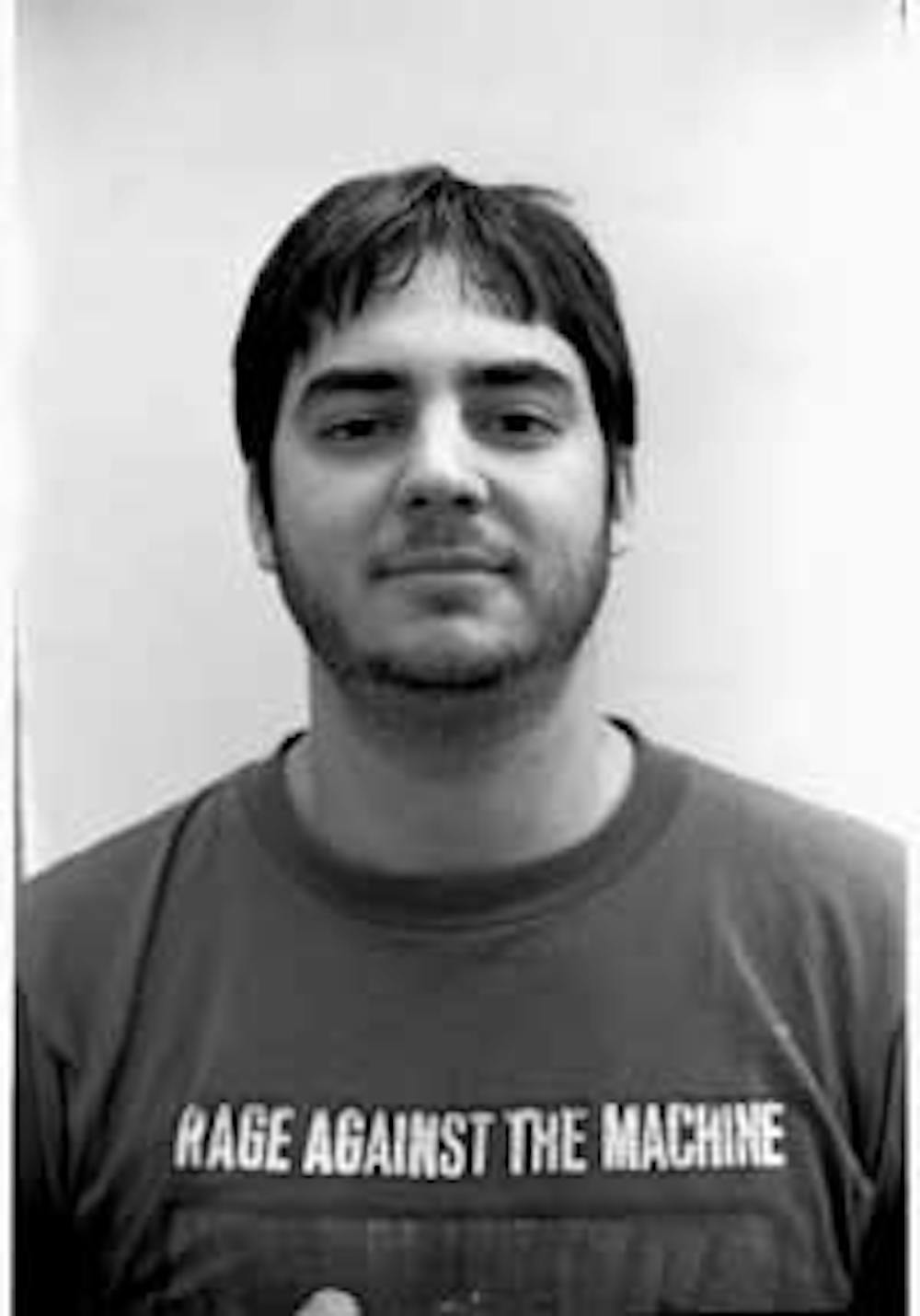
As a Tempe musician, I often dreamt of the day when my band, The Dying Time, would be interviewed for an article in a music or entertainment magazine. Unfortunately, that day will never come, as we played our last show in October.
You could probably claim that I'm trying to write the eulogy for my own funeral. However, my experiences over the past few years have given me insight into the inner workings of the local music scene. When you think of cities known for their music scenes, Phoenix does not come to mind; however, it does not have to stay that way. In fact, our city has the potential to be added to the list of great music cities because it is still expanding and waiting for a culture to call its own.
There are many individuals who are trying their hand at the many aspects that make up a music scene in hopes of taking Phoenix to the next level. Nita's Hideaway has become a quality venue for up-and-coming national acts as well as bigger local acts, and Sunset Alliance Records has released a handful of albums by local artists in the last year.
Also, brothers Ryan and Kyle Casey, two local musicians, have recently started Omega 3, a magazine dedicated to local music and literature.
"We wanted to put out a testament to the amount of bands out there, and the scene is so disjointed, so we wanted to bring the community together," Kyle Casey said of the magazine.
However, despite these and other scattered successes, there is room to improve. Phoenix is still far from having a thriving and cohesive music scene. A few years ago, I wrote an article on Five Speed, a local band that recently opened for Jimmy Eat World and has a song on The Emo Diaries, a national compilation. But no one had the chance to read it. The free music magazine it was supposed to appear in, Link Music Arizona, went under just before publication. Although it survived for about a year, it finally fell victim to competition for advertising with other local publications.
Omega 3 is not the type of publication that can achieve Link Music Arizona's one-time circulation of 35,000. And even though the Phoenix New Times and Get Out give a nod here and there to local music, they mainly cover national acts, or local acts that have achieved national notoriety. In other words, there will be a gaping hole in the music scene until someone turns out a local music publication that can be competitive in circulation and advertising.
Another big problem is that there is a shortage of venues that not only host local music, but also provide a "hang-out" that gives local music a sense of community. In the past five years, numerous places catering to local music have closed, including The Green Room, The Electric Ballroom and Gibson's — the latter is now a dance club.
Local bands like The Dying Time are now playing at places like the Lucky Dragon, a Chinese restaurant turned rock venue on the weekends. There is a niche to be filled by an underage venue that will relentlessly promote local music. Places such as the Modified in Phoenix and the Nile in Mesa have tried this in the past with some success.
However, Modified is now the Modified Arts and is planning to focus on more than just music, and until the Nile improves the condition of its facility and stops charging $7 a head for local shows, it will continue its present downward spiral into nonexistence.
Something also must be done about Valley radio, because right now it is a joke. It is simply too bogged down by corporate competition, which does not allow enough airtime for local music.
An easy solution to this problem is college radio. ASU's radio station, The Blaze 1260 AM, consistently plays local music, but unfortunately, the only time you can pick up the station's frequency is when you are next to the building from which it is broadcast.
ASU spends a ton of money on many things, but it won't spend the money to get The Blaze on the FM dial or give them a broader frequency. Besides giving students an even more realistic, hands-on learning tool, such a move would also open up a huge avenue for advertising that could generate money for the University.
If you have read this far, then you must have some interest in local music. And if you don't see yourself starting a music magazine, promoting shows, opening a music venue, starting a record label or petitioning radio stations to play more local music, then just do one thing: go to shows.
Do you like hard rock? Go see Redfield. What about punk? Go see Stereotyperider. Hip-hop? Go see Drunken Immortals. College rock? Signsedso. Indie rock? Seven Storey Mountain. Every local musician needs your support, and the talent pool here is better than you think.
Take advantage of the fact that you attend a hugely populated college campus right in the middle of one of the nation's biggest metropolitan areas. We should all try to see our city — and our lives — as the blank canvases they are, yearning to hold something great. In the words of Aaron Stauffer, lead singer of the indie great Seaweed, "Take advantage while you're young and while the chance is good."


