Making leaders accountable for human rights violations.
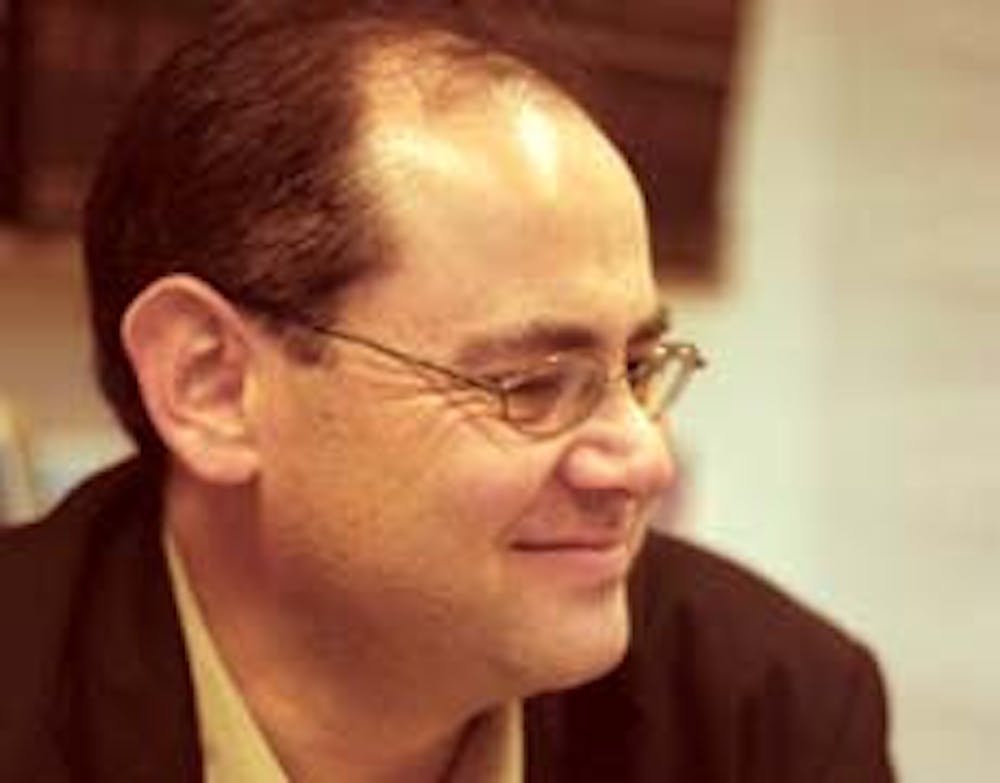
That's what the International Criminal Courts are supposed to be doing, according to David Jacobson, an ASU professor and expert on global judicialization processes.
Now, Jacobson will have an opportunity to put that theory to the test after receiving the Rockefeller Foundation Grant, placing him on a team that will discuss the positives and negatives of international courts in Italy in May 2003.
"In theory, they are supposed to hear cases of leaders or ordinary soldiers who have been involved in serious human rights violations," he said. "It can involve war crimes, crimes against humanity or other crimes like that."
The hope is that the international courts become a mechanism to ensure that leaders who make these kinds of violations are punished and that such crimes diminish in the future.
While this is supposed to be the court's purpose, the international criminal courts are new and were formally put in place just a few months ago and have not yet been tested, Jacobson said.
"This workshop is unique in that it brings together people who support these courts and people who oppose them," he said. "It brings together people who are legal scholars, practitioners and theorists."
After the discussion, which will include 15 intellectuals from all corners of the world, recommendations will be presented to the U.S. State Department, the U.S. Supreme Court and to European courts and departments.
Those in favor of the courts say people who have escaped from serious human rights violations could now be charged in this court, but those against say the courts are not accountable to anyone.
"The danger is that they [courts] become political bodies and pursue political ends," Jacobson said. "The Europeans favor the courts and the Americans are resistant to it, partly because the United States is so heavily involved in peacekeeping and other operations around the world, and they feel vulnerable to this court."
The United States is also concerned that this court would unfairly target Americans because of anti-Americanism.
"This is very different than courts we see domestically or nationally because within democracy there have always been courts being a part of a system of checks and balances between the executive branch and the legislative branch and the judiciary," Jacobson said.
The international courts are in some ways self-standing entities, which leads to questions concerning court accountability, he added.
"If the concerns of the United States are correct, then we have to find a way for these courts to have some kind of accountability to some entity or get rid of [the courts]," Jacobson said.
Supporters say those that preside over the courts are fair-minded people, so there isn't a need to worry about countries being targeted, he said.
Reach the reporter at susan.padilla@asu.edu.