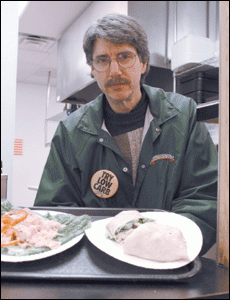
ASU eateries have jumped on the low-carb bandwagon, but how do they measure up and are there enough options?
Most low-carb diets require the dieter to eat no more than 20 grams of net carbs, the remaining carbs after subtracting fiber and other carbs that don't affect the diet.
In other words, it's OK to eat a juicy cheeseburger if you don't eat the bun.
The Burger King in the Memorial Union has a low-carb menu. Low-carb items include an Original Whopper Platter wrapped in lettuce for a little more than $2, or a Chicken Wrapper for just under $4.
Both the Whopper Platter and the Chicken Wrapper have less than five net grams of carbohydrates.
The MU's Schlotzsky's Deli, known to many for its crispy, tasty bread, also has introduced a low-carb menu.
Schlotzsky's manager Patrick Shanley said the demand for low-carb meals has become very high, and that the business has seen profits after introducing the menu just last month.
The menu includes a low-carb tortilla wrap, in place of a regular bun, with just seven net grams of carbohydrates. Schlotzsky's also offers to replace buns with lettuce wraps on any of its sandwiches.
Psychology senior Jen Thomas was eating a Schlotzsky's sandwich Monday, though she wasn't eating low-carb.
"I wouldn't order it because it doesn't sound filling," Thomas said about the low-carb tortilla wrap. "I would eat it if it sounded good, but not that."
With all the hype surrounding the low-carb, high-protein diets, many question their long-term effects.
The Institute of Medicine, a Washington, D.C.-based organization that sets the standard for daily recommended nutrient intake, advises adults to eat 130 grams of carbohydrates per day.
A person on a low-carb diet is recommended to eat just 20 to 30 net grams of carbs.
Eating so few carbohydrates can disrupt normal metabolic functioning. The flip side of the debate is that low-carb diets can contribute to good health, particularly in keeping the risk low for Type 2 Diabetes, which is usually caused by excess weight.
Burger King, Schlotzsky's and Einstein Bros. Bagels, which offers a low-carb nine-grain bagel with 18 grams of net carbs, are the only places that advertise a low-carb menu on campus.
For a quick snack, the Union Market in the MU sells an Advant Edge-Carb Control Bar that has three grams of net carbs for about $2.
ASU psychology junior Felicia Marsh was on a low-carb diet for several years before the fad began. She chose the diet for her health: she is hypoglycemic and can't eat sugar.
"I don't eat on campus. I've heard about the low-carb burgers at Burger King and I think the idea is stupid; it's not a burger," Marsh said. "I also think it's too expensive; if it cost less and options on campus were expanded, I would then buy on campus."
Reach the reporter at allison.banzhof@asu.edu.