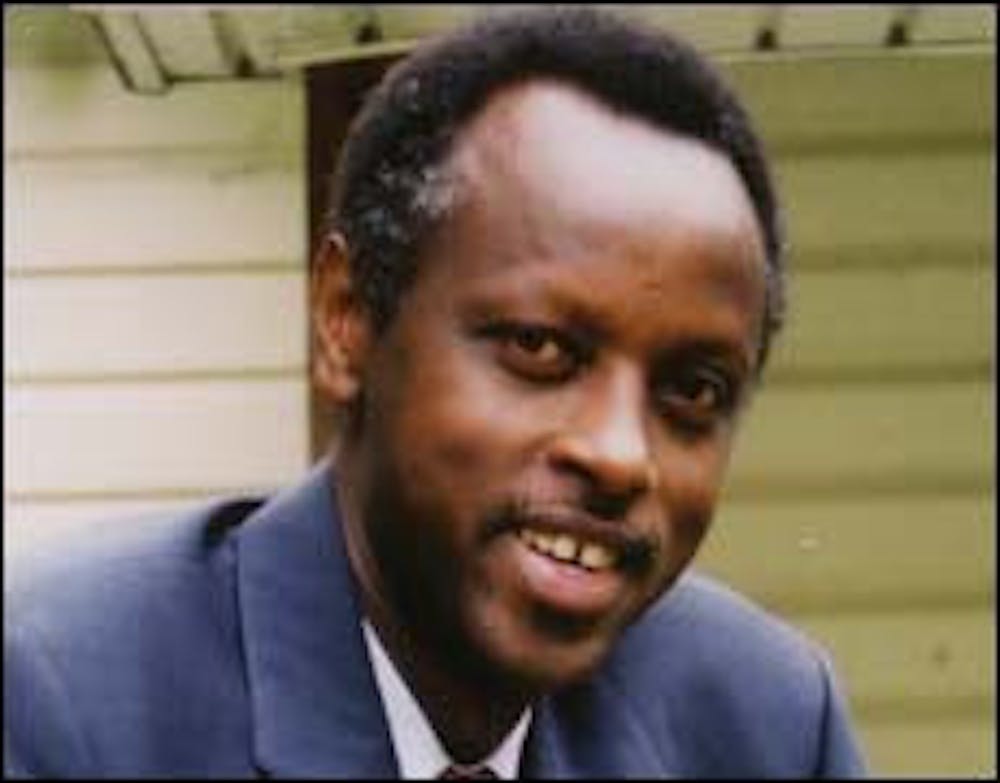
Former head of Rwanda's parliament Joseph Sebarenzi will be presenting his "Peace, Reconciliation and Restorative Justice" lecture tonight at 7 P.M., in the Student Union Ballroom. This event will be the start of the Martin Luther King 2006 celebration at the Polytechnic campus.
During the 1994 Rwandan genocide, many of Sebarenzi's family members died, including his parents and seven siblings. During his time in Parliament, he said he did not believe in exacting revenge, but decided to push for peace and reconciliation.
"Suffering breeds character," Sebarenzi said. "The way to deal with my suffering, the way to deal with the pain my people went through, was not towards revenge, but towards peace. [This is the way] to break that cycle of violence."
Sebarenzi said his care for future generations also brought forth his message of peace.
"If we don't work for peace, and towards revenge, we are just perpetuating violence. We are really compromising the future of our children. If we really love our children and grandchildren, the best gift we can give them is not to pass violence to them," he said.
Sebarenzi said he remembers his childhood as a time of discrimination and dehumanization.
The Dutch and Belgian colonizers introduced a system of dividing the people of Rwanda into two main groups: the Hutu and Tutsi. Identity cards were issued to differentiate Rwandans.
This aided the genocide, Sebarenzi said. Those carrying Tutsi cards were killed, while the Hutu were safe. During the genocide, 800,000 Tutsis were slaughtered during a period of 100 days.
Lydia Dancel, office specialist senior for the Student Union, said she would attend the lecture.
"This was such a crisis in life. I'm interested in hearing what he has to say about it. He lost his entire family, then he changed -- probably from more awareness of being peaceful with himself and peaceful with the world," she said.
Mike Mader, director of student activities at the Student Union, invited Sebarenzi to speak.
"I had heard about [Sebarenzi] through some colleagues at some other campuses. I went online to learn more about him. [We decided] he would be a good person to come out and talk about his message, which is basically peace and reconciliation and restoration of justice ... a very appropriate message because it clearly envisions MLK's vision of striving for peace in a nonviolent way," Mader said.
Reach the reporter at cem.burnham@asu.edu.