Which restroom do you use when you don't consider yourself neither female nor male?
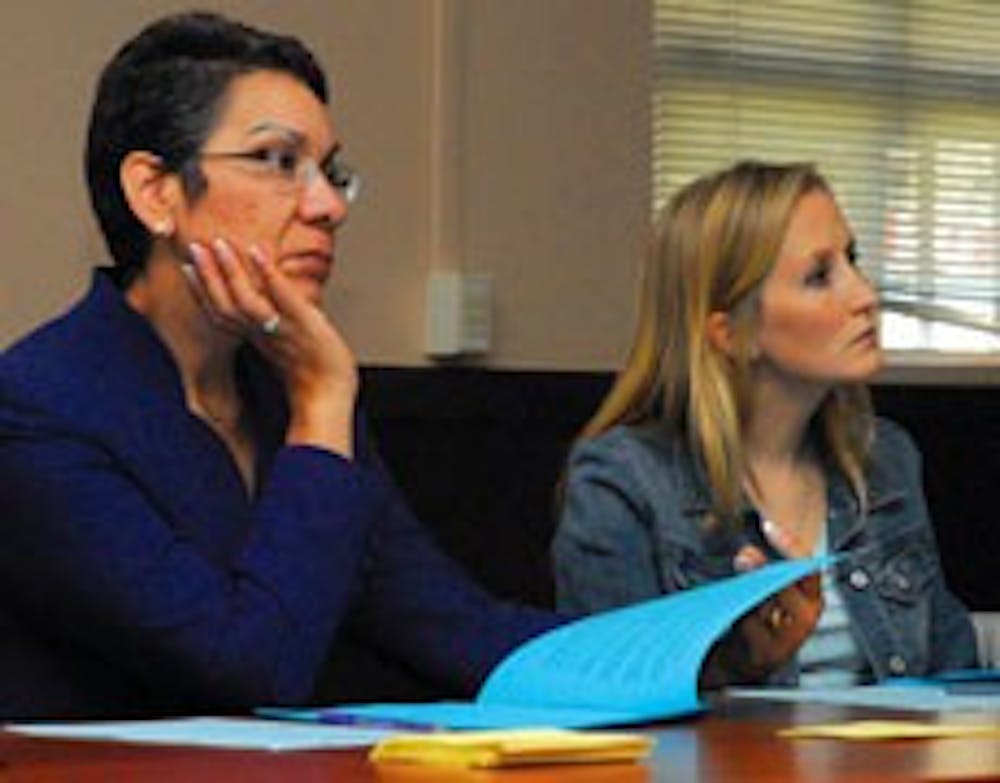
As one of the few higher learning institutions around the country to have non-discrimination policies on gender identity, ASU Downtown Campus held a class Tuesday to help build staff awareness about students who don't fit into the standard male and female gender categories.
The class, Gender Identity 101, is the second of three in a series of workshops called SafeZONE 101, which identifies problems those who don't fit the mold of male or female may encounter. The first class was an introduction to the series.
David Coffman, assistant professor of stage management and production manager, said there's no such thing as a homogeneous way to classify transgender. He said the very nature of being a transgender person creates problems, such as whether to use the women or men's restroom.
At the gender identity class, ASU staff members were informed about which pronouns to use when addressing transgender students. Coffman said the transgender community uses new pronouns, such as "ze."
The class addressed a series of "myths" and "truths" surrounding the transgender community.
One example of the myths discussed is the belief that being transgender stems from a perversion or sickness.
Academic adviser Ria Hermann said she attended the class because she wanted to be ready to address any issue a student might bring to her.
Gender Identity 101 is a part of SafeZONE, a series of classes sponsored by Intergroup Relations Center, and is one of three classes. Intergroup Relations Center is a department that handles diversity issues on campus.
While the primary goal of the classes is to increase staff awareness, students are welcome to attend the classes as well.
Much of the class curriculum stems from what committee members at SafeZONE decide.
Lori Girshick, Intergroup Relations Center program coordinator, said a lot of the curriculum body was based on her own research.
David Leo, who coordinates and teaches SafeZONE classes said the classes were initiated at one time through the Gay Lesbian Bisexual Transgender Queer coalition, but the program has "changed and grown" since.
Members of the transgender community are often classified by definitions that don't really identify the person, causing that person to be alienated, Coffman said.
The third and final class, Becoming an Ally, will be held April 10 in Post Office Classroom 120.
Reach the reporter at: marc.young@asu.edu.


