In the cool November air, Community Action Officer Scott Melander leans against the side of a patrol car and surveys the line of First Fridays vendors stretching down East Garfield Street in downtown Phoenix.
Melander knows this neighborhood well. Of the 20 years he has worked for the Phoenix Police Department, he spent 18 working downtown.
Over the past six years, Melander said he watched the neighborhood improve drastically, and the monthly art walk has become so popular that the city plans to expand it in January.
“[Before,] we had gang activities, shootings and drugs,” he said. “People were walking around with open containers of alcohol, which is illegal.”
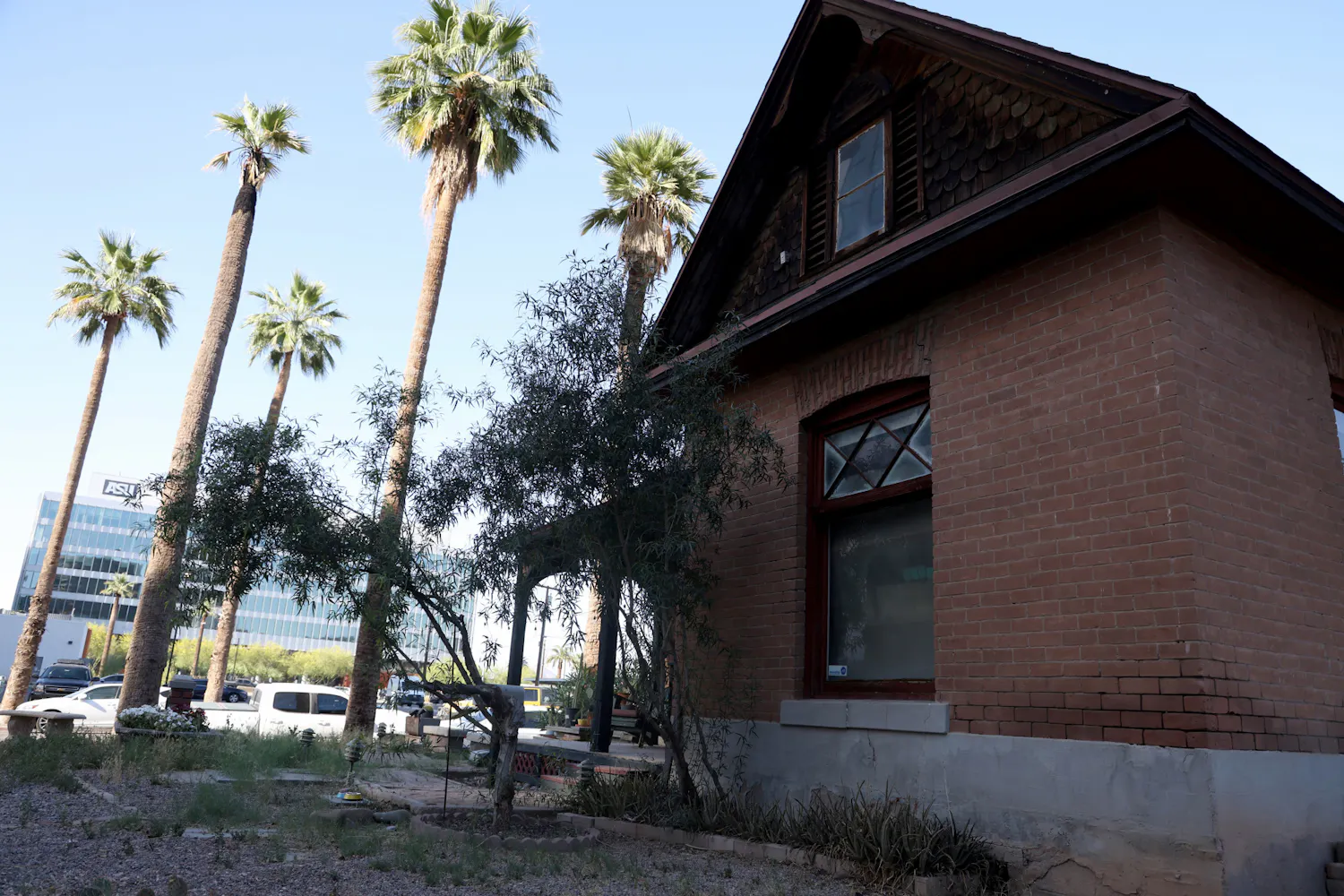
Melander said a combination of building renewal, committed homeowners, ASU’s downtown presence and Phoenix’s First Fridays art walk have revitalized the area and significantly decreased crime.
“We started clearing [crime] out,” he said. “We had more art galleries move in and had homes purchased by people invested in the neighborhood. That really made a change.”
First Fridays, Phoenix’s monthly art walk, unites Phoenix artists with crowds of more than 15,000 in one night, creating an atmosphere that discourages many crimes. The event has positively affected the area, Melander said.
“I’ve only had to make one arrest in the five or six years I’ve been down here for the First Fridays event,” he said.
Greg Esser, executive director of the Roosevelt Row Community Development Corporation, remembers when rampant crime deterred people from attending First Fridays.
“Ten years ago, there was very low attendance at the event,” he said. “Maybe a few hundred people … and that was at a time when crime in the downtown area overall was fairly high.”
Transvestite prostitution, drug sales, murder, arson and property crime were common, he said.
New buildings and businesses along with interest in the neighborhood and increased police enforcement have significantly reduced crime in the area, Esser said. But rapidly growing attendance has posed its own problem.
“Vendors were setting up wherever they could; they were setting up in front of businesses, they were setting up in vacant lots, they were setting up in front of the sidewalk,” he said. “That meant as people stopped to browse, people in wheelchairs [and] in strollers were actually being pushed into the street.”
Poor crowd management paired with no enforcement of visitors and vendors during the first five years ended abruptly in August 2005 when Esser said a police presence that “looked like a military state” came to First Fridays.
Melander said the August 2005 police presence, while large in scale, focused primarily on regulation education.
“It wasn’t enforcement where we went out and started knocking people over the head with clubs,” he said. “We just educate people and let them know. The crowds have been real perceptive of that.”
Esser said that a heavy-handed police presence eventually gave way to unprecedented cooperation between the community and Phoenix police.
“That over enforcement lead to a period of dialogue between business owners, community residents and the city on what appropriate measures were in order to ensure a safe and successful event for everybody involved,” Esser said.
Police now enforce safety regulations to keep vendors from forcing pedestrians off the sidewalk. Over the summer, the city began closing Garfield Street between Seventh and Fourth streets, devoting it exclusively to the event.
Starting in January, the city will expand the street closure to McKinley Street, enlarging First Fridays’ area of operation.
“We have so many vendors who want to participate in First Fridays,” Melander said. “We’re really encouraging it to happen.”
Reach the reporter at channing.turner@asu.edu.