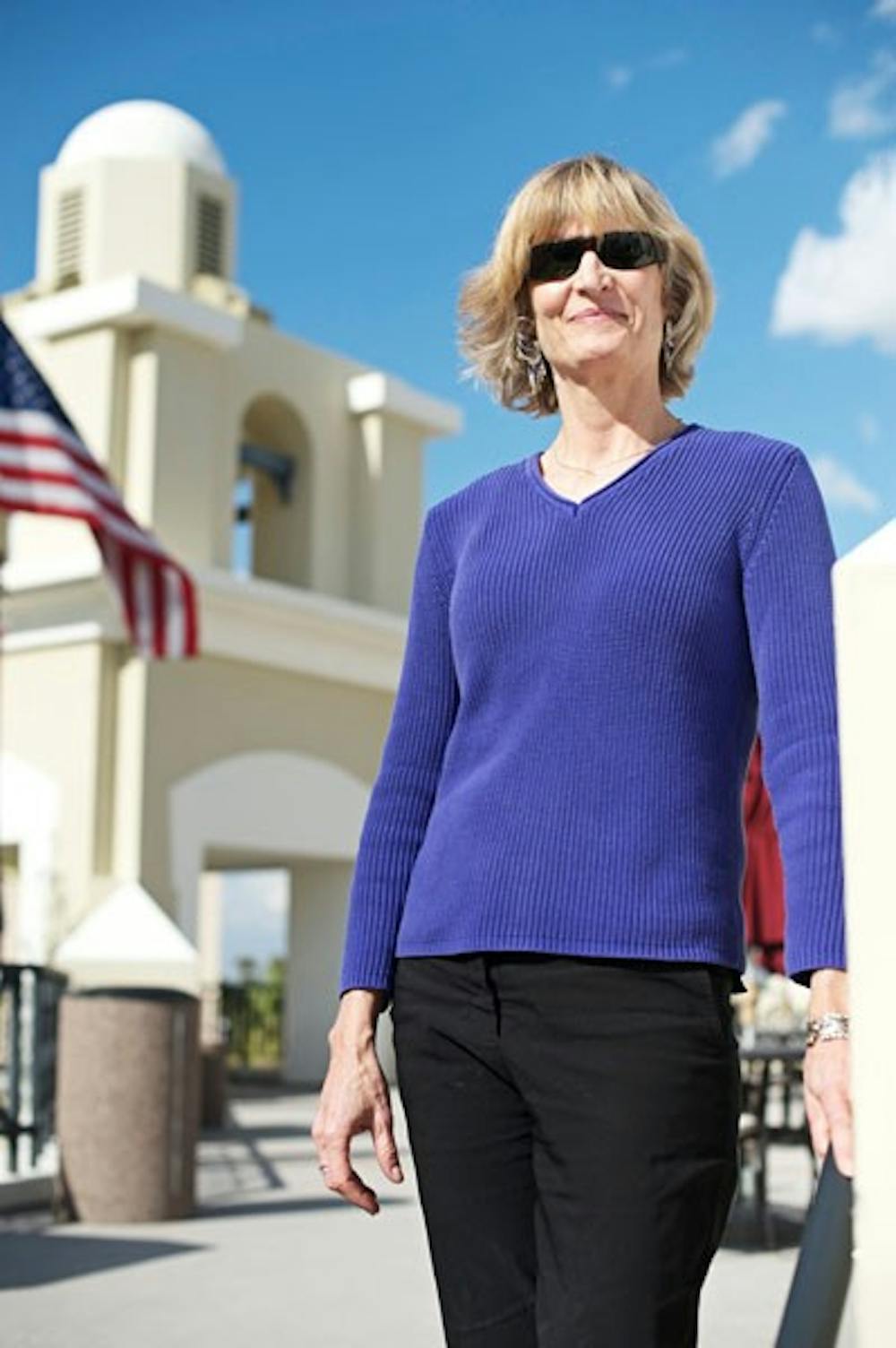

Researchers at ASU are looking to ease the process for chronically ill patients to receive in-home care.Kimberly Shea, a registered nurse and an assistant research professor for the College of Nursing and Health Innovation, received a $385,000 award that allows her to research telehealth monitoring — how medical care providers monitor patients from another location.
“Technology needs to be looked at as a tool in healthcare,” Shea said. “An average caseload for a home health nurse per day is five patients.”
Telehealth nurses can see up to 65 patients a day, she said.
“It’s allowing patients … to take charge of their health,” Shea said. “They have these technologies available to use and they don’t have to rely on somebody bringing them the information.”
The grant also provides Shea with mentorship from prominent members of the medical community.
“[This grant] enables me to be at the table with some really well experienced, tenured people in this research area that have been in it for years and watched it grow,” Shea said. “It provides a career development piece. That’s different from most grants, which are purely research.”
Telemonitoring equipment allows patients with chronic illnesses like congestive heart failure and diabetes to use monitoring devices in their own homes. Those readings are transmitted to a nurse who can monitor multiple patients from a workstation at a hospital or office.
Traditionally, patients would go to a hospital or doctor’s office, or a nurse would travel to the patient’s home. Telemonitoring increases productivity by allowing the patient and nurse to remain in their homes and workstations.
Working under the guidance of experts in the fields of biomedical engineering and nurse engineering, Shea’s research examines feedback to patients using telemonitoring equipment.
“I think it’s a perfect thing for nurses, because nurses are patient advocates,” she said. “If we study [patient responses] as nurses, then we can be serving our role as patient advocates, to use it in the right way.”
Shea’s research is in conjunction with Banner Home Care, a medical provider of self-care monitoring equipment. The study consists of about 40 patients undergoing self-care techniques, utilizing telemonitoring equipment.
It examines how patients respond to feedback from equipment and from nurses monitoring the readings, and whether the feedback causes positive changes in behavior.
Cathy Lally, a registered nurse and health innovation graduate student, will assist with collecting and compiling data for Shea’s research.
“It’s a great opportunity for me to learn and also to give in this program,” Lally said. “It’s a hot topic in the health care arena.”
The Mentored Patient-oriented Research Career Development Award allows Shea to conduct research while receiving tutelage from experts in the field.
One of her mentors, biomedical informatics professor Robert Greenes, said this program will allow Shea to grow as a researcher and help patients.
“We are introducing a range of potential methodologies and approaches that can augment in things like managing patients in their own homes [using] health care,” he said.
Shea said she is grateful for the guidance she’s receiving as well as the opportunity to help people.
“This is … bringing the health care to them through technology so they can be more involved with their health,” she said. “Whether or not it’s really working is my job to figure out.”
Reach the reporter at joseph.schmidt@asu.edu