The ASU Police Department is looking to change the way students contact authorities for help.
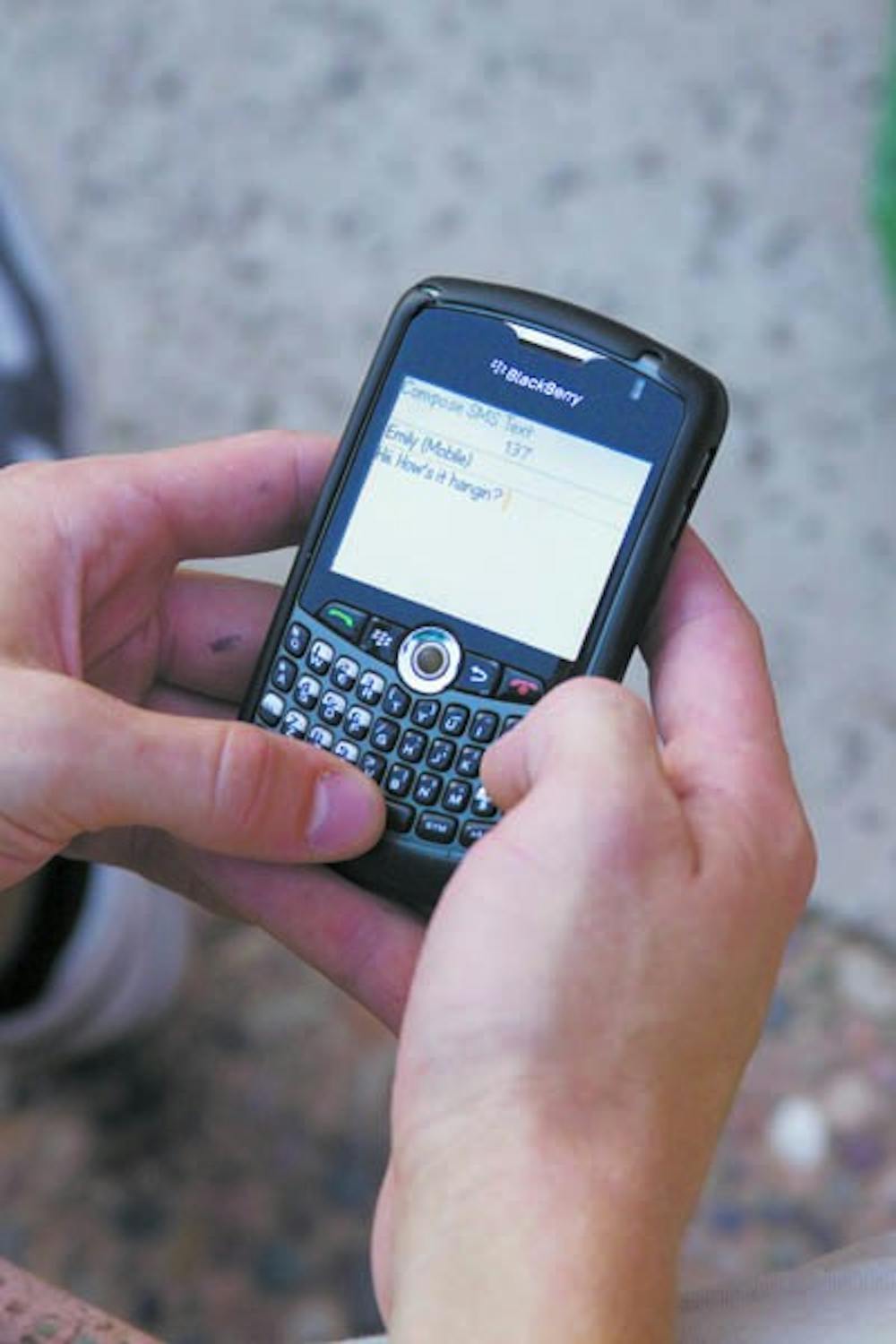
Instead of calling police or reporting crimes in person, students may soon have the option of texting emergencies.
ASU Police spokesman Cmdr. Jim Hardina said the department notices how students use technology and is always looking at ways to leverage technology to their advantage.
“Eventually the police department is going to have to use text messaging,” Hardina said. “It’s just our culture.”

Michelle Potts, the communications supervisor of the ASU Police Department, said the first phase in implementing a text-messaging system will be for non-emergency matters, which include crimes that are not in progress but require a police response.
This way, she said, police can analyze the volume of text messages and see how well the department’s communication center can handle the load.
“Eventually it could go to 9-1-1,” Potts said. “But that’s the future, the next generation of 9-1-1.”
Hardina said the staff fully supports the text-messaging system, but its implementation comes down to funding.
“It's just a matter of sorting out the details of how it’s going to work,” Hardina said.
Cmdr. Mike Thompson said even though the proposed text-messaging system is for non-emergency calls, it’s still a very viable method of communication with police.
“Technically, it’s not coming through the 9-1-1 lines, but there’s not that much of a difference,” Thompson said. “You’re still getting the same people and communication, and you’re still getting the same officers responding.”
Thompson said communicating with police via text message would also benefit the hearing-impaired.
Individuals with hearing impairments can currently use a telecommunications device for the deaf or a chat-relay with a third party to contact police, Thompson said, but those systems come with setbacks.
He said both systems produce considerable delays, and the person would have to have access to the machine wherever they are.
With text messaging, these problems can be eliminated, Thompson said.
“If they’re in the middle of the Memorial Union, they can text straight to the dispatcher, and the dispatcher can text them back,” Thompson said.
The technology, which is being produced by Intrado Inc., was first implemented in Black Hawk County, Iowa, in 2009.
“We definitely have a different venue with students [text messaging] more than a residential county,” Potts said.
Thompson said he would also expect to see an increase in the amount of crimes reported due to the perception of a higher level of anonymity.
“The community will be a little more apt to report things,” Thompson said. “You could be texting your friend, you could be texting anyone, but you’re texting the police and nobody knows.”
Reach the reporter at mhendley@asu.edu