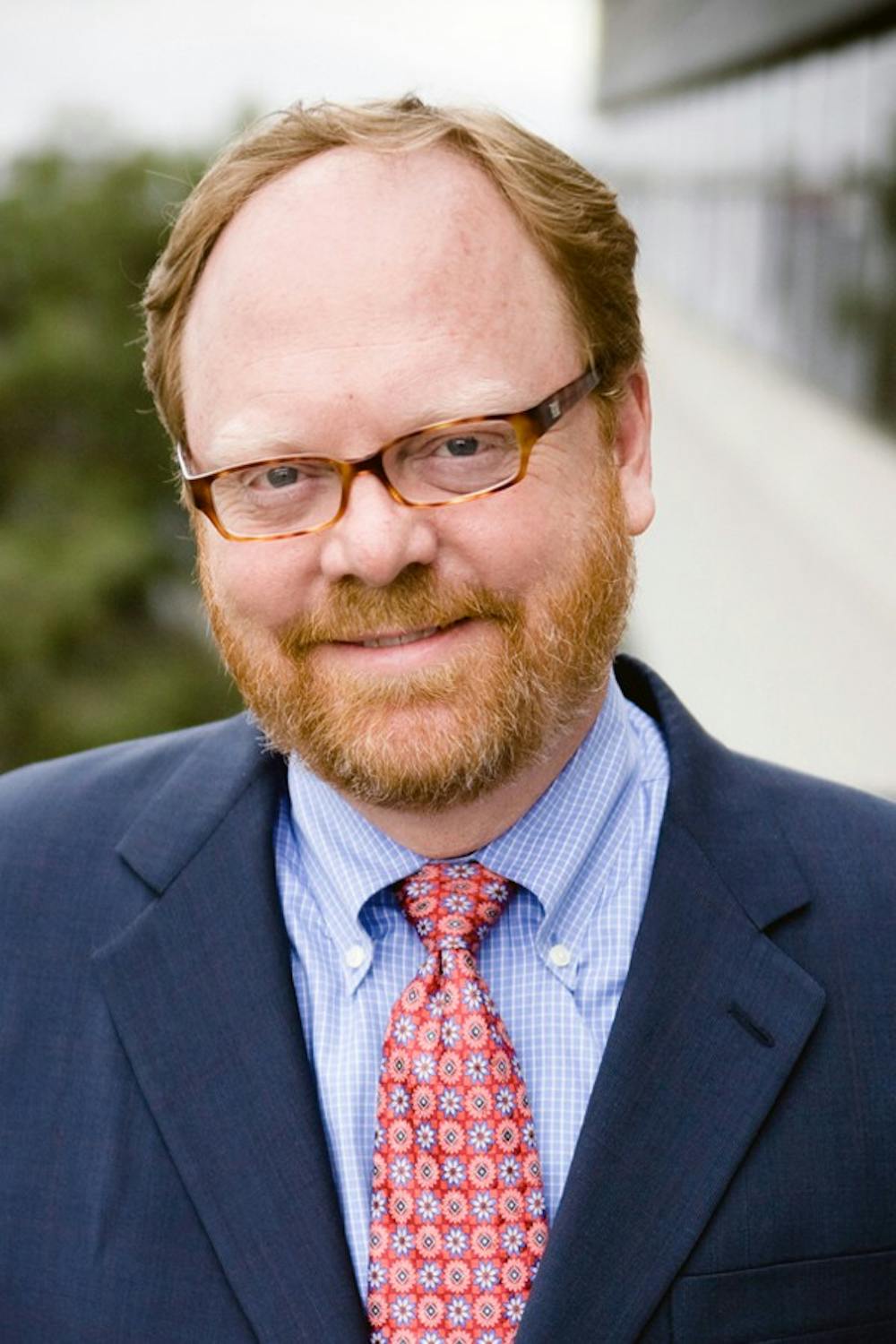

Wes Gullet, a 50-year-old father of three, 24-year Phoenix resident and partner at the lobbying and strategic planning firm FirstStrategic has entered Phoenix mayoral runoff election after securing 20.5 percent of the votes in the mayoral election in August.
Although a political fresh face, Gullet has held a handful appointed positions including chairman of the Phoenix Planning and Zoning Commission and has worked closely with U.S. Senator John McCain.
The State Press: What motivated you to run for the office of Phoenix mayor?
Wes Gullet: I thought that there were ways we could make (Phoenix) better, streamline the process, save money and cut costs. I think we need to do that to get the economy going again. Having been a businessman, I understand how tough it is and how people are suffering with the 9 percent unemployment rate. So a year ago when I was looking at the (mayoral) race and looking at the candidates, I was concerned that the candidates were not (going to be able to boost the Phoenix economy) so I decided to get in the campaign and bring some business principals to City Hall and really challenge the status quo.
SP: Your opponent, Greg Stanton, has held an elected position on the Phoenix City Council for the past nine years. You have never held an elected political office. How do you feel this will affect your candidacy?
WG: The fact that I have not served on the (Phoenix) City Council makes a huge difference and I feel that it is one of my strongest attributes. I am not tied to the decisions of the past, I can come in with a set of fresh eyes and really challenge the status quo by not coming in and saying, ‘This is the way we’ve always done it and this is the city way’ and instead I can say, ‘We need to challenge that and do it a different way because this way doesn’t seem to be working.’
SP: How do you feel in comparison with Phoenix’s current mayor, Phil Gordon? What would you do the same as Gordon and what would you do differently?
WG: Well, that’s a fundamental difference between (Greg Stanton) and I. Phil Gordon just endorsed Stanton on Monday because he believes (Gullet) will continue (Gordon’s) legacy. I think I am going to challenge that legacy. When the economy went south, what we in the private sector did was lower prices; Phil Gordon did the exact opposite, he raised prices. They doubled the price of parking meters downtown, garage fees, parking ticket fees and permit fees in addition to adding tax on groceries that people need. If you raise prices, customers leave, and that’s what happened; customers quit buying. It’s had a terrible effect on our economy and we’ve lost 250,000 jobs in the past three years. So we need to go back in, in an urgent fashion, and reduce those costs.
SP: Should you be elected, what are the main changes you would like to see in Phoenix?
WG: We’re going to get the economy going again by reducing costs. How we’re going to do that is immediately repealing the food tax; we’re going to put a halt to increasing water rates; we’re going to reduce red tape by making the permit process much simpler; and all those things are going to help generate an economic boom.
SP: In light of the recession, how would you alter the city of Phoenix’s budget?
WG: Well, what (the city of Phoenix) did was give raises out to employees and couldn’t afford them. I believe in performance-based pay. We’re only going to provide raises to those that are going above and beyond and that is going to be limited to 30 percent that will save two-thirds of the cost of those raises or $16 million. Another thing the city of Phoenix does that it cannot afford is provide double pension to our city managers. We have a great pension plan for the city employees and we have to say, ‘Look, we can’t afford to give you that second pension.’ The efficiency task force found 3 percent savings in last year’s budget. I believe we can find 5 percent and we do that by beginning with zero base budgeting.
SP: Greg Stanton said he believes your involvement with the lobbying firm FirstStrategic is unethical as a mayoral candidate. Do you plan to stay with FirstStrategic if elected?
WG: No, and Greg knows that. I’m going to sell my firm and I will not have any kind of financial gain from FirstStrategic or the business that they do.
SP: Can you explain your ‘Seven Points Job Plan?’
WG: We need to lead from a regional perspective which is why I am proud to have the mayors of Scottsdale and Tempe endorsing my campaign because they know we can work together in a regional way to bring jobs to the region. Second, we need to have a plan with a purpose; we shouldn’t just have a vision for downtown, we need to have a strategic plan for all the 15 villages in Phoenix. We need to make sure we are planning for the next big idea. We need to report on that planning and the success of that planning often; right now the city of Phoenix’s strategic plan was written in 1991 and that is unacceptable. We need to leverage the city’s resources and make sure we are taking advantage of the millions of dollars of infrastructure we have in Phoenix. We need to modernize government through cutting red tape and making it easier to get permits. We need to invest in local business through reducing fees, rates and taxes as well as buying locally. Finally, we need to promote Phoenix. What that means is we need to put a big sign on city hall saying, ‘We’re open for business’.
SP: Many ASU students use the light rail for transportation throughout the Phoenix metro area and there has been discussion in regards to expanding the light rail. What is your stance on light rail expansion?
WG: I think before we put more money into light rail, we need to get through the planning (on the new light rail routes) and get a return on our original investment. The potential that exists on the light rail line (from the Tempe campus to Downtown campus) is enormous. We haven’t even done the planning and looked at what the commercial opportunities are (along the light rail route). We need to take better advantage of the capital. We can’t afford more debt, we can’t afford to invest more money that we don’t know how we’re going to pay back and we need to be very careful right now with the decisions we make.
SP: Roughly 13,500 students are enrolled at the Downtown campus. How important is the youth vote to your campaign?
WG: I think the youth vote is really important. What we want to do is encourage people to vote, but the fact of the matter is that older people vote and younger people don’t vote. I would love to have younger people involved in the process because we’re going to make enormous positive changes downtown. We’re going to lower those parking meter fees, we’re going to turn loose small business, and instead of trying to restrict First Fridays, we’re going to encourage them to be even bigger. We need to make it easier to work from home so that young people graduating from college have an easier time of starting their own businesses without having a bunch of restrictions. I think these things would have a tremendous positive impact on young people.
SP: If you were elected mayor, how would you like to see the Downtown youth get more involved in local politics?
WG: I want to create a leadership academy within the city that helps take advantage of the students we have downtown so that they can take advantage of internships and other things. As Dr. Crow and I have talked about, let’s get (the massive ASU undergraduate population) to work. Let’s put those people in their fields of expertise into real life jobs that can help move the city ahead. A lot of it has to do with the unions not wanting cheap labor, which are students. I want to take advantage of that. I’m not going to be beholden to the unions so that we’re trying to stop having students participating internships; I want to take advantage of that so we can be more cost effective and give real life experience to young people.
SP: In what ways would you like to see the Downtown campus change or expand?
WG: The city of Phoenix needs to continue its partnership with ASU. Dr. Crow has talked about the need to attract another university downtown, possibly a private university, which would expand the number of young people in the downtown area. We also have to continue to look at ways to get the law school downtown. I want to work with Dr. Crow on these things; we just need to be careful because we don’t have the money we once had.
Reach the reporter at doberhau@asu.edu
Click here to subscribe to the daily State Press newsletter.