 (Photo courtesy of Summit Entertainment)
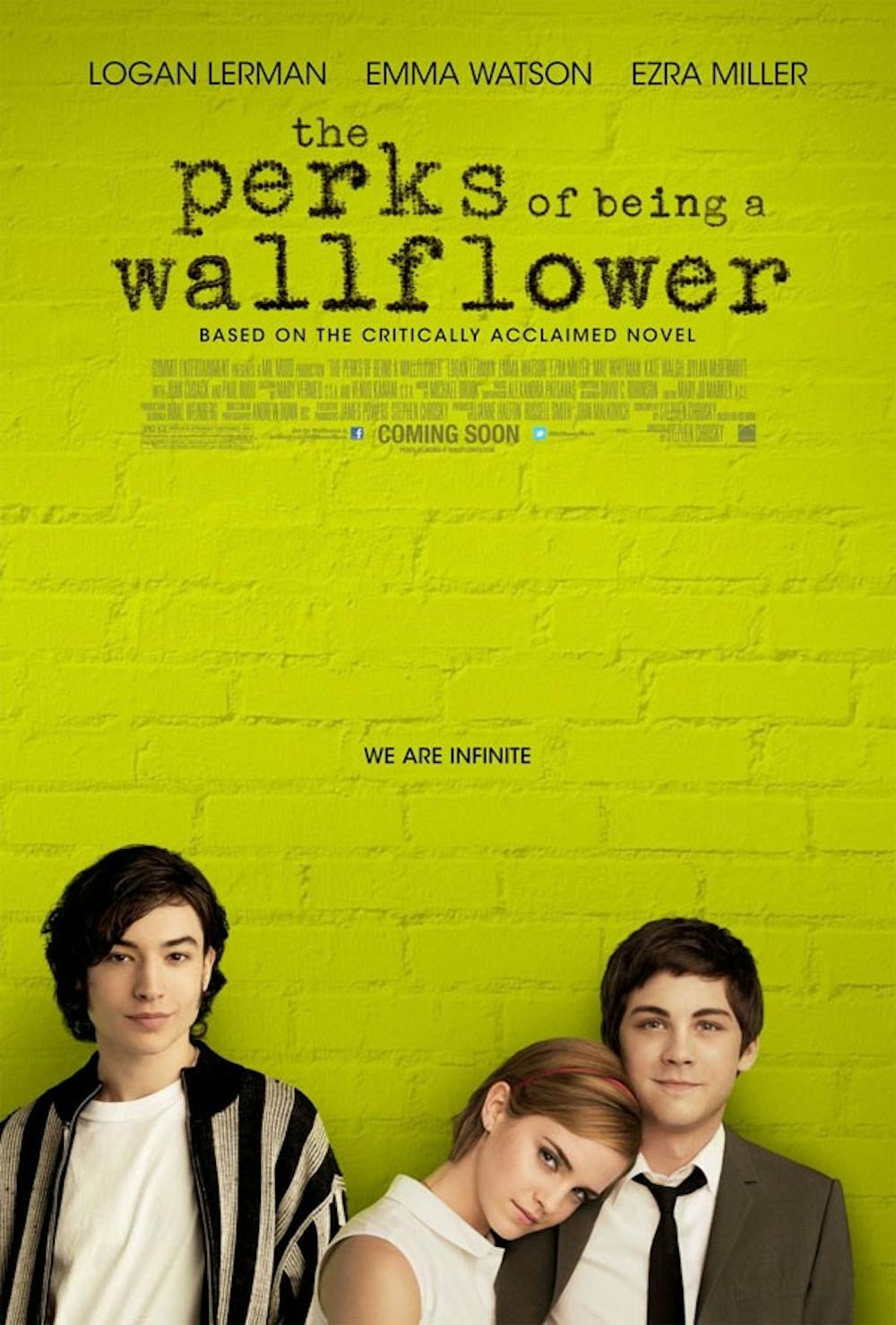
Bestselling author Stephen Chbosky brought his press tour to Arizona last week in support of the movie version of “The Perks of Being a Wallflower,” which he wrote and directed. The State Press had the opportunity to sit down with Chbosky and discuss the movie, his inspirations and the best memories from the set.
The State Press: How easy or difficult was it to transition your book to a screenplay?
Stephen Chbosky: It was the most challenging screenplay I ever wrote. Because, you know, first of all, the book is so personal to me in terms of my life but also my career. I really needed distance to be able to do a real adaptation. I found it very challenging because I felt an obligation to the fans, I felt an obligation to the book, whereas when I was writing the book, I was just telling a story and it just poured out.
SP: Because the book is so personal to you, was it difficult to imagine seeing it played out on the big screen?
SC: That part wasn’t difficult because when I wrote the book, because so much of my training is in screenwriting, I think of prose in very visual terms so it was not difficult to make that transition. However, it was hard to shift perspectives. The book ... is told in a series of letters (and) it’s a very subjective storytelling technique, where movies by nature are objective. Let’s say in the book, Charlie would say, “Sam is so nice” or “Patrick is hilarious” or anything about any of the characters (and) because he’s a reliable narrator or storyteller, we just accept it. But in a movie, you have to earn everything; you have to earn his point of view for every member of the audience. So what I started to think was let me try to design the movie so everybody in the audience feels like Charlie about all these other characters and these experiences.
It was tricky. It took me four months spread over many, many years to write the book; it took me a year to write the screenplay.
SP: What was the process of casting the characters like?
SC: The process ... it was one of the most fun parts of making the movie because once I had the screenplay — I knew the characters so well because of my life with the book and the screenplay — I knew what I was looking for. I wasn’t trying to find the characters; I knew the characters. I was just trying to find great actors and great kids. I’ll never forget, for Emma (Watson), I’d seen her in “The Goblet of Fire” and there’s a scene that she had with Daniel Radcliffe in front of these steps and ... I loved her in that scene. Of course, I was aware of her and I just kept thinking, “This girl gets better every movie.” I don’t know, it was just a feeling, knowing Sam the way I do, I thought, “I think she’s the right fit.” I met her in New York City and I knew she was like a kindred spirit; right away I had found Sam.
I’d only auditioned two people for Charlie at that point and Logan (Lerman) was the second one and after five seconds of his first audition, the first scene of his audition, I knew I’d found Charlie and I didn’t need to audition anybody else after him.
Ezra Miller, I did a callback for him over Skype, same with Nina Dobrev and (with) each kid, the cast just got better and better. If you’re a fan of the book, I can’t wait for you to see this. They’re unbelievable. And Mae Whitman ... she is so funny as Mary Elizabeth.
SP: What was your favorite scene to film?
SC: There’s one in particular ... it was the third take and I still to this day do not know why the third was the magic charm — maybe because the light was coming up. I’m not sure — So we start filming and I’m in the camera car and she’s (Watson) right next to me in the truck and she has the safety cable, so she climbs out the through the cab and she stands up in the back of the truck.
Just a quick tangent: Emma, the pressure on her and her life is so extreme because of all these obligations and the Potter franchise and all the fashion stuff that she does. She wears it really well and she’s an incredibly responsible young woman, but in a lot of ways she was never was able to be a kid because she had this career. And in that moment, going through the tunnel, it’s like she entered the tunnel as Emma and she left the tunnel as Sam. Somewhere in that tunnel, she became a kid and she never looked back. And I got to film it. I’ve never seen a young person happier in my life than that moment. And if you see the stuff that didn’t even make it into the movie, when the take was over and it was time to yell cut, to see the joy on her face and the relief, she almost started crying. I’m not sure if we’re allowed to do this, but I want to include that take in its entirety, completely silent (with) no music or anything, just to show that moment of Emma Watson’s life because it was a rare privilege to be able to design the shot to capture that lightning in a bottle.
There’s another one too that I will share because I think that you will find it very funny. You have to understand — Emma Watson, Logan Lerman, Ezra Miller and Mae Whitman — none of them had prom really. None of them really had a graduating class because they grew up on movie sets. And so there’s a scene (where) we don’t even hear them, it’s just a letter, where you see them run. It’s prom and they’re running to the limo outside of Sam and Patrick’s house and I love it because that is their prom photos. And to see these four people treat prom as something so exotic, something that we might take for granted, was great because they got to be kids. That was the whole point and that was what we were celebrating.
SP: Were there any crazy or hilarious moments from the set?
SC: I will say ... this is a little bit of inside scoop, but it’s fun. I wanted to make this movie PG-13 because I knew that any 13-year-old kid in the country, practically, could get my book at their library and I wanted the movie to have the same access. So I wrote it and I really fought hard to tell an authentic story and have it be PG-13. And there’s a rule with PG-13, which is, with very few exceptions to this, you’re allowed to say the word “f-ck” one time. And there was a bit of a contest going about who was going to get the “f-ck.” And it came down neck and neck between Logan and Ezra, because in the cafeteria scene when Charlie sticks up for Patrick, he looks right at Brad, and I scripted it this way, and he says, “You touch my friend again, I’ll f-cking blind you.” And he gave that performance and I knew, luckily I knew, I needed to get the same intensity so he did it perfectly and I said, “All right Logan, stay in that place and just give it to me one more time without the work f-cking” and he did it and it was even better. I think it was later, I’ve actually lost track, but Ezra Miller, who plays Patrick, at the “Truth or Dare” scene improvised a line where he just said, “That’s so f-cked up.” They were both great and in the end, Ezra got the “f-ck” and he’s gloating about that a little bit.
SP: When you were making the movie, what were your personal expectations for it?
SC: I wanted the film to be as good as the book and that was a challenge because it’s such a different artistic medium. I wanted it to be authentic for the fans and I wanted it be as cathartic for anyone that needed to be cathartic at the end. That was the expectation and the standard that I had. If it had been anything less than that, I would have been terribly disappointed. Luckily, it met all of my expectations.
It is a rare thing for a first-time studio director to look at his movie and say if they gave me $10 million and all the time in the world for reshoots, I wouldn’t touch a frame of this movie. I wouldn’t change a cast member. I wouldn’t change a song ... this is the absolute authentic version of this movie of my dreams. This is it and I could not be prouder of this movie.
SP: So you picked everything for this movie, from the cast to the music to the locations, based on your specific vision?
SC: Yeah. And obviously I had wonderful colleagues and collaborators. I didn’t do everything myself by any stretch, but the vision, absolutely, the vision was mine. Alexandra Patsavas, who was our music supervisor, she’s done “Twilight,” she’s done the “Grey’s Anatomy” soundtracks, “Gossip Girl.” You name it — she’s done it. We grew up in the same era so she brought dozens of songs that we tried and the music was built from a combination of my favorites and hers. We became wonderful friends during the course of the movie and the soundtrack is outstanding. People are freaking out about the soundtrack. And what’s great is that Summit, they believe in the movie so much. Normally when you preview a movie, you put in all the songs that you want and then you finish and then you play it for the audience and then they say, “Great, now get us the cheap songs and then we’ll save money.” But in our case, they said you could have them all because they believe in it so much.
It was important to me since I had the book — the book was completely my vision and just me. I wanted to embrace the collaborative nature of making movies. The actors brought so much and the crewmembers brought so much; my producers had wonderful ideas. What I found was the more that I listened to other people’s takes on the characters or on the story, the more that my vision was strengthened as opposed to weakened. That was unexpected in a wonderful (way) and it was a wonderful experience.
SP: What do you think your fans are going to take away from this movie?
SC: I think they will take away the same feeling that they had the first time they read the book, which is, I hope, a celebration and an affirmation of what they’re going through, what they’ve gone through and all the things about growing up that are wonderful and also tough. What I want is (for) everyone to see this movie to have this experience where you’re sitting in the theater — and let’s say you are a young person — and you feel alone (and) that no one else gets what’s going on. And you’re sitting in the theater and you look — and this has happened at some of these Q&As that I’ve done — and two people down, like when you’re laughing, they’re laughing. And then later, when you’re crying, this guy’s crying. And you realize that just with being in that room, how much we all have in common and how truly alone you are not. That’s what I hope people get.
Reach the reporter at okhiel@asu.edu