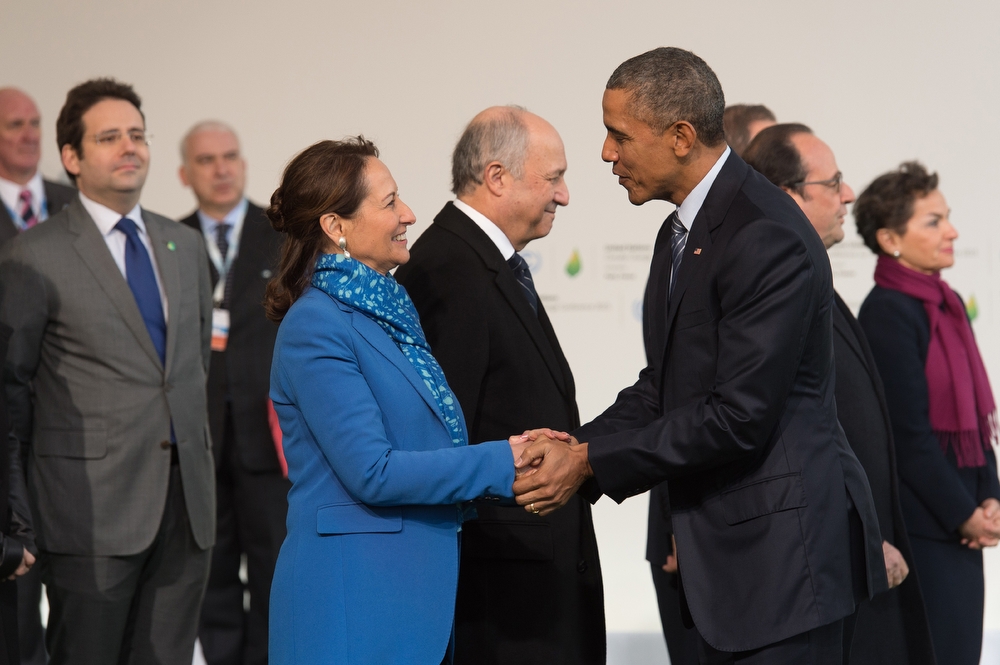
Hundreds of political officials, government representatives and climate experts are in Paris debating how to reduce greenhouse emissions worldwide. The circulating rhetoric signals a common understanding amongst representatives that the mightiest nations must take charge on the matter, but developing countries also have a role to play. The current climate agreement being examined in these debates does not provide enough support for developing countries and expected efforts to reduce carbon emissions.
Read More: Climate change rhetoric problematic in face of catastrophic disaster
The climate talks, if managed properly, could result in a climate change agreement that supports both developed and developing countries in numerous ways. Throughout the initial draft of the agreement, parties realized the "importance of international cooperation and support for adaptation efforts and the importance of taking into account the needs of those developing countries that are particularly vulnerable, recognizing the particular vulnerabilities of LDCs (Least Developed Countries)."
The strategies suggested within this conference are lackluster — at best.
Despite the climate agreement's lack of support for developing nations, the U.S. and other developed countries would receive benefits in response to the further development and stabilization of those weaker countries.
The stabilization and strengthening of the developing countries would dramatically increase the number of global partners to import and export goods, services and jobs with. Stabilization effectively broadens our country's economic partners and weans us away from our dependence on other strong countries. Case in point the recent economic downturn of China that rocked the global marketplace.
Stable economies and governments would provide stronger international support for eliminating global threats, ISIS for example. Also, more stable countries could easily court heightened foreign investment as well as foster a more active domestic economic environment where entrepreneurship and innovation is possible. This is not to mention the positive effects more stable economies and governments would have on global poverty and hunger.
In the agreement, they discuss that more developed countries should "share information, best practices, experiences and lessons learned," but developed nations can go beyond that by sending experts in the fields of sustainability, city planning and engineering from universities around the world to support these countries. In addition to the intellectual investment in the LDCs, an economic package should be presented, outlining the benefits private companies could acquire by providing human and financial capital for the LDCs to create sustainable energy grids and so forth.
Furthermore, Article 9 of the Climate Agreement is weak because it does not include any transition period for developing countries to research and explore the most cost-effective and environmentally-beneficial routes to reducing greenhouse gasses. After the agreement is completed, the developed countries of the deal should not come to the LDCs demanding proof that greenhouse gasses have been reduced. Stipulations must be included that take into account the importance of research and slow but steady development of more environmentally friendly practices.
If this climate agreement implements laws that ban companies in these developing nations to suspend practices that are deemed "unsustainable," then that could result in unintended consequences resulting in the disenfranchisement of LDCs and repel them from continuing their involvement in reducing harmful emissions.
The Climate Agreement has the aptitude for successfully reducing carbon emissions worldwide over the coming decades. However, the developed nations involved must have patience with developing countries and implement a well orchestrated strategy that includes financial, intellectual and diplomatic support for countries worldwide to cultivate more sustainable economies and eventually save Earth.
Related Links:
Don't forget to worry about climate change
Using force against ISIS is necessary
Reach the columnist at Graham.Paul@asu.edu or follow @GrahamASUpress on Twitter.
Editor’s note: The opinions presented in this column are the author’s and do not imply any endorsement from The State Press or its editors.
Want to join the conversation? Send an email to opiniondesk.statepress@gmail.com. Keep letters under 300 words and be sure to include your university affiliation. Anonymity will not be granted.
Like The State Press on Facebook and follow @statepress on Twitter.