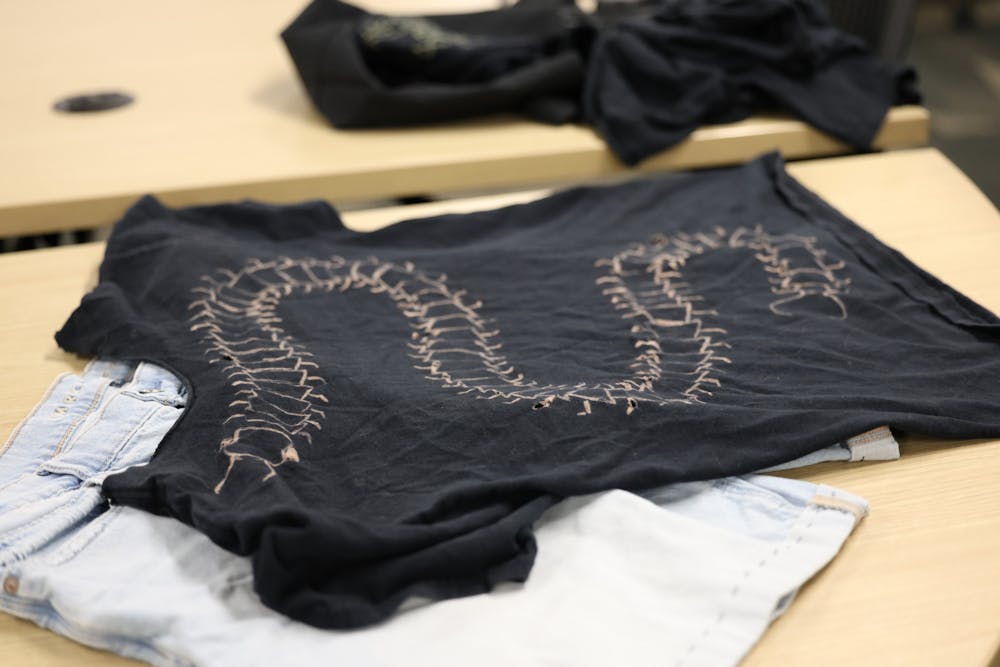
In the back of everyone’s closet lives a wasteland of long-unworn clothes — stained shirts, ripped jeans and scuffed shoes that will probably never see the light of day again.
A world of creative potential waits within these unwanted clothes through upcycling, the art of turning discarded materials into something new.
Hazal Gumus-Ciftci, an assistant professor at The Design School, has partnered with students to teach them the basic elements of upcycling, such as mending and repair.
Gumus founded the Mobile Fixer Studio, which launched recently on the Tempe campus and can be found in Hayden Library throughout October. Within the Mobile Fixer Studio, students bring their unworn clothes and learn how to fix them up.
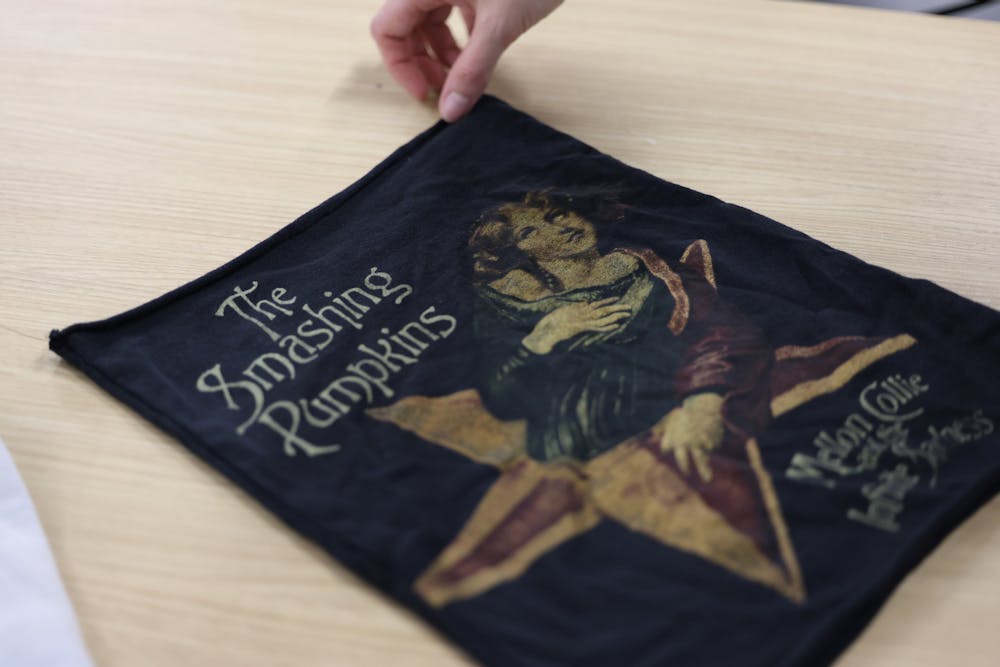
"People are saying that they're happy because they're saving money by repairing this pair of jeans or this t-shirt, because they don't have to buy a new one," Gumus said.
Students walk in, looking to save a few bucks and recover a beloved shirt, and they leave with the ability to repair their own clothes.
A 2024 study from the National Institutes of Health reported that a sample of 300 individuals said they, on average, engage in upcycling every six months. They reported barriers such as "lack of skills" as a reason for not engaging consistently in the practice.
Gumus’ mission with the Mobile Fixer Studio is to spread awareness about the dangers of fast fashion and teach students to be self-sufficient. She also said there is a need for University students to learn because they may not have the skills to repair items that are broken or the time while adjusting to college life.
READ MORE: Fashion's dirty secret: Cheap clothing and its towering environmental cost
Alongside the ecological benefits, the ability to upcycle opens a whole new door into personal style that isn’t possible through everyday shopping, Gumus said.
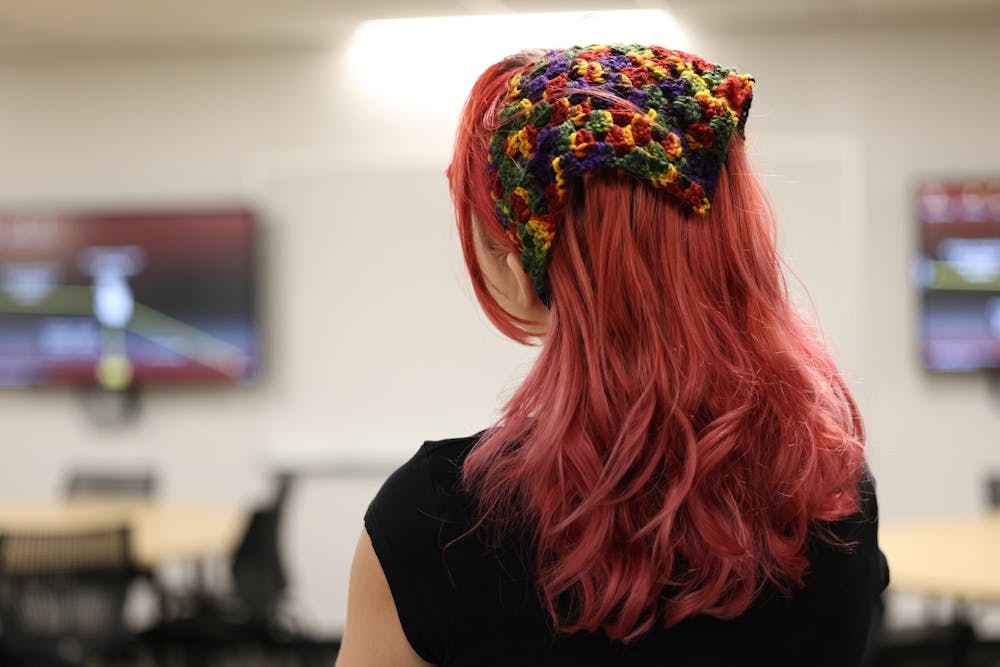
"There's that connection between creativity and repair and how people get closer to their items," Gumus said. "It's not just a piece of textile that they paid $5 for, but it's something that they invested time (into)."
Cleophace Ashinda, a freshman studying English, said he attended the studio with no prior experience in fashion. He left with a t-shirt imprinted with the African continent, an homage to his heritage, made entirely by him.
"I want to represent my culture," Ashinda said. "It allows me to have a voice at ASU."
Pepper Dikeman-Suerken, a sophomore studying civil engineering, said their upcycling journey started as repairs, which later developed prominently into their wardrobe and their friends' clothes.
They said their designs range from very complex to something achievable with some scissors and a dream, tailoring their clothes to their tastes.
"At the end of the day, you aren't made to fit clothes," Dikeman-Suerken said. "Clothes are made to fit you."
While upcycling may seem daunting at first, all it really takes is some interest and a willingness to try, they said.
"You can find out how to do anything, even if you're not interested in learning how to sew," Dikeman-Suerken said. "If a frat guy can cut the sleeves off of his shirt, so can you,"
Sofia Lucatello, a freshman studying fashion design, said that upcycling has always been a part of her life. From a young age, she knew how to sew, and those skills transferred to her experience studying fashion in high school and college.
She also said that if there's clothing that may not fit, she will always attempt to upcycle it instead of throwing it away.
Upcycling can be an important part in Gen Z’s battle against consumerism, Lucatello said.
"Due to fast fashion and mainstream social media, people have lost their personal sense of style," Lucatello said. "They're just following weekly trends that are happening."
READ MORE: From classroom to catwalk: How ASU is redesigning fashion's impact on the planet
She said that her generation needs to set an "example for the future" when it comes to the fashion industry.
Receiving compliments on items that are handmade is Lucatello’s favorite part about upcycling. She also said that throwing clothes away should be a last resort because there are endless possibilities.
"If you have a piece of clothing in your wardrobe that doesn't fit, or you don't like the style of it ... look at it twice and think how you would be able to fix it or alter it to fit you," Lucatello said.
Edited by Kasturi Tale, George Headley and Ellis Preston.
Reach the reporter at ajanusee@asu.edu and follow @lexijanusee on X.
Like The State Press on Facebook and follow @statepress on X.
Lexi Janusee is a senior reporter at The State Press. She is a sophomore studying Journalism with a minor in Theatre. This is her third semester with The State Press, working previously as a full-time Echo reporter.