Music blares, lights flash and hundreds of college students wait in line to enter busy bars in Old Town Scottsdale and Tempe's Mill Avenue — a typical weekend for many ASU students.
However, one police stop for an alcohol-related offense could mean the difference between an educational class and a criminal charge, depending on which police department is involved.
Although the ASU, Tempe and Scottsdale police departments each handle cases of underage drinking, driving under the influence and fake IDs, their approaches differ.
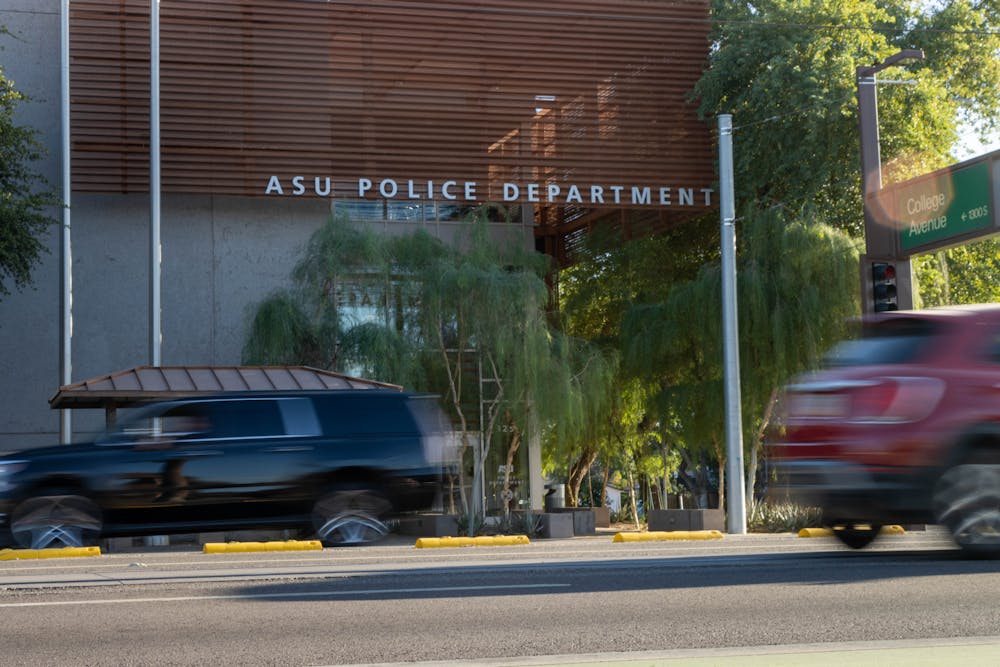
Amanda O'Halloran, a spokesperson for ASU PD, said in a written statement that the department typically refers underage students with a first-time alcohol violation to the Brief Alcohol Screening and Intervention of College Students program.
"BASICS is an evidence-based, educational approach designed to address problematic alcohol use," O'Halloran said. "This program is available only to first-time offenders and focuses on helping students make healthier choices."
READ MORE: Getting back to BASICS: New program teaches students to make better alcohol-related decisions
O'Halloran said ASU PD's goal is to see students succeed.
She also said outcomes vary by violation for students 21 or older, and, in some cases, the Student Services Manual may be applied rather than criminal law.
"The goal is to provide students with the education and tools necessary to change behaviors and reduce repeat offenses," O'Halloran said.
Although the University's approach may be less severe than that of city police like Scottsdale or Tempe — which do not have the BASICS program — an ASU PD violation still carries consequences, even if they aren't always criminal.
If a student is arrested, a key difference between ASU police and city police is the impact on a student's academic future, Jonathan Goebel, a local criminal defense attorney, said in a written statement.
"Where it differs is ASU PD Officers will report the arrest to the ASU Dean of Students which creates problems for the student with the University," Goebel said. "Scottsdale PD have no obligation to report anything to the Dean and usually won't."
Just a few miles north of the University's Tempe campus, Scottsdale police take over with a stricter, enforcement-heavy approach, without exceptions for students.
Aaron Bolin, a spokesperson for Scottsdale PD, said in a written statement that the department works closely with bar staff in the Old Town Entertainment District and has numerous officers prepared for nightlife crowds.
"We have great working relationships with our bars and nightclubs in Old Town," Bolin said. "We have Old Town staffed with numerous officers, especially on the weekend nights."
Depending on the circumstances, enforcement can range from a citation to an arrest with potential jail time.
When Scottsdale police encounter an underage drinker, Bolin said they prioritize the safety of the individual first and then check for age verification. He also said the department prefers "cite-and-release," but ultimately the result of the case is based on the situation. Depending on the fake ID, charges can include theft, identify theft and forgery, Bolin said.
Tempe PD, while operating near the University's largest campus, retains a similar approach to underage drinking.
In April, Tempe PD conducted a joint underage drinking bust with the Arizona Department of Liquor Licenses and Control at Tempe Tavern, a popular bar for University students just a few miles from campus.
READ MORE: Police raid Tempe Tavern, 173 individuals apprehended
According to a DLLC press release, the raid resulted in 173 arrests tied to underage drinking and possession of fake IDs. Of the 173 apprehended, 165 people were cited and released, while eight were booked into Tempe City Jail.
The raid was organized after multiple complaints to Tempe PD regarding underage individuals gaining entry into a licensed liquor establishment.
However, there is some relief for those facing charges in Scottsdale, Goebel said. Since January 2023, state law allows many misdemeanors to be sealed after two or three years, including alcohol-related offenses such as DUIs.
The state law can assist in lessening the long-term effects of misdemeanors, Goebel said.
DLLC Investigations Lt. Luis Samudio said in a written statement that the department has received grants from state authorities, such as one from the Arizona Governor's Office of Highway Safety. These grants are used to support underage drinking prevention efforts through enforcement and educational outreach.
Samudio said funding is used statewide, but the department works with local agencies to strengthen enforcement efforts.
"The GOHS grant is specifically allocated for increased enforcement, primarily covering overtime costs, and for the acquisition of technology and equipment to support these efforts," Samudio said.
A second grant from the DUI Abatement Council will support the enhancement of field operations and educational outreach initiatives, Samudio said.
Bolin said that the ideal situation is one in which police do not need to intervene to enforce state liquor laws at all.
"Prevention would be the goal, and we would prefer that those under 21 would make the responsible choice to not drink alcohol or use fake IDs," Bolin said. "It would be safer and keep them from having any legal consequences."
Edited by Carsten Oyer, George Headley, Sophia Braccio and Pippa Fung.
Reach the reporter at kaelias@asu.edu.
Like The State Press on Facebook and follow @statepress on X.