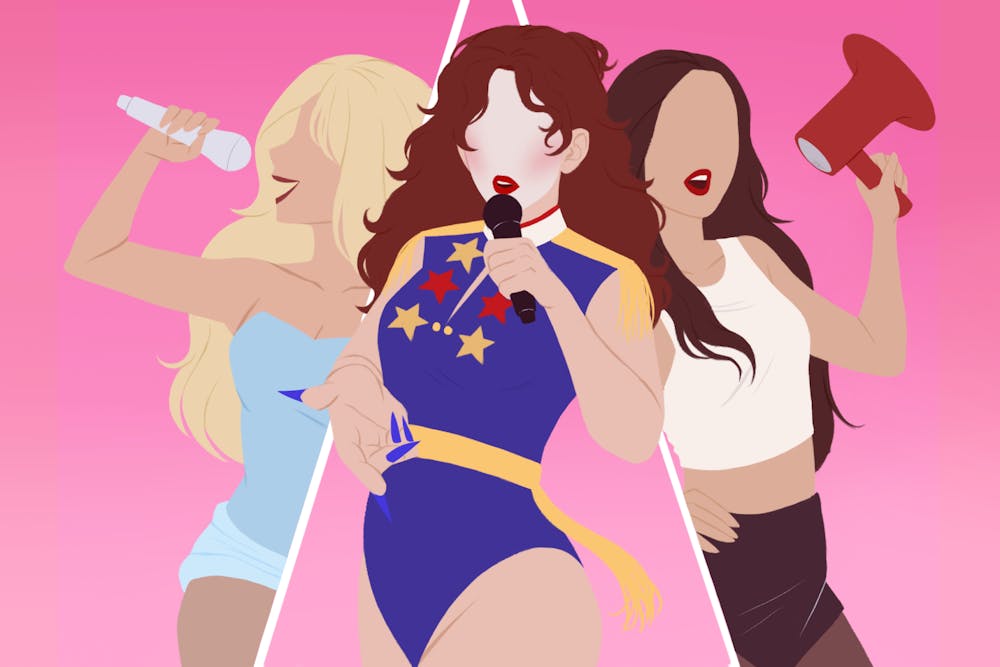
You hear them everywhere. Songs like "Manchild" by Sabrina Carpenter, "The Fate of Ophelia" by Taylor Swift and "The Subway" by Chappell Roan are all over the radio and continue to top charts.
Today's pop music has taken a turn from past decades. Female artists dominate the board with songs that speak to embracing sexuality, particularly for women.
Bree Hill, a first-year student studying film and media production, sees a lot of "encouragement of women to show off who they are and that they are full sexual beings."
In a society that's riddled with standards that often put down feminist thinking, these songs have ways to speak to millions of listeners while challenging those standards.
"A lot of artists like Chappell Roan are pushing men out of the picture, because that's what she stands for," said Camryn Poteet, a first-year student studying film and media production.
This reduction of misogyny may allow women to feel more vulnerable and grow from supporting each other.
Songs like this go a long way in opening conversations up to more controversial topics that were not talked about in the past. Talking about sex is empowering, and this type of music opens young adults to being more comfortable discussing it.
"It's really bold of these artists to take this stance because of the way that people perceive it," Hill said. "I like this new wave."
Some of these lyric choices can also reinforce stereotypes. For example, Carpenter shares some references to being a housewife, being married and settling down in her song "Busy Woman."
"I think the messages that they're sharing are fine because it's personal experiences," said Ryan Peterson, a third-year student studying business data analytics and accountancy.
As is with any big music trend, there are plenty of people against this new wave. Critics often point to how sexually explicit these songs are, and how they aren't good for teenagers to listen to. This reaction often differs from these artists' male counterparts.
"People still are more conservative about women's sex life, no matter how much men talk about (their sex life)," Poteet said.
Peterson brought up another trend that's happening inside the music industry called the TikTok-ification of music. This is the idea that songs are being tailored to have catchy choruses, which shapes artists' songwriting.
"There's less emphasis on quality songs and (more on) just having one pop-off moment for TikTok, which has also led to a decrease in songs having bridges; they just do the chorus as many times as they possibly can," Peterson said.
As music trends continue to evolve, these new songs embracing women and sexuality also include queerness. A lot of these songs include lesbian empowerment, which Poteet said has helped people to support the LGBTQ+ community.
In today's music scene, trends tend to come and go, and regardless of your taste in music, the lyrics you listen to may just open your mind.
"Don't judge (artists) without giving them a try," Hill said. "People tend to judge immediately. Just listen to everything and everyone."
Edited by Kasturi Tale, Henry Smardo, Tiya Talwar and Pippa Fung.
Reach the reporter at gachatht@asu.edu.
Like The State Press on Facebook and follow @statepress on X.
Gokul Achaththekoot is a junior majoring in actuarial science at ASU. He is involved with on-campus sketch comedy, and enjoys learning more about the community and culture of ASU. This is his 5th semester at The State Press, having served on The Echo as a part-time reporter in all his semesters here.