The number of Indigenous students enrolling in postsecondary school is increasing. Even so, they remain one of the most underrepresented groups in higher education, according to the American Council on Education.
"They sometimes misrepresent, misquote and misplace how they talk about communities, and so there is sometimes this tribal community mistrust toward Western institutions," Jessica Solyom, a professor at the School of Social Transformation and affiliate faculty at the Center for Indian Education, said.
At ASU, Indigenous organizations give students the space to practice, share and uphold their culture and traditions, Solyom said.
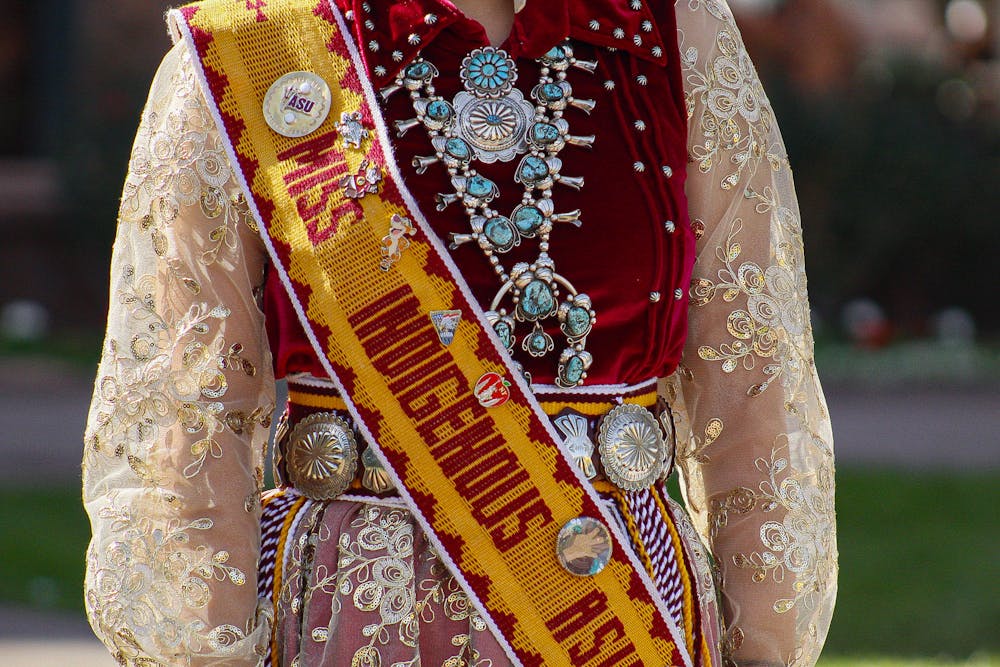
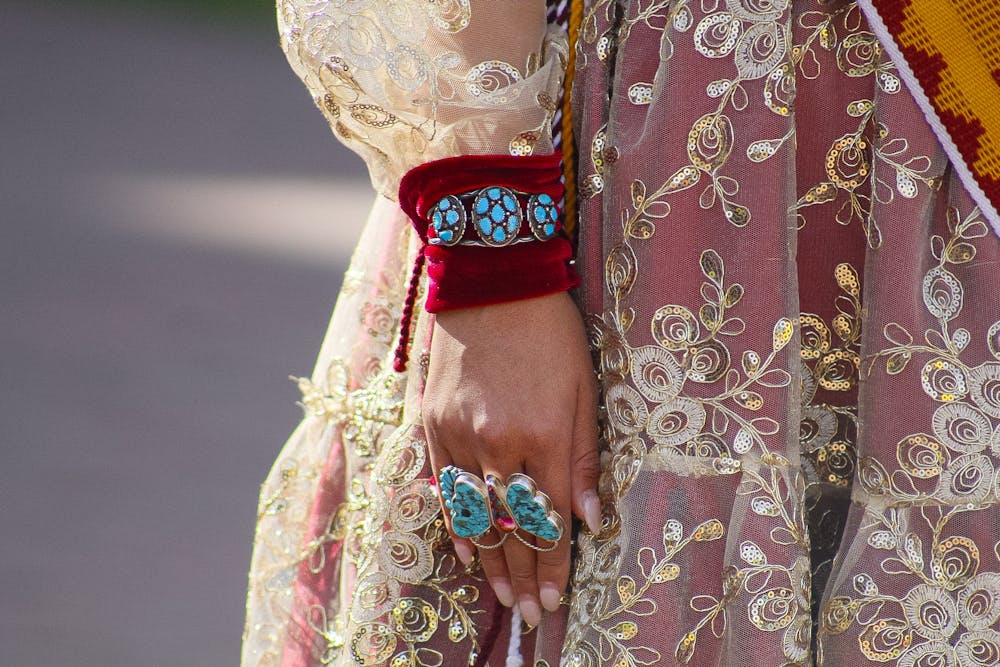
One of these programs is Ms. and Mr. Indigenous at ASU, a student-led organization focused on promoting leadership, cultural awareness and higher education at the University.
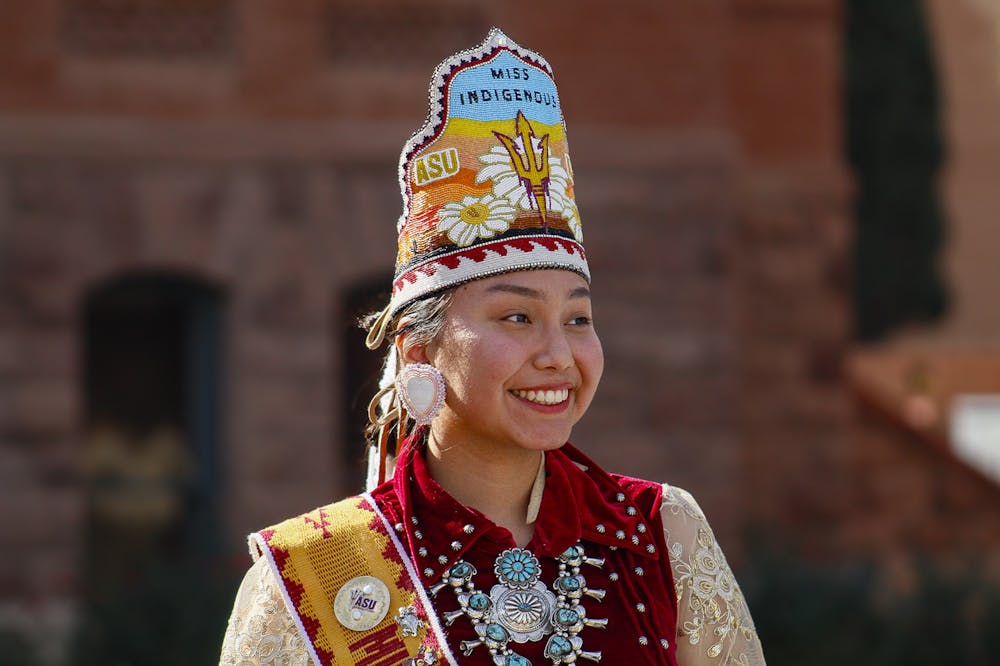
The MMIASU pageant takes place every year in April. The pageant coincides with Pow Wow at ASU that will be hosted at the Desert Financial Arena, Tonana Ben, the current title holder of Ms. Indigenous and a senior studying biological sciences, said.
READ MORE: Powwows at ASU: A living legacy of Indigenous culture
Ben said that during the pageant, students run for the title with a platform they want to promote throughout the year.
"My platform included being able to balance our cultural aspects in a Western world," Ben said. "Being able to have our traditional values that we as Indigenous people have but also being able to connect with the Western society, such as education or academia."
Solyom said the pageant should not be confused with typical beauty pageants like Miss Arizona and Miss America. The participating students have both a cultural and community responsibility to share what they are learning, she said.
Ben said she is incredibly honored and grateful to hold the Ms. Indigenous title this year.
"Within Indigenous communities, not only mine of the Navajo Nation, but also others, pageantry is something that's very big on reservations and within tribal communities," Ben said.
Outside of what they do on campus during the semester, MMIASU also works with tribal communities across Arizona on a yearly Tribal Nations Tour. On this tour, Ben said about 10 to 15 Indigenous students travel across Arizona, visiting schools in tribal communities.
"(We) show our representation and share our college experience of how we came to ASU, how we chose our major and answer any questions they have," Ben said.
The Alliance of Indigenous Peoples is a student-led coalition that aims to represent and unify all self-identifying Indigenous voices on campus.
The coalition hosts different academic, social, cultural and professional development events, Jenna Rios, the president of AIP and a senior studying public service and public policy, said.
AIP works with 12 different member organizations on campus, including the Native American Business Organization and the American Indian Science and Engineering Society. Rios said AIP serves as a space for Indigenous students on campus to unite and work together.
Rios said she originally applied to be an officer for AIP during her freshman year and, through her position, found other Native spaces and students on campus.
"It's been super helpful to my social life, my personal life, my cultural and spiritual experiences here on campus," Rios said.
On campus, MMIASU has held events including its Diné Bizaad bingo night, where numbers and colors were read in Navajo language, Ben said. She also held a workshop event teaching students how to make traditional ribbon skirts.
"Those are some ways that we do outreach out to local communities but also being able to bring that culture to ASU campus and being able to educate others on our culture," Ben said.
AIP recently held its own National Native American Heritage Month event, celebrating Cal Seciwa, the founder of what is now the American Indian Student Support Services. The event included a blessing and song from Ms. and Mr. Indigenous, Rios said.
"That's really important for our events, as well as students, to be more in touch with their culture and spirituality, and give them a moment to appreciate why we're here and what we're doing," Rios said.
The coalition holds an end-of-the-year gala, where they invite dancers from nearby communities like Salt River Pima-Maricopa Indian Community.
Dancers who take part in the event are contracted and reimbursed for their time, Sophia Chase, the treasurer at AIP and a junior studying business, said.
"We're trying to give back to them as much as they're giving back to us culturally," Chase said.
Both AIP and MMIASU provide spaces for Indigenous students to celebrate their culture together, while also organizing events to spread awareness of their history.
"To even be in a space with other native people, even if you're not from the same space or from the same community, just being in those spaces together is really meaningful," Rios said.
Edited by Natalia Rodriguez, George Headley, Tiya Talwar and Ellis Preston.
Reach the reporter at dbell39@asu.edu and follow @dhemibell on X.
Like The State Press on Facebook and follow @statepress on X.
Dhemi Bell is the editor for the Community and Culture desk. This is her third semester with The State Press, working previously as a part-time Community and Culture reporter.