The cold water rushed out of the faucet, sending the slightest shock through my waiting hands.
"Oh, it always seems like places like this are out of paper towels," a warm voice said from my right.
I look up for the first time since I entered the restroom and see a smiling, older woman with fading red hair and an orange blouse. I was caught off guard — nobody had ever spoken to me in the women's room before. My next words were timid, afraid of being perceived.
"I know," I said. "It feels like the least you could do."
This was, by anyone else's standards, a totally unremarkable interaction. However, for me, a trans woman, it was the first time I was told I belonged in that space.
What it meant to me was "I'm Meadow, I'm a woman and this is my bathroom."
Sadly, these small moments of inclusion and belonging are under threat at college campuses across the country.
On Oct. 17, the Trump administration invited ASU to discuss its "Compact for Academic Excellence in Higher Education." Essentially, the compact offers schools preferential access to federal funding in exchange for acquiescing to several exclusionary demands against marginalized communities.
READ MORE: BREAKING: ASU 'engaged in dialogue' with White House amid higher education compact talks
Seven of the nine original schools that were given this offer have already rejected it, and the University seems poised to follow suit.
In a section, ironically titled "Student Equality," the compact asks schools to end any recognition of trans or gender expansive identity and bar us from using "single-sex spaces," such as our preferred restrooms or locker rooms.
However, even if the University refuses this compact, there is no reason to think the administration will stop there.
Over the summer, the Trump administration withheld $50 million in federal research grants in an effort to coerce Brown University to adopt parts of its radical agenda. One of the concessions in the agreement they reached was an end to recognition of trans identity in the University's athletic operations, and effectively barred trans students from using their preferred restrooms within sports facilities.
This was met with swift resistance by advocacy groups like the ACLU and GLAD LAW, but the damage had already been done.
Opposing transgender people's access to public restrooms has become a marquee issue for the anti-trans movement and the right wing at large. Despite constant fearmongering about supposed safety concerns, a 2018 study from Sexuality Research and Social Policy has demonstrated that allowing trans people to use their preferred bathroom does not have any effect on the number of criminal incidents in those spaces.
In fact, the opposite is true: This policy jeopardizes the safety, health and well-being of trans students.
According to a February 2025 brief by UCLA School of Law's Williams Institute, 9% of transgender women experienced verbal harassment in men's restrooms. 7% of transgender women had the same experience in women's restrooms.
In the 2022 U.S. Transgender Survey, 6% of respondents reported being verbally harassed, physically attacked or experienced unwelcome sexual contact when accessing or using a restroom in the last year.
The mental toll these policies take can be devastating. In 2024, a study in the International Journal of Transgender Health surveyed over 12,000 transgender and non-binary Americans between the ages of 13 and 24. The survey covered disparities in health correlated to negative experiences associated with their identity.
"Transgender and nonbinary young people who reported sometimes or always avoiding public bathrooms reported significantly higher odds of all assessed mental health indicators," the study read. "Notably, those who reported always or sometimes avoiding public bathrooms had almost twice the odds of attempting suicide in the past year ... compared to their transgender and nonbinary peers who never reported avoiding public bathrooms."
Another study in the Journal of Adolescent Health from 2021 discovered that, among trans youth who experienced bathroom discrimination, 60% seriously considered suicide, one in three had attempted in the past year and one in five had attempted more than once.
Being trans has never been easy. I, like so many of us, had a dark period where I dropped out of school and considered taking my own life. For my community, it is almost a daily occurrence to read about another kind, beautiful, young soul taken from us far too soon. Every single one of these deaths is preventable.
It is not an inherent trait of our identity that nearly half of trans youth have considered suicide in 2022, according to data from the Trevor Project. It is a direct consequence of transphobic rhetoric and policy. In fact, anti-trans laws and regulations have been demonstrated to increase the likelihood of suicide attempts among trans youth by up to 72%, according to Nature Human Behavior.
The last year has seen a dramatic curtailing of trans rights and freedoms, led by an administration that appears hellbent on defining us out of existence. Within this tempest, the University has been one of the few places I have felt safe, seen and understood in the last year. Bending to these callous, thoughtless demands would destroy that space for all of us.
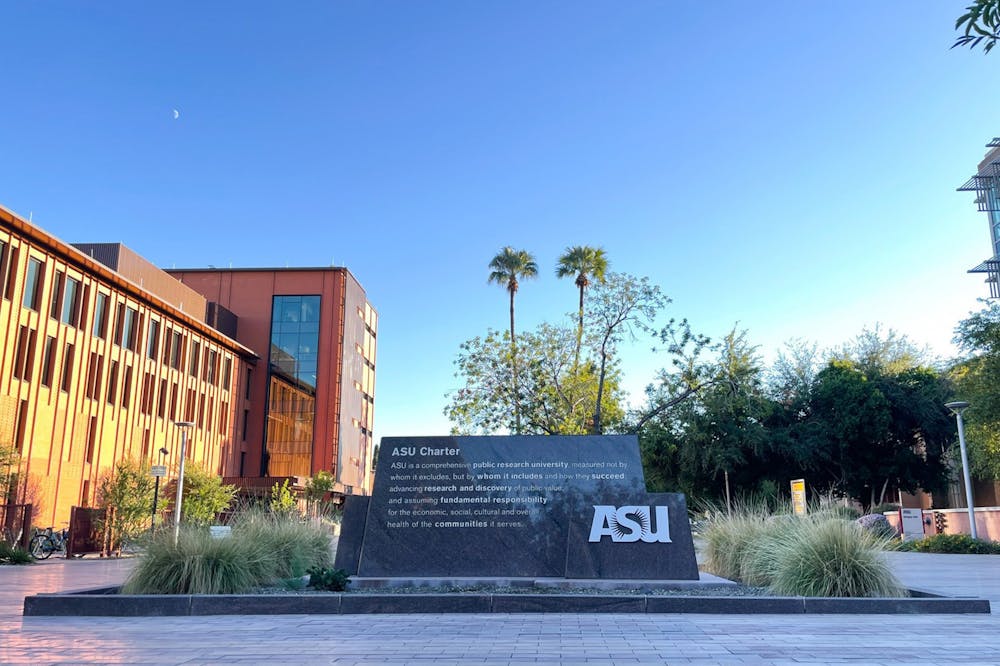
The University's charter reminds us that "ASU is a comprehensive public research university, measured not by whom it excludes, but by whom it includes and how they succeed."
Trump's compact serves as a chilling reminder that these basic values of respect and inclusion for all are not a guarantee.
It is the University's responsibility to continue the fight for these promises in the face of mounting pressure against my community and so many others.
If you or someone you know is struggling with mental health, visit 988lifeline.org or text 988 for help. For campus resources available 24/7, visit https://eoss.asu.edu/counseling. ASU's EMPACT line is 480-921-1006 and is available 24/7.
The Trevor Project's website offers many resources to provide knowledge on topics surrounding sexuality.
TrevorLifeline: 1-866-488-7386
Editor's note: The opinions presented in this letter are the author's and do not imply any endorsement from The State Press or its editors.
This content was contributed by authors who do not work at The State Press. If you are a community member who would also like to contribute, please email execed.statepress@gmail.com.
Edited by George Headley, Senna James, Tiya Talwar, Katrina Michalak and Ellis Preston.
Like The State Press on Facebook and follow @statepress on X.