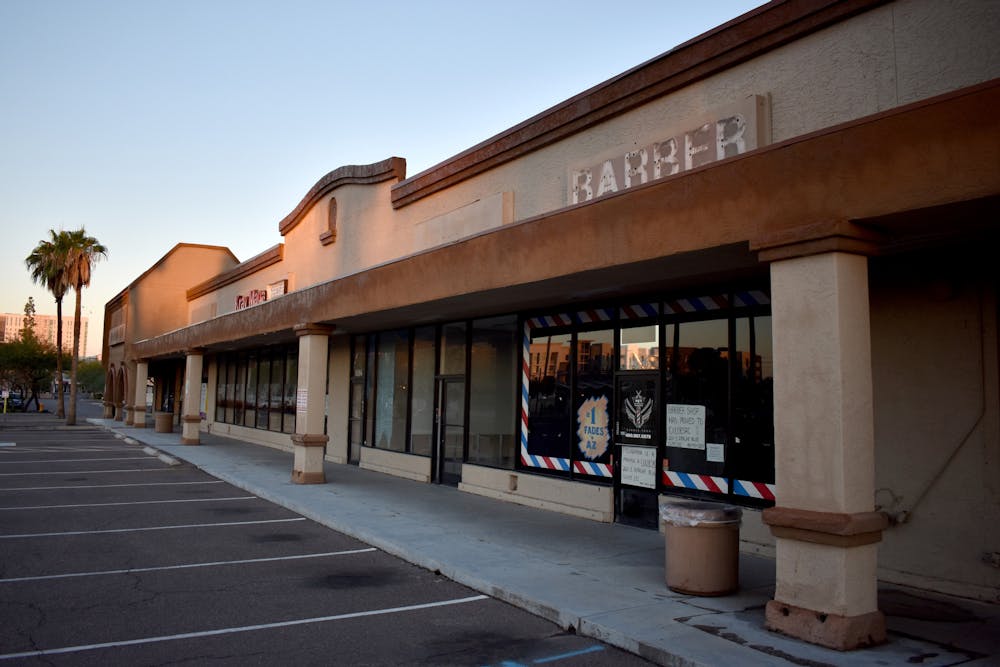
The Tempe City Council unanimously approved the construction of an affordable mixed-use housing development near the Dorsey Lane and Apache Boulevard Valley Metro light rail station at a Nov. 13 meeting.
The development, which will be located less than a mile from ASU's Tempe campus, is set to replace an abandoned Food City that has sat vacant for decades and has frequently drawn criminal activity and limited pedestrian access.
The development will be led by Dorsey Development Partners in partnership with Palindrome and will include affordable housing and shopping options.
Josh Rutherford, the Tempe economic development special project administrator, said the project will include 400 housing units, 360 of which are slated to be affordable.
"(The development) meets the city's strategic goal of providing more affordable housing that's desperately needed in the region," Rutherford said.
READ MORE: Tempe residents share thoughts on Danelle Project redevelopment
Rutherford said planners chose the location for its proximity to the transit corridor near the light rail station, which is especially useful for affordable housing.
"This is for the community," Rutherford said. "This is for people who really need affordable places to live."
Rutherford said the city has received a "tremendous amount of support" from the community for this new development, and residents have been aware of the project for as long as the city has owned the vacant property.
The project faced challenges after the first developer selected could not come to terms with the city, forcing planners to issue a new request for proposal, Rutherford said.
"There's a tremendous amount of activity behind the scenes to get where we've gotten today, and there's still some more work to be done to actually put a shovel in the ground," Rutherford said.
Jack Woodburn, a recent ASU graduate and a resident living north of the Dorsey and Apache light rail station, attended a community meeting related to the project and said he wants to see the space redeveloped to replace the abandoned Food City.
Woodburn said the lot is poorly lit and neglected. People taking advantage of the area have stolen from his own property, he said.
"I want a grocery store nearby," Woodburn said. "It's just better overall. It's better for the people who live there. It's better for the city."
Woodburn said the development will improve "staying power" in the area, bringing the neighborhood added community.
READ MORE: Tempe neighborhoods express concerns over ASU's expanding student population
The plan shows that city officials are working to improve residents' housing opportunities and overall lives, Woodburn said.
During the Nov. 13 meeting, Charles Buss, a Tempe resident living in the University Heights neighborhood, raised concerns that the grocery store would be too small to ensure affordable prices. If the store is only built according to the minimum of 10,000 square feet, Buss said it could be more of a convenience store.
"I have yet to find a grocer that can operate in that small of a space," Buss said.
He urged the City Council to raise the minimum number of square feet for the grocery store to 20,000 to ensure prices are accessible for the residents living in the affordable units.
Tempe Mayor Corey Woods emphasized during the meeting that it is a minimum of 10,000 square feet, and the developer can accommodate building a larger space if needed.
The development will keep residents from spending the majority of their income on housing costs, Rutherford said. The added spending in other areas would benefit the city's economy.
Rutherford said more projects are planned for the area.
"Our housing department has several properties along the Apache corridor," Rutherford said. "This isn't the first, and it's certainly not the last."
Edited by Carsten Oyer, Senna James and Ellis Preston.
Reach the reporter at apruiz@asu.edu and follow @andiruiz2405 on X.
Like The State Press on Facebook and follow @statepress on X.
Andi Ruiz is a politics editor at The State Press. She was formerly a lead politics reporter and anchor at The Cut Network. This is her second semester at The State Press and is committed to bringing credible and accurate information to the ASU community.