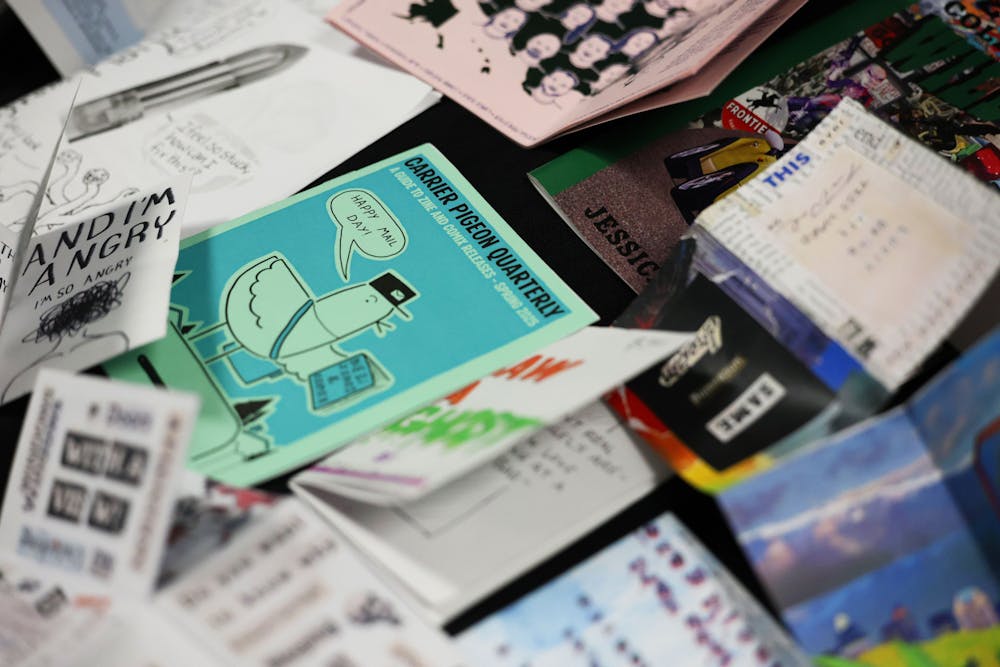
Tucked into a corner of Hayden Library sits a collection of tiny, unassuming booklets.
Self-published and self-distributed, they're bursting full of art, information and stories. Flipping through the small pages, they may seem delicate, but these pamphlets are as punk as can be — you're looking at a zine.
Pronounced "zeen", the word is shortened from fanzine. The play on words is a combination of fan and magazine. They originated as a creative outlet, popularized during the punk scene of the '70s as a form of political protest.
In the modern world, zines can be used for virtually anything. The art form encompasses any sort of self-publication one can dream of. In fact, many zines are meant to push the boundaries of societal taboos.
"When it's a copy that can be distributed, you can do whatever you want," Heather Green, a professor at the School of Art, said. "There's a lot of freedom and liberation in that."
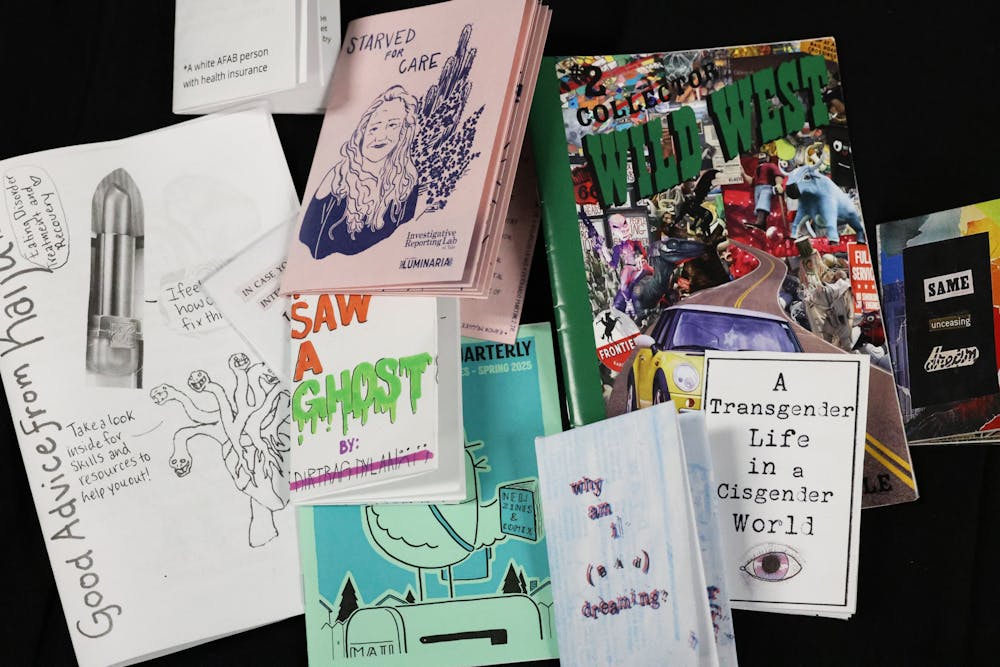
Green teaches a class about the history and process of zine making. She encourages Sun Devils to pick up the pen and express themselves by addressing problems in their communities.
READ MORE: 'Voices of ASU' zine chronicles students' stories of ASU Counseling Services
Due to their bite-size, zines are easily distributed and can be found anywhere: being passed out by clubs, stapled to bulletin boards or even used as decoration.
"I was introduced to zines when I was a teenager in the early '80s during the punk scene, and so I've kind of been familiar with them for most of my life," Green said. "It seemed like a really fresh, more immediate way of getting the word out there."
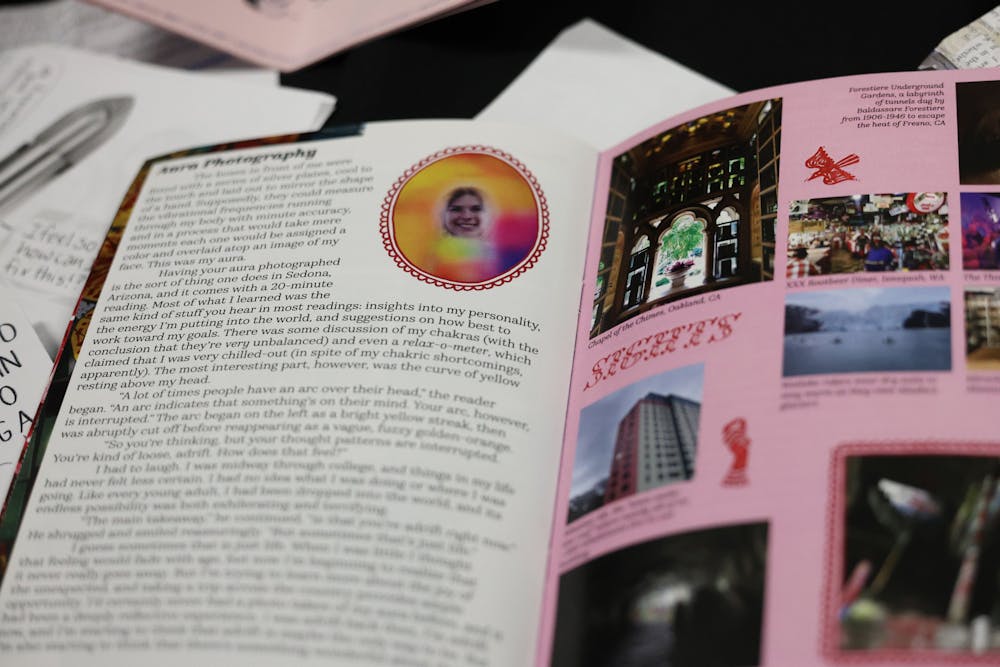
Green said some students write their own poetry, create their own imagery or utilize collages in their zines. Others are more information-based instead of artistic.
Planned Parenthood Generation Action at ASU has been using the art form to connect with other students and share important information about access, healthcare and bodily autonomy.
"We've used zines to educate people on their bodies," said Leigh Alcantara, the co-vice president of social media and public relations at PPGEN and a sophomore studying biomedical engineering.
Alcantara said that some zines they distribute provide information on uterus care, abortion pills, birth control and starting hormone replacement therapy. PPGEN also uses zines to let students know when and where its events are.
When PPGEN does on-campus deliveries for sexual health products students need, it provides zines about the products being received. Alcantara said this is a way for people to hear about their resources while eliminating inconvenience.
Zines are an underground way to spread information, which is valuable for students who may already be overwhelmed by taboo topics.
Alcantara said most students are scared to talk to their peers about reproductive and queer rights, but the internet isn't quite personal enough to provide reassurance.
"A lot of people are terrified to ask for help, and we do everything we can to push back against that," Alcantara said.
Zines are able to bridge the gap between human connection and information sharing. PPGEN utilizes them mostly for advocacy.
"You see a lot of zines in the public sphere where it's mostly political based," Christopher Tithof, an ASU alumnus, said. "But it's not just that. It can be so many things."
Tithof took art classes for a semester to reconnect with his creativity after feeling disconnected from his physics major. As a result, he found out about zines through a printing class.
The artform quickly captured Tithof, who found his niche in the artistic expression sphere. He said that zines were so impactful to him because they're versatile.
"Students could express their own viewpoints in different ways that we hadn't seen previously," Tithof said.
READ MORE: Students share their stories through zines, language and art in new exhibit
There isn't any "right" or "wrong" way to make a zine; they can take any form the author chooses.
"A huge thing with the zines is that these are first hand accounts of how these experiences work," Alcantara said. "We also want to make sure that ... from the student to student level, the information tracks."
Alcantara said it's important for students to find ways to distribute their information because it could save a life. They said that knowing about the resources around campus keeps Sun Devils safe and connected.
Green said that making zines is about being a skilled communicator rather than being a highly skilled artist.
"If you want your voice to be heard or you want to be expressive and someone else to see it, (zines are) one of the easiest ways to get out there," Tithof said.
Edited by Kasturi Tale, Senna James, Sophia Braccio and Pippa Fung.
Reach the reporter at ajanusee@asu.edu and follow @lexijanusee on X.
Like The State Press on Facebook and follow @statepress on X.
Lexi Janusee is a senior reporter at The State Press. She is a sophomore studying Journalism with a minor in Theatre. This is her third semester with The State Press, working previously as a full-time Echo reporter.