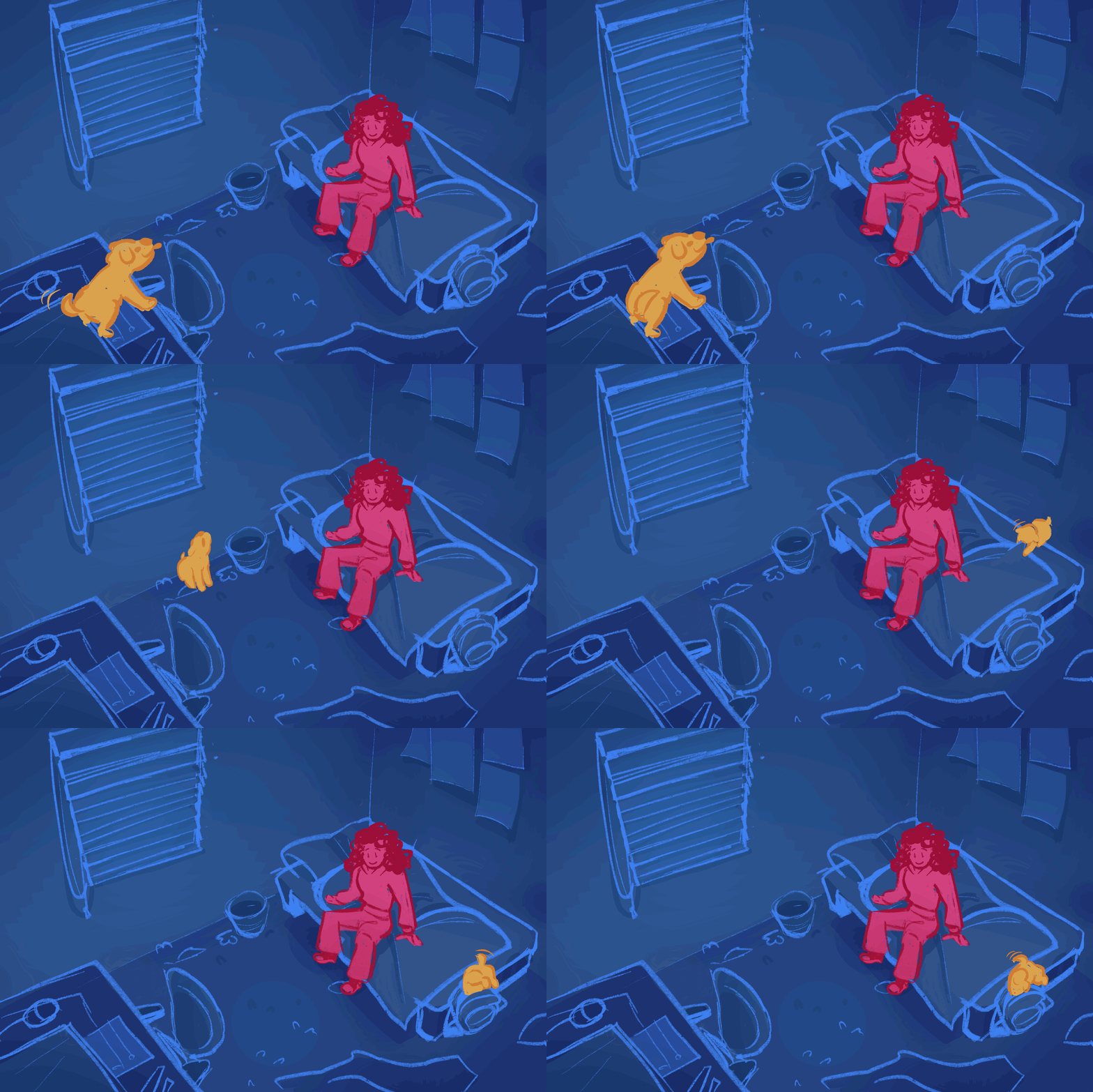
After long, stressful days of classes and coursework, many ASU students return to their dorms to recharge with the support of their roommate, but for some Sun Devils, that roommate is a furry friend.
According to ASU Housing Policies, certified emotional support animals are permitted for dorm residents with approved medical documentation. To get an animal registered, students can contact the Student Accessibility and Inclusive Learning Services office to fill out paperwork to request the accommodation.
Miguel Soto, a junior studying mechanical engineering who lives in University Towers with a cat named Venus, said SAILS required a letter from a psychiatrist who advocated for the need for an ESA before the University could approve Venus' residency. Soto also said the University requires ESA paperwork to be renewed every semester, including information about the pet, a picture and a designated backup caretaker for the animal.
Students each have unique reasons to apply for an ESA. Common reasons for ESA registration include anxiety, depression or other conditions. Soto said an important reason for Venus to live on campus is that Venus' presence is comforting and decreases stress.
"It's really nice when I have a long day and a stressful day that I can just come home and then have a companion with me," Soto said. "She's very energetic, so it's nice to be able to play with her and de-stress by just being with her."
College can be demanding and overwhelming for some students. ESAs can help provide comfort to students and also be a reason to start the day. Max Snyders, a freshman studying popular music who lives in Gordon Commons with a cat named Mazda, said the responsibility he feels to take care of Mazda helps give structure and purpose to his days.
"Having her gives me a much easier way to get used to everything," Snyders said. "Now, I have a way to plan out my day: I feed her, I go to my classes, and then I have a good schedule."
Additionally, ESAs can help spark connections between the students with the animals and students who do not have pets, or are missing their animals from home. Snyder said he has been able to engage with more Sun Devils because they want to learn more about Mazda.
"They just want to know about my cat," Snyder said. "Especially if I was home for the weekend and I'm bringing her back or something, they'll see her, and we will be in the elevator being stopped, and everyone just wants to ask me about her."
READ MORE: Creating campus connections: A guide to meeting new people at ASU
Caring for a pet can require extra energy and patience from students, and those with ESAs tend to have to set aside extra time to take care of their animal and the animal's needs.
Eli Quimby, a freshman studying fashion design who lives in Gordon Commons with a Siberian husky named Spartan, said she walks her dog three times a day. Quimby added that she walks Spartan when she wakes up, and at around 4 p.m. and 8 p.m. daily.
"You have to take that into account, 'When am I gonna be able to walk him? What time is good?'" Quimby said. "The hardest part is just making sure you keep that consistent schedule because that's what he needs."
The attention each pet requires can help students feel grounded in their routines, despite the hustle and bustle of the college environment around them. Pets face the new college experience just as much as the student does; Quimby said support is what helps her get through the day.
"There's always that reminder of home, and you'll feel it knowing that they're there with you," Quimby said. "You're not alone. Someone came with you, even if it's an animal."
Edited by Kate Gore, Senna James and Ellis Preston.
Reach the reporter at galawre3@asu.edu.
Like The State Press on Facebook and follow @statepress on X.
Grace Lawrence is the lead reporter for the community and culture desk at The State Press. This is her 2nd semester working with The State Press.