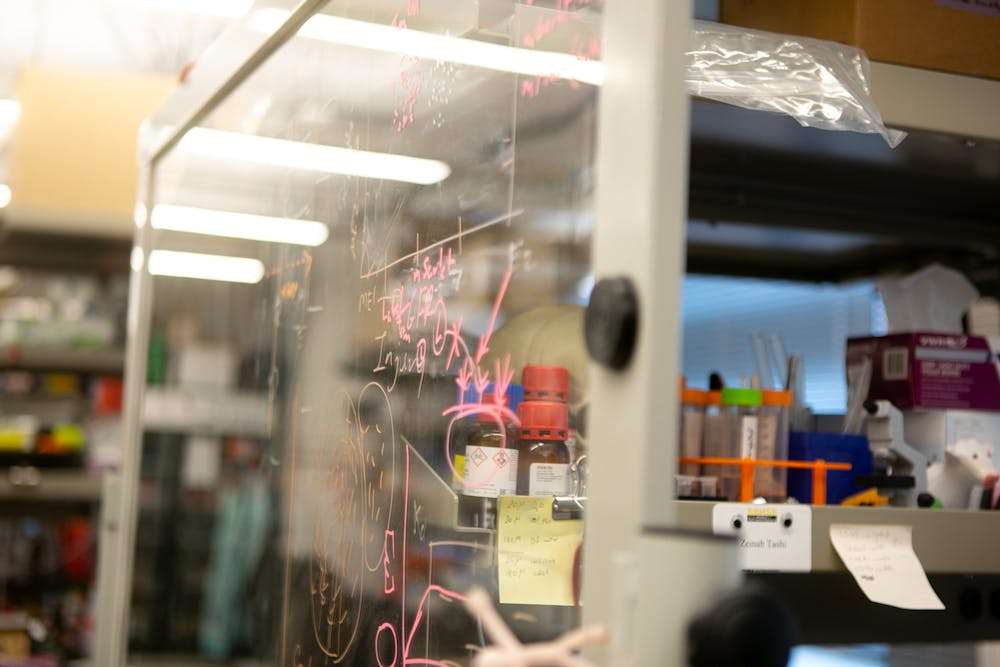
Last year, the 2025 ASU iGEM team competed at the iGEM Grand Jamboree, an international synthetic biology competition in France, and won gold. In 2026, the team has even bigger goals in mind.
The iGEM Foundation has hosted the competition for 23 years and attracts over 400 teams each year, according to its website. Each year, the teams work to develop synthetic biology tools with real-world applications.
Nicole Salazar, a leader of the 2025 iGEM team and a recent ASU alumna, said a key factor in iGEM projects is the emphasis on recognizing the product's human impact and uses.
Over the course of a year, the team developed its UNIglobin project, which focused on creating a portable blood conversion kit.
"(UNIglobin) was essentially to create a project that addresses the global blood shortage," she said. "We wanted to find a system that we can convert any type of blood to the universal blood donor."
The team spent the spring semester planning the year's project. Salazar said a key consideration in deciding the project's focus was input from team members, as student interest determines the project's course.
Salazar, who was the 2025 human practices lead, said an important consideration for the team is the potential applications of their projects. She said the team reached out to surgeons and clinicians for feedback on its product and advice on potential improvements.
"What makes iGEM and synthetic biology so unique is the human factor in realizing that, yes, we're doing all this amazing, amazing research, but we also have to think about how it impacts real people and the downstream applications," she said.
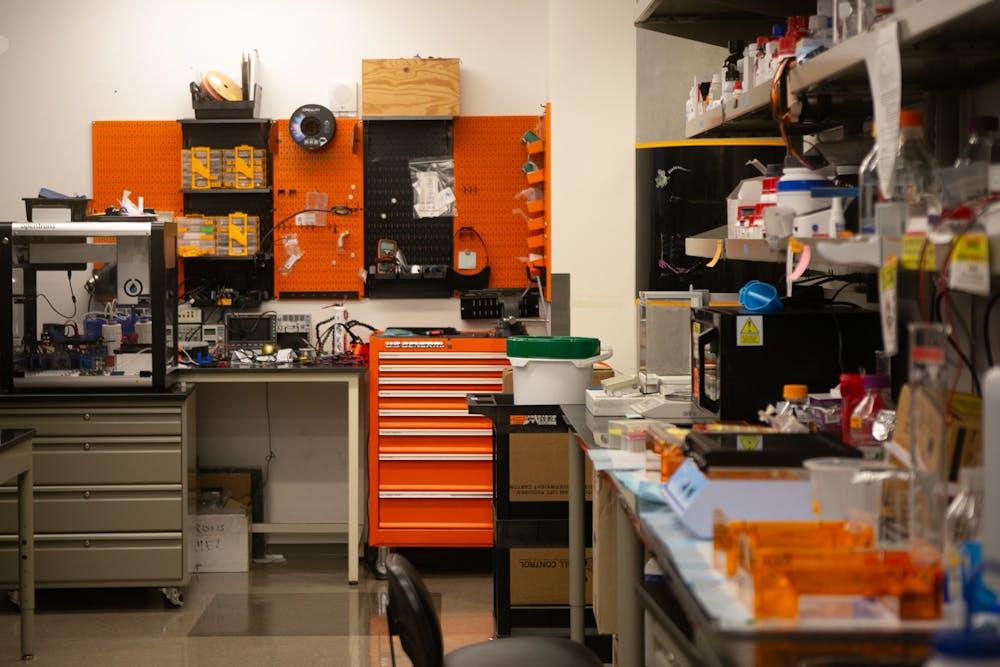
The culminating project the team created involved efforts from several departments, including human practices, wet and dry labs. Wet labs are laboratories where liquids and chemicals are tested and studied, while dry labs focus on computing and engineering research.
Michelle Kim, a junior studying computer science and the 2025 wet lab lead, said the lab mainly focused on enzymes that could help convert A, B and AB blood types into universally usable blood.
"These enzymes, we produced them in the lab, and we purified them and we tested all these out using our own assays," Kim said. "We ended up going all the way to testing them in pig's blood to see how effective these enzymes are at converting red blood cells."
Ryan Crane, a junior studying mechanical engineering and the 2025 hardware lead, said to utilize the product from the wet lab, the dry lab had two main tasks: first, to create an electronic sensor to detect the effectiveness of the enzymes from the wet lab, and second, to develop a filtration system for the different blood components that could be used without electricity.
"You're able to take, for example, an A blood individual or a B blood individual and take their blood and process that blood using our kit on site," Crane said. "Eventually, you're able to use that blood, it's type O, and transfuse it to any individual."
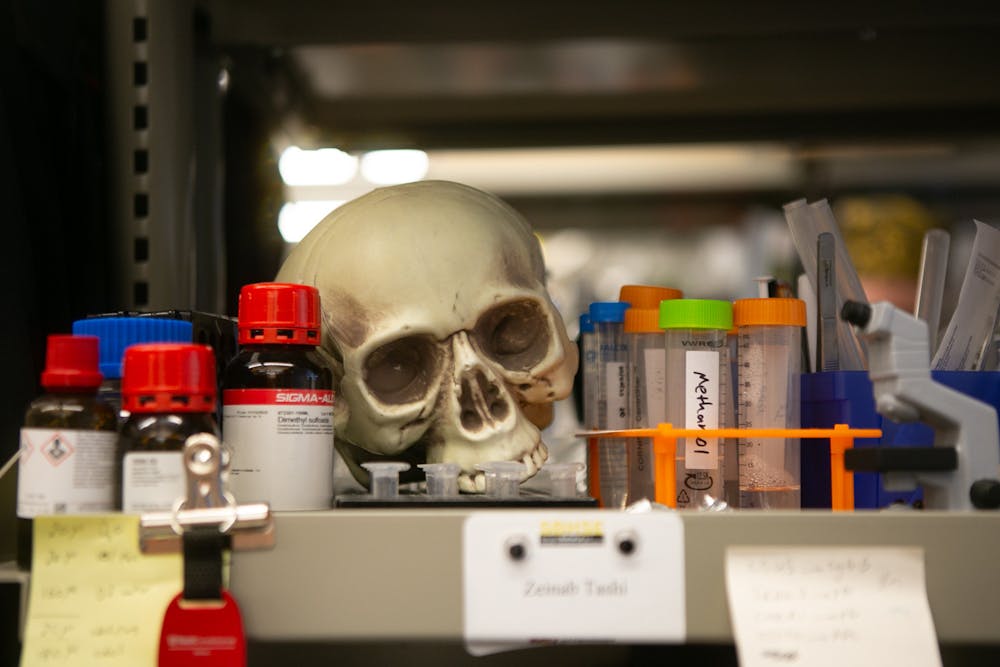
Five members of the 2025 iGEM team traveled to the Paris Convention Centre in October to showcase the finished project to judges and other teams.
Salazar said the team was happy to receive the gold but hoped to achieve even more next year.
"It ignited something," Salazar said. "We really want to achieve not only the gold, but more recognition with a special prize or a grand prize winner in the competition."
Benjamin Bartelle, a professor in the School of Biological and Health Systems Engineering and the team's adviser, said in addition to the students' work toward the international competition, they also got the opportunity to present their project to SkySong, a private technology licensing group the University uses to manage patents.
Bartelle said the group pitched the project to SkySong with a write-up and filed a provisional patent. He added the team is working to determine which parts of the project should be granted a full patent to move forward with potential commercialization of the group's work.
"The dream, if we do everything correctly, is that then if we have a license of the patent that could come back to support iGEM in the future, that's a road we have to go down," Bartelle said. "Until a donor gives us a couple million dollars to keep iGEM going in perpetuity, we have to try to build it ourselves."
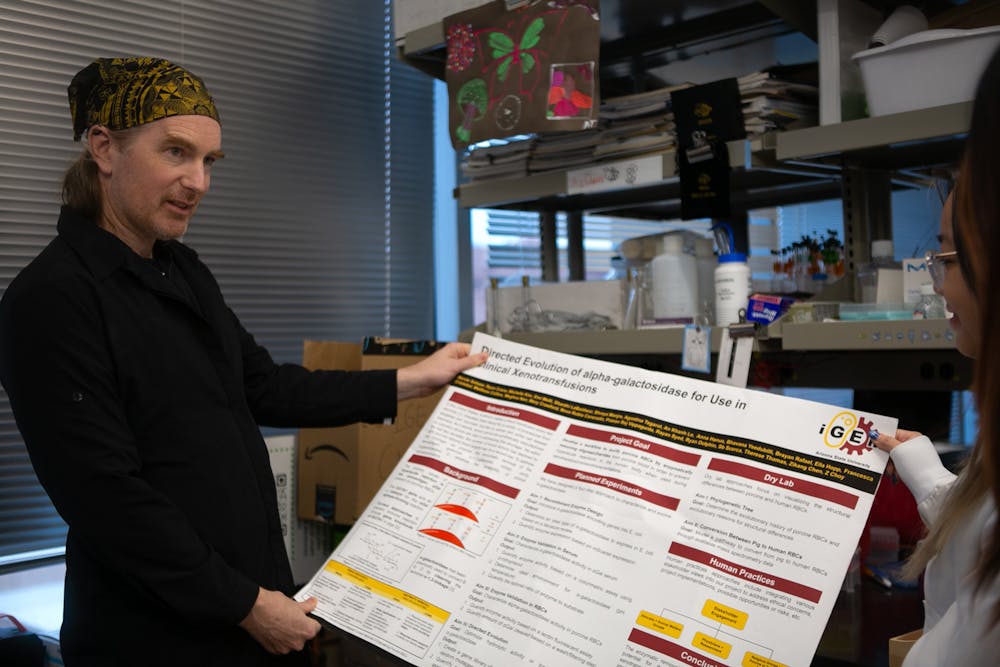
For the 2026 season, iGEM team leadership will continue to allow members to choose the project's focus, said Francesca Cristobal, a junior studying biomedical engineering and the 2026 human practices lead.
Cristobal said the iGEM team will get together soon for the "Idea Bowl," where students will form groups based on their interests and identify real-world problems to base an iGEM project on. She said involving team members' input is crucial to improving morale and excitement for the upcoming season.
The iGEM team is still recruiting new members for the 2026 season, and Cristobal said she recommends the team to anyone who has an interest in creating significant community impact, even those without a science background.
"Anyone could join if they have a vague interest in science," Cristobal said. "It's always good to engage people with science, because I feel like it's such an important and impactful field."
Edited by Natalia Rodriguez, Senna James and Pippa Fung.
Reach the reporter at kagore1@asu.edu and follow @kategore_17 on X.
Like The State Press on Facebook and follow @statepress on X.
Kate Gore is the Science and Tech Desk editor, ensuring accurate coverage of the scientific endeavors completed by ASU faculty and students and their impact on the broader community. She is beginning her second year on staff at The State Press. She previously worked as a Community and Culture Reporter, shining light on important events and happenings around campus.