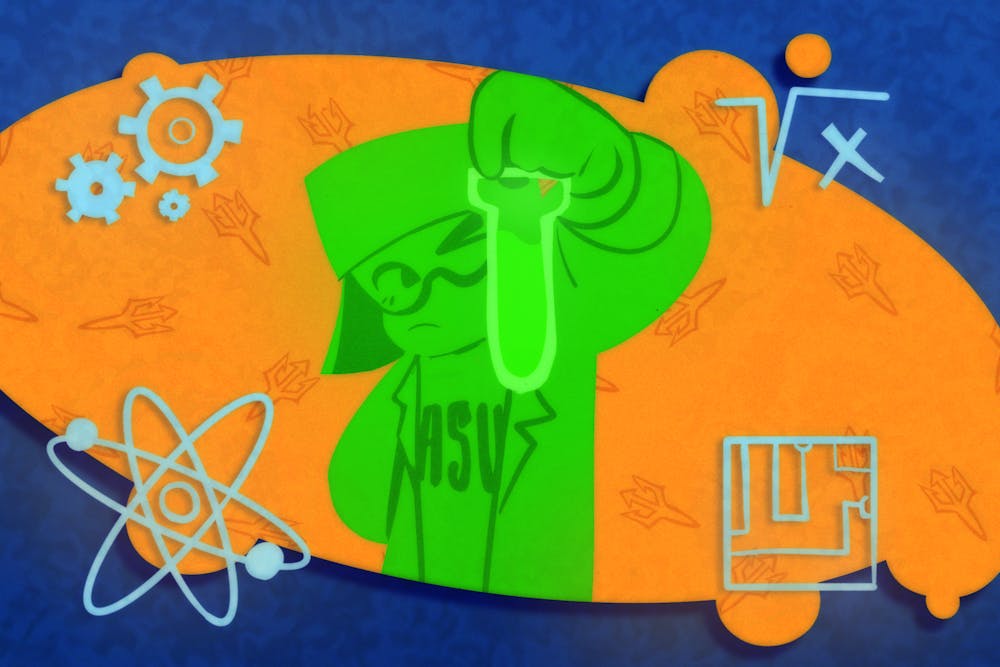
With the influence of social media, the emergence of generative AI and a recent change in student culture, the Research for Inclusive STEM Education Center recognized a significant shift in how the current generation of students learn.
The RISE Center's Project GenZ aims to improve teaching practices and enhance learning environments in science courses for Sun Devils to address that shift.
"Our goal is to help make ASU more inclusive," Sara Brownell, the RISE director, said. "So, we do a lot of research that focuses on how we can make undergraduate STEM education more inclusive, and then we also really try to actually take the research findings that we discover and try to implement them into classrooms."
READ MORE: RISE to the occasion: Advocating for inclusive education at ASU's RISE Workshop
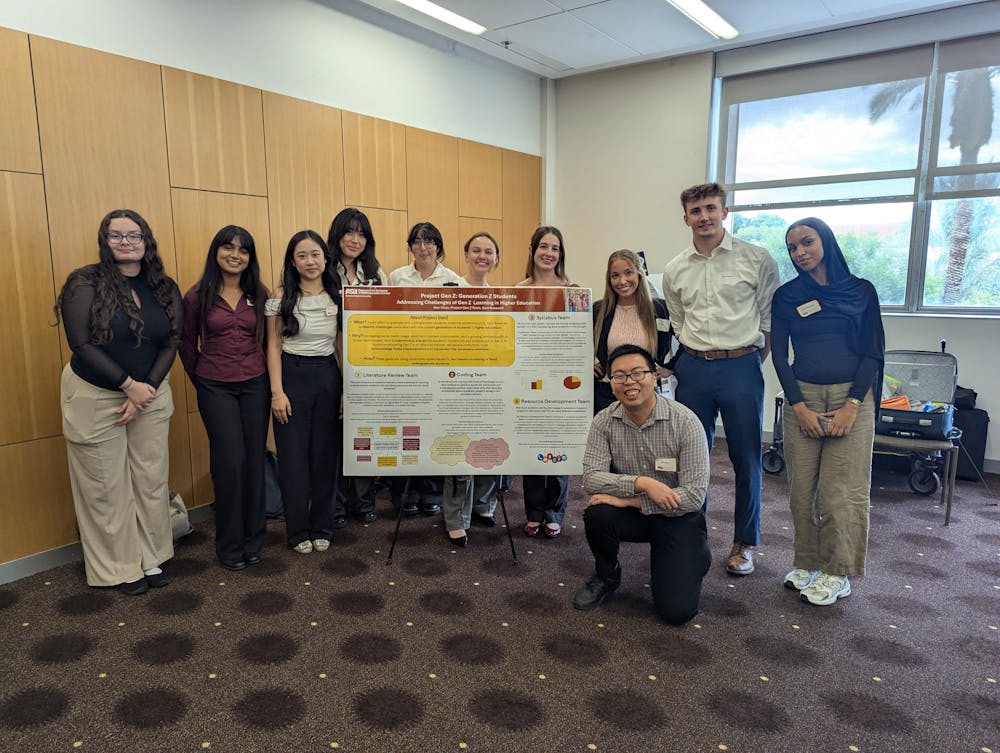
The student-led initiative is made up of 14 members guided by Brownell, a professor in the School of Life Sciences, and Ben Chan, a doctoral student studying biology.
The start of Project GenZ
The project began when Brownell noticed a shift in her classes. After more than a decade of teaching, Brownell said she was unable to engage with students in the way she used to a couple of years ago.
"I wasn't understanding them the way I had previously understood students," Brownell said. "It was fascinating, because it felt like a really abrupt shift. It felt like I got them and then in a single year, all of a sudden, I didn't get them."
Brownell and Chan, her teaching assistant, began speaking to her students about the gap in understanding between them and their instructors. Concerns included phone usage, professors claiming students were "lazy" and difficulties engaging during class, she said.
"What I realized is that the problem is not Gen Z students," Brownell said. "The problem is a mismatch between instructors and instructors' attitudes (and) current best practices, which I would argue are not best practices right now."
READ MORE: Media literacy and the manosphere: Gen Z's lapse in critical thinking
With this information, the two collaborated to create Project GenZ and recruited students looking to help with the research.
"One of our Gen Z students put it really succinctly in that they wanted our faculty members, our instructors, to realize that they are not just teaching younger versions of themselves," Chan said. "Their teaching needs to adapt to meet the needs of our current generation of students, who have experienced life and the world and are learning completely differently than when they were students."
Currently, the project focuses on science courses within ASU. Brownell said with a focus on the University, the team is able to explore highly-populated classrooms, online programs and hybrid degree programs.
Research and impact of Project GenZ
The project is split into four research teams: literature review, academic integrity, curriculum analysis and resource development.
Ethan Anderson, a senior studying biomedical sciences, joined Project GenZ after he enrolled in one of Brownell's courses, Animal Physiology. Anderson explores the prevalence of generative AI and its impact on student performance and academic integrity.
Anderson said that in interviews the team conducted for the project, one-third of respondents believed most students cheat in some way. In the same interviews, over half of the respondents believed instructors should increase proctoring and surveillance to prevent cheating.
There are growing concerns about how often people use ChatGPT throughout their educational program, Anderson said. He added that the validity of a degree may come into question if the frequency of students using generative AI to complete coursework increases.
"These are all worries that we have and reasons why we want to make education fair and equitable for everyone by reducing cheating," Anderson said. "This has very transcendent impacts on society and our learners, and so that's why we care so deeply about this, and why we're doing the work that we're doing."
Project GenZ shares its findings with the University, professors and faculty through informative events and presentations. The team is looking to continue its research at ASU and gather more students to get involved with the program.
"I've never had students drive projects as much as this Project GenZ team," Brownell said. "Their ownership over the project and their contribution have basically informed the project completely ... more than any other project where I've worked with students, it has been so amazing to see how we couldn't do this work if we didn't have these students."
Edited by Kate Gore, Jack McCarthy and Pippa Fung.
Reach the reporter at sjames51@asu.edu and follow @sennajames_ on X.
Like The State Press on Facebook and follow @statepress on X.
Senna James is the digital editor-in-chief of The State Press. She currently works as a digital reporter for Cronkite News. She has previously worked as an intern at AZ Big Media and a public relations specialist at the Cronkite Agency. She is in her 7th semester with The State Press working previously as a managing editor and the community and culture editor.