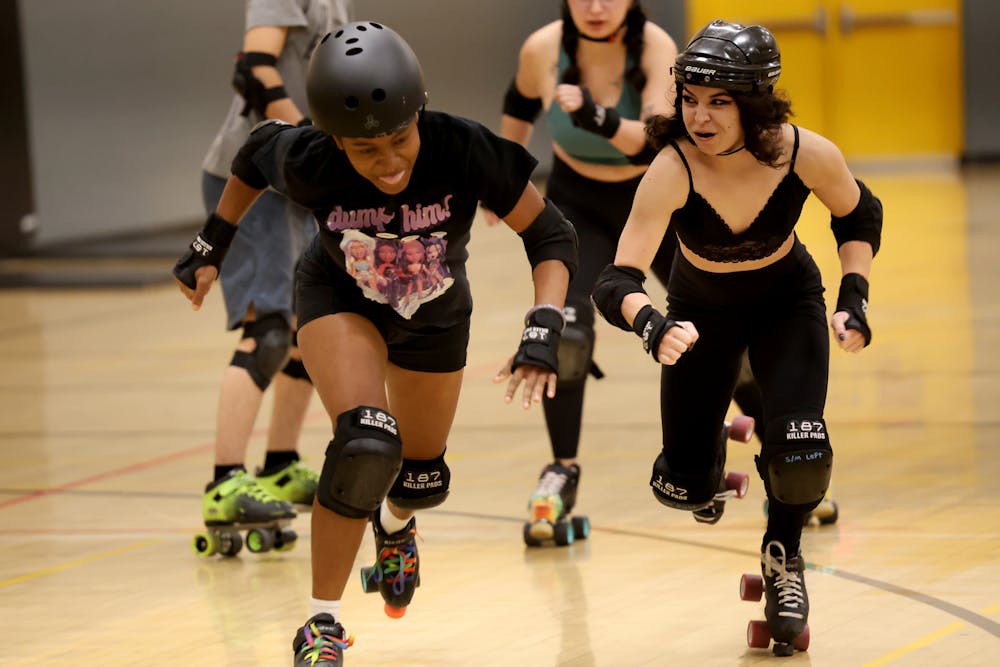
The Derby Devils at ASU are building a unique pairing of inclusivity and self-expression with big hits and skillful skating, as the University's premier roller derby team.
Roller derby got its start as a famously female-led sport, with the Women's Flat Track Derby Association serving as the primary governing body, according to its website. But in this regard, Derby Devils at ASU offers a unique experience as a co-ed team, open to all students.
"It was a vote that the team members had, in the mid-2010's, that they decided they wanted to move into a more co-ed space for the team," Devoney Looser, a regents professor at ASU and the faculty adviser for the Derby Devils. "I think part of that came out of who wanted to skate and they're taking inclusivity very seriously."
READ MORE: ASU's Derby Devils are skating their way to fame and unity
Derby Devil at ASU's shift to expand inclusivity is being mirrored at the professional level, with the WFTDA making efforts to increase inclusion for other genders in recent years, according to Looser.
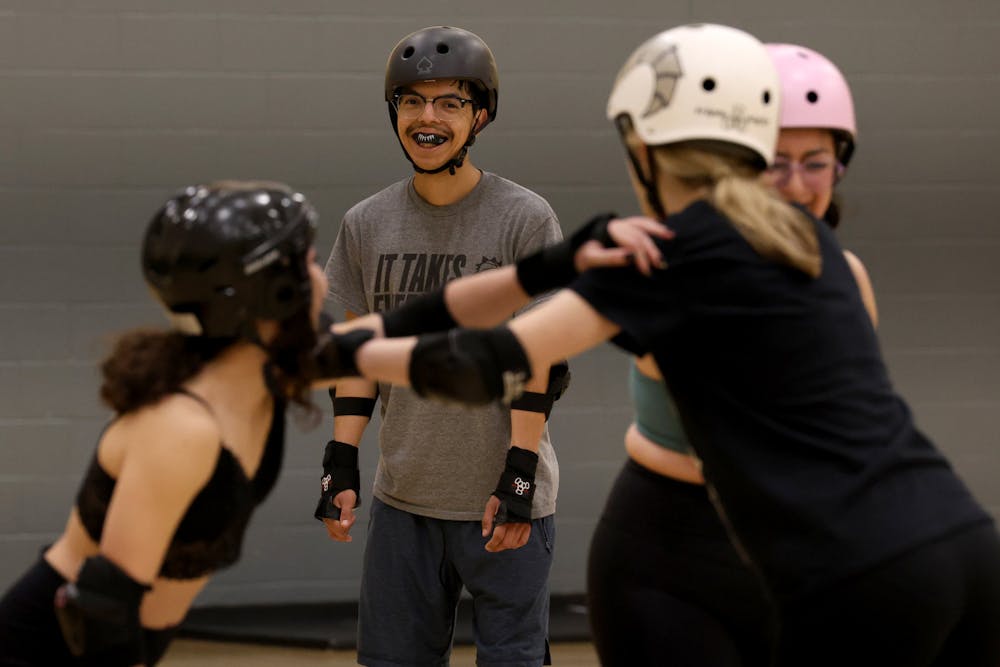
Some may find the fast-paced and contact-driven sport, with its values of respect and inclusivity, a bit jarring. But for skaters like Jules Brugarolas, a sophomore studying biochemistry, this dynamic makes sense and is facilitated by the openness of ASU's team.
"We're playing to have fun — the most important part is that we respect each other, because it is a full-contact sport, you're getting hit," Brugarolas said. "You want to feel safe with the people hitting you. So it comes down to the fact that, if you do know the person respects you, it's no longer about gender lines."
The sport involves skaters primarily using physical blocking to help their team's jammer, a designated skater on each team, score points by passing skaters on the other team, according to the WFTDA website. The team wins based on how many points their jammer accumulates.
Because of its co-ed nature, some skaters said Derby Devils at ASU also provides a safe environment for LGBTQ+ students looking for a sport to compete in.
"Roller derby is a famously queer sport – it's led by a LGBTQ mission and people, and a lot of people care about that, and so we really do just try and be open to anyone who wants to just come learn and meet some really cool people who are just very accepting," said Taylor Young, vice president of the organization and a junior studying media arts and sciences.
Abigail Boles, a junior studying linguistics, said the inclusive space that Derby Devils provides is especially important for non-binary or transgender students.
"It provides a space in sports for people who don't fit into the typical gender binary, like anyone who's trans or non-binary and doesn't want their gender to be a pivotal factor in how they play sports, because it's not," Boles said. "It becomes more inclusive for everybody, not just people who fit into the two gender binaries."
The existence of such a space for transgender, non-binary or other LGBTQ+ students comes at a time when gender-based participation in sports is an active political debate.
On the national level, in February 2025, President Donald Trump signed Executive Order 14201, titled "Keeping Men Out of Women's Sports."
According to the order, the federal government would "rescind all funds from educational programs that deprive women and girls of fair athletic opportunities," and focus on opposition to "male competitive participation in women's sports more broadly."
For Looser, the presence of such political action surrounding gender in sports only makes the role of the Derby Devils at ASU more impactful.
"(The organization is) incredibly important because it shows that it's possible and that it works," Looser said. "That a welcoming space for people of all gender identifications on the same team can work and can be an incredible athletic experience, an incredible social experience and just something that ASU should be very proud of continuing to make possible.”
Looser added that beyond the Derby Devils, roller derby as a sport has been leading the charge in many athletic, gender and social issues, whether through lawsuits or other forms of action.
The club takes acceptance beyond gender or identity and extends it into the skill level of skaters on the team.
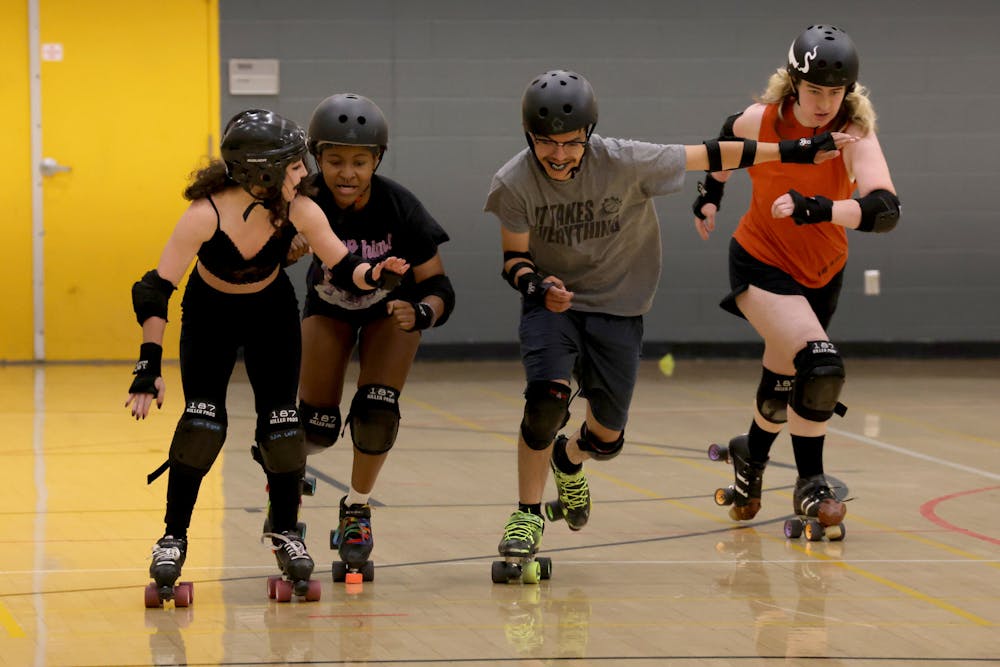
"Inclusivity across varying skill levels and varying ability levels is really important to us ... because we are on a college campus and because a large amount of people that we are going to have wanting to join our club have never heard of roller derby before," Boles said.
To make the sport even more approachable to new members, just this past semester, the Derby Devils created different practice times for varying skill levels, allowing beginners to build up foundational skills while more experienced skaters could perfect their technique.
This inclusivity goes hand in hand with self-expression, which is primarily accomplished through the distinct nicknames or alter egos adopted by skaters.
"It is a way to experiment with self-expression that is not allowed in your day-to-day, that is truly, just one in a million," Young said. "Whatever is happening to Taylor, for example, does not matter on the track, because Pistol Whip — which is my derby name — is here to play roller derby."
In a way, the nicknames adopted by skaters also factor into their ability to participate in such a competitive and high-contact sport while maintaining the openness and respect that make Derby Devils at ASU unique.
"It's part of the separation between you, the derby player, who is willing to body slam your friends, and you, the person who's going to hold the door for them on the way out," Brugarolas said.
Edited by Senna James, Henry Smardo, Sophia Braccio and Ellis Preston.
Reach the reporters at sluba@asu.edu and follow @samluba6 on X.
Like The State Press on Facebook and follow @statepress on X.
Sam Luba is the Lead Community and Culture Reporter at The State Press. He is a junior studying political science and justice studies with a certificate in political history and leadership. This is his fifth semester with The State Press, working previously as a Senior Reporter and part-time Politics reporter.