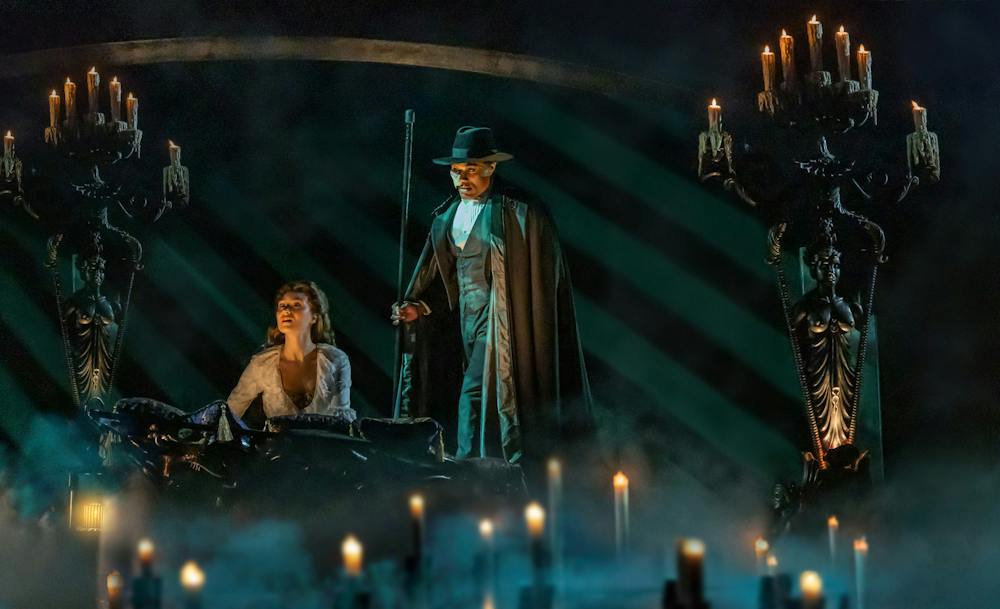
After more than a decade, the curtain rose on the Opéra Populaire to a sea of expectant fans holding their breath to see the longest-running Broadway musical in history at ASU Gammage.
Phantom of the Opera opened on Wednesday, and musical theater fans were flocking to Gammage to get a seat.
For years, I was told there was no better musical than Phantom of the Opera — and I can finally say that it's true.
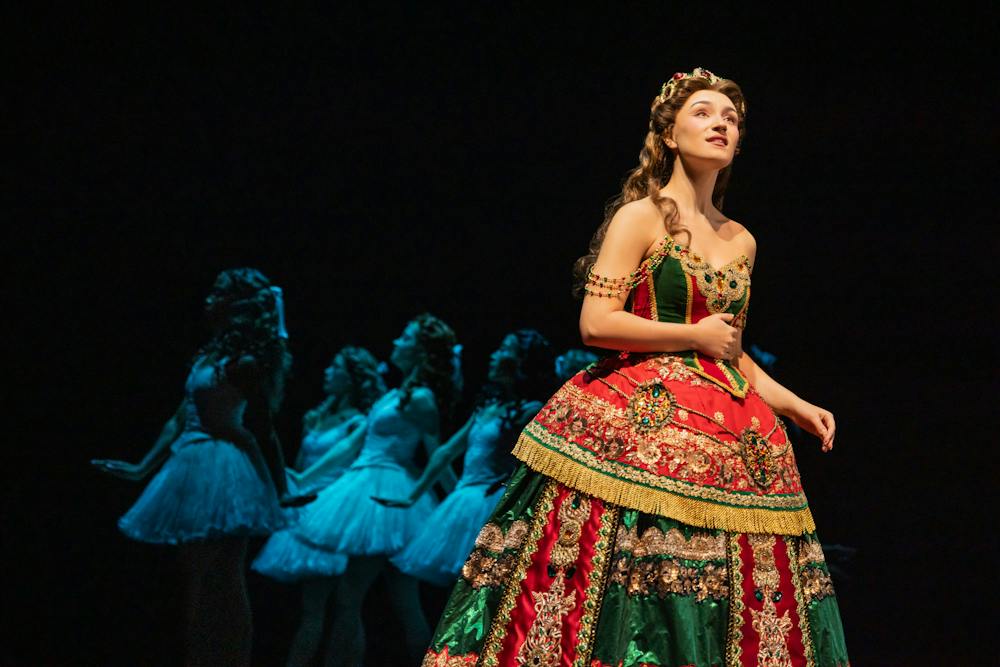
The story follows Christine Daaé, a chorus girl who becomes the principal soprano at an opera house in Paris after taking lessons from a secret tutor.
READ MORE: Take a bow: Top 5 shows to catch this season at ASU Gammage
While the Phantom's performance was categorically electrifying, his lair — along with many other technical aspects of the show — made this musical a triumphant piece of theater.
The stage transforms from scene to scene in a marvelous fashion. There's the usual assortment of turntables, trapdoors and rotating sets, but seeing candles coming out of the floor to illuminate the characters' way under the opera house was unlike anything I'd ever seen.
The show is notoriously technically challenging. ASU Gammage had to close its doors for two months before the musical first took the stage in 1994, mainly to prepare for the show's iconic chandelier.
The chandelier arguably remains one of most talked-about parts of the stage performance.
The fixture has several notable segments during the show, including sparking lights and swinging from the ceiling before its final moments.
At the end of act one, the Phantom shatters the 2,000-pound chandelier in a fit of rage, sending it flying down over the audience's heads. The chandelier crash is one of the most well-known scenes in musical theater, and the production crew executed it to perfection at Gammage.
An under shadowed yet technically impressive feat was the way the Phantom's voice traveled throughout the theater.
When his written notes to the occupants of the opera house are being read, the Phantom's voice surrounds the audience.
The production uses the theater's speakers to isolate his voice in certain sections, a technique sure to give audience members goosebumps as the Phantom speaks almost directly behind them.
READ MORE: An odd pairing: The 'friendship' that built ASU Gammage
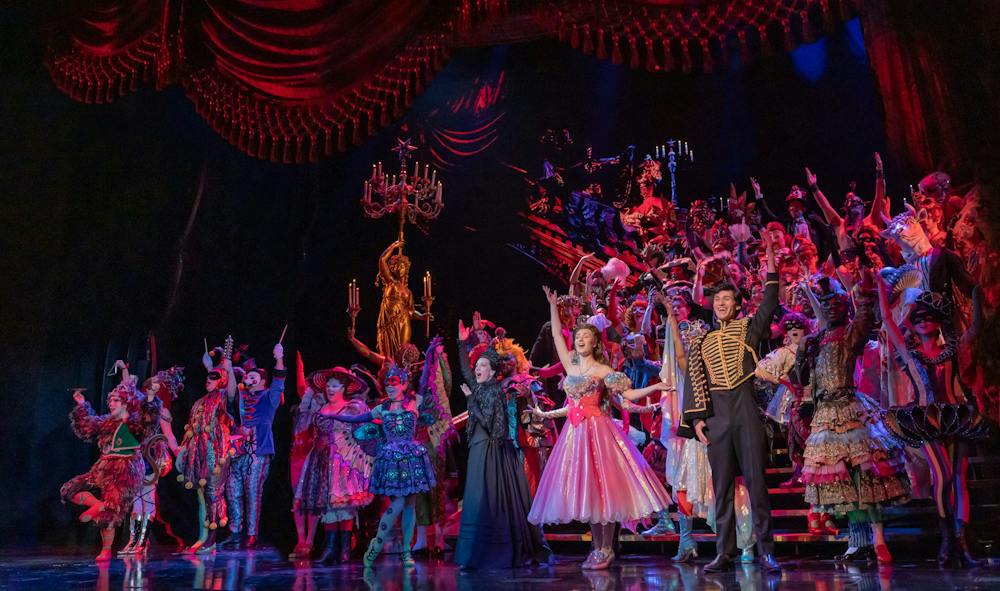
Act two starts with "Masquerade," a party the managers of the opera house host after reopening the venue with a new chandelier. The costume design shines brightest during this song as the cast and crew of the venue dance around in vibrant attire with, "paper faces on parade."
The vocals were at full force from start to finish. Christine's actress, Jordan Lee Gilbert, made her National Tour debut with this musical after a prior career in opera.
Gilbert was tasked with what critics often deem one of the most demanding vocal performances in musical theater and made it look effortless.
While the vocals, effects and stage design made for an incredible ambiance, the mystique of the Phantom made the musical all the more alluring.
In the final scene, the Phantom disappears after his final encounter with Christine and her love interest, Raoul. Even after seeing the show twice, I couldn't figure out the mechanics behind the move — perfectly selling the Phantom's character as a master of illusion.
The Phantom of the Opera will continue to haunt audiences at ASU Gammage until Oct. 4, 2026.
Rating: ★ ★ ★ ★ ★
Editor's note: The opinions presented in this column are the author's and do not imply any endorsement from The State Press or its editors.
Edited by Sam Troester, Emilio Alvarado and Sophia Keeling.
Reach the reporter at amahearn@asu.edu and follow @abiahearn on X.
Like The State Press on Facebook and follow @statepress on X.