Perfection isn't always interesting.
It can be visually and sonically appealing, but it's something consistently trying to be replicated. On social media, in songs, in movies and across creative spaces, polished work is readily available. As generative artificial intelligence grows more sophisticated, flawless images are a mere click away.
But lately, candid and blurry photos have been making their way onto the main grid.
Films that highlight morally questionable main characters and trending songs that emphasize emotional vocals over polished ones all highlight a new era of artistic taste.
This shift, according to some creatives at ASU, feels like an interest in art that is authentically human.
Ean Meloch, a sophomore studying music therapy and frontman of the punk band Holepuncher, said the performers getting emotional and less polished during a show can make it more impactful for the audience.
READ MORE: Rocking out at ASU: A peek into the Sun Devil music scene
With the onset of AI-generated music, Meloch said the public is opting for music with more of a human touch.
"People really just value the human behind the music and the experiences that formed why they make the music that they do," Meloch said. "With AI, you can sonically replicate that, but you can't come up with the meaning behind it."
This same notion is also prominent in other forms of art and media, where creators leave space for an unexpected and unfiltered moment to shift a part of a project.
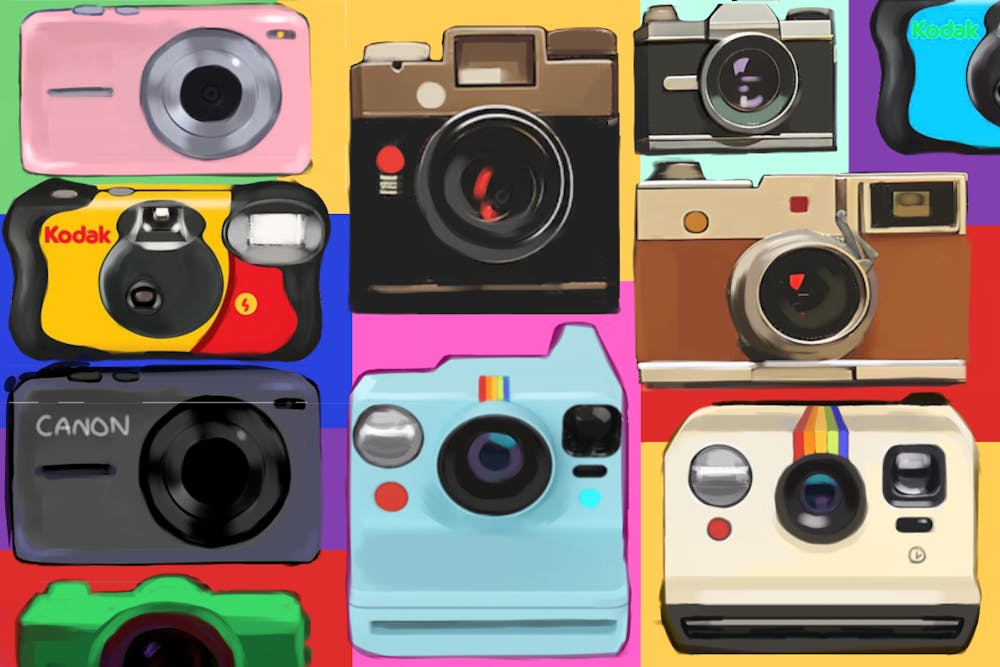
This is especially seen in photography. Instagram archives are full of photos that maybe aren't the most flattering, or "perfect," but they have an appeal to them that gives off an effortless style while adding to a profile's aesthetic.
Hudson Donnally, a sophomore studying supply chain management, spends his free time doing film photography.
After accidentally altering some of his camera settings for a Halloween photoshoot with the Film Photography Club at ASU, the photos for the session turned out blurry — unintentionally adding to the aesthetic that he was capturing.
"No photographer intends for things to be blurry," Donnally said. "They always want that perfect photo, but even though it doesn't go to play, it still can turn out perfect, and with those Halloween photos, I really do think they're some of the best photos I've shot."
This especially can take form in TV and movies, where neither plots nor visuals need to have a polished feel.
Michaela Hughes, a sophomore studying film and media production, said perfection isn't easily defined in moviemaking.
"I see it more as if you embody the correct emotion, if you really move the audience," Hughes said.
Conveying the emotion doesn't need to be a perfect endeavor. Hughes said audiences relate to imperfections in film, leading them to feel more connected.
READ MORE: Sun Devils take the big screen at ASU's 21st annual film festival
Hughes emphasized that in the world of film, if something doesn't go to plan, the "flawed" work can still be embraced. Particularly for film students, mistakes are something to learn from and appreciate.
Hughes said more movies ought to have different plot structures and resolutions to bring them closer to the realities their audiences experience every day.
"I'm personally tired of it, because I want something that's more relatable, in a way," she said.
Edited by Sam Troester, Carsten Oyer and Sophia Keeling.
Reach the reporter at evwestfa@asu.edu and follow @ellwestfall on X.
Like The State Press on Facebook and follow @statepress on X.
Ellie Westfall is a Reporter for The Echo at The State Press. This is her first semester working with The State Press, and she is in her second year at ASU with a double major in Journalism and Political Science.