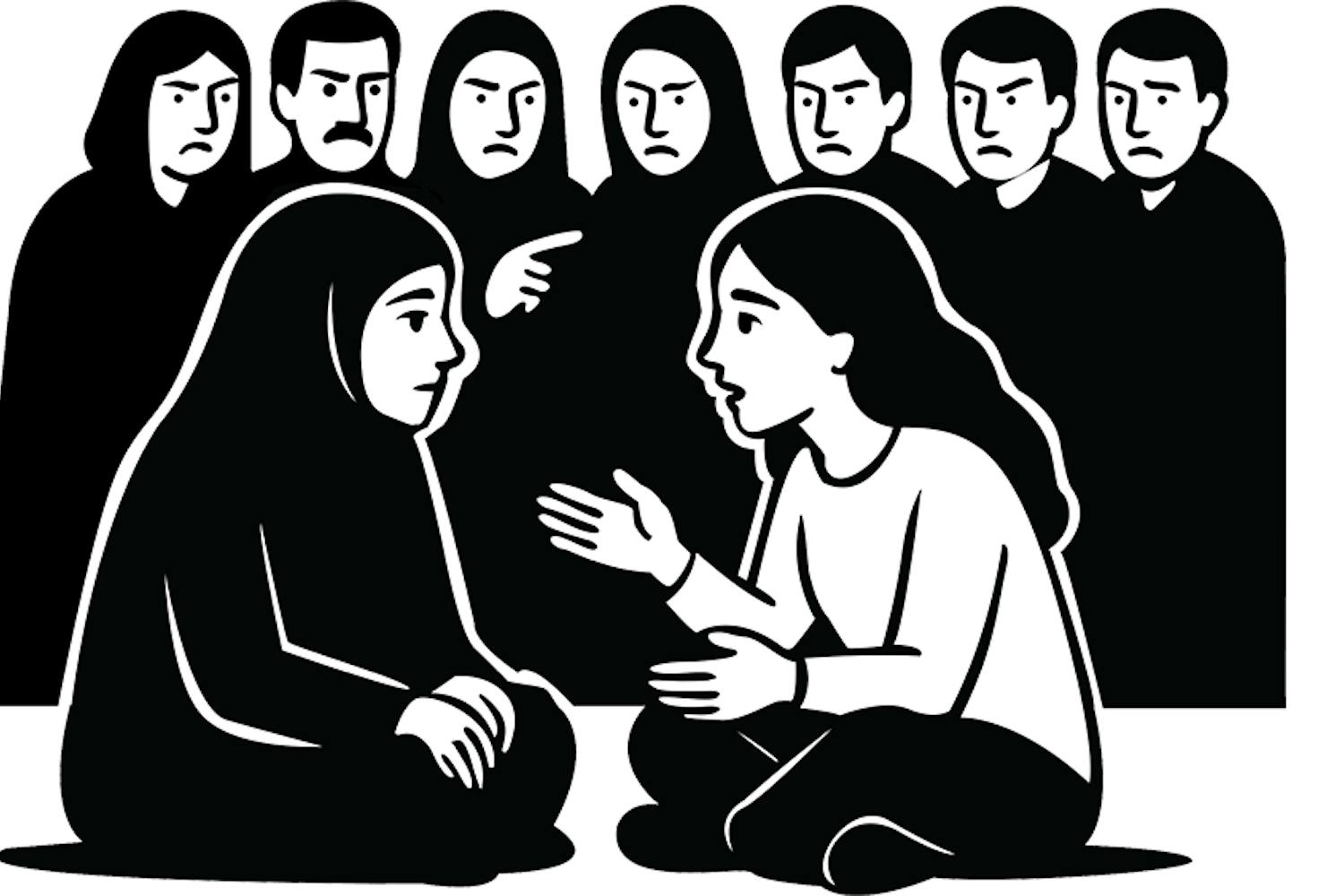
Less than three weeks ago, ASU international students were probably not worried about becoming targets of backlash. Today, they travel in groups after dark for fear that they will become the next victims of what officials are calling hate crimes.
“Before the Sept. 11 attack, we were just normal students attending classes, but now we have people calling from home,” said Nazeef Ebrahim, a bioengineering senior and president of the ASU Muslim Student Association. “There is a lot of anxiety as we don’t know what tomorrow holds for us and how long this backlash will go on.”
Since the terrorist attacks on the East Coast, there have been reports of threats and hostility toward students perceived to be of Middle Eastern origin. The incidents have heightened the need for cultural understanding within the ASU community.
Two groups are trying to prevent anti-Muslim sentiments from spreading on campus.
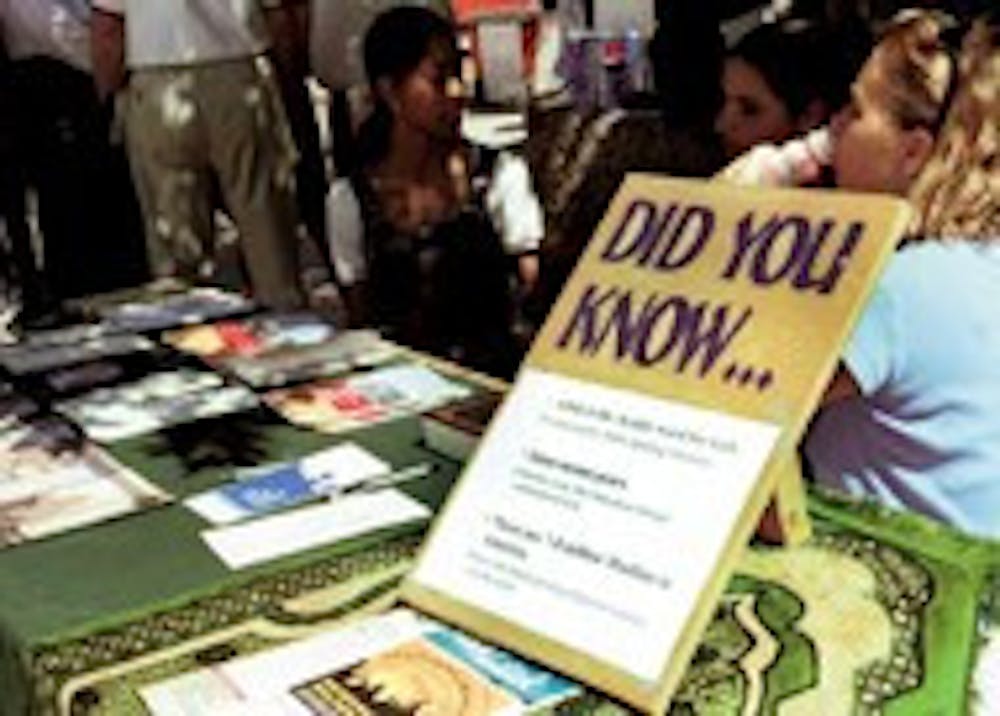
The Muslim Student Association of ASU and the Islamic Cultural Center of Tempe are involving students, faculty and staff in efforts to educate people about Islam by distributing literature. The Islam information table had been set up by the fountain near the Hayden Library on Wednesday and Thursday.
“The reason why we are pushing so hard in getting people educated about Muslims is to try and increase security on campus,” Ebrahim said. “We are approaching everything with caution and also moving around in groups and we don’t stay late on campus as we are worried about the safety of our students.”
There have been at least 48 international students who have withdrawn from ASU since Sept. 11, according to Bob Soza, dean of student life.
Police officials are investigating three incidents of hate crimes on campus. A student’s car was set on fire in a parking structure Saturday, but police have not connected the arson to the student’s Iranian ethnicity. The student is a U.S. citizen.
“We are trying our best to rally support on campus and in the community so that we don’t worry about attacks,” Ebrahim said.
Ebrahim described the event as an effort by Muslim students on campus to prevent stereotypical backlash against students of color.
Trish Short, a psychologist with the counseling and consultation department at ASU, said she was at the event after receiving e-mails from the organizers asking her to show solidarity with the Muslim students on campus.
“I wanted to show my support to Muslim students on campus and also educate myself,” Short said. “I feel that staff and members of the community need to go out of their way to help international students and students of color even if it is just to say hello or shake their hands.”
The event was initially sponsored by the Intergroup Relations Center, but it had to pull out at the last minute because the office received complaints from members of the ASU community, especially faculty, regarding the separation of church and state.
“We were getting calls stating that a government agency cannot support or advocate any religion but the efforts being made in this event to try and create a safer environment have still touched the students,” Kathleen Wong, program coordinator of the IRC, said. “We are still very supportive of the event, and I really think that the Muslim students need the support from the campus.”
Bert Jacobs, director and professor of microbiology who was at the event, expressed a strong concern about the safety of his students on campus. He also felt the need to promote a better understanding among different communities so that ASU does not project a hostile campus climate.
“I have many students of color in my lab, and I want to set up protection for them and try to get them to walk in groups,” Jacobs said. “At this point, I would like to hear from the students of color on what they need to feel safe.”
Reach Vedatrayee C. Banerjee at ctitam@hotmail.com.