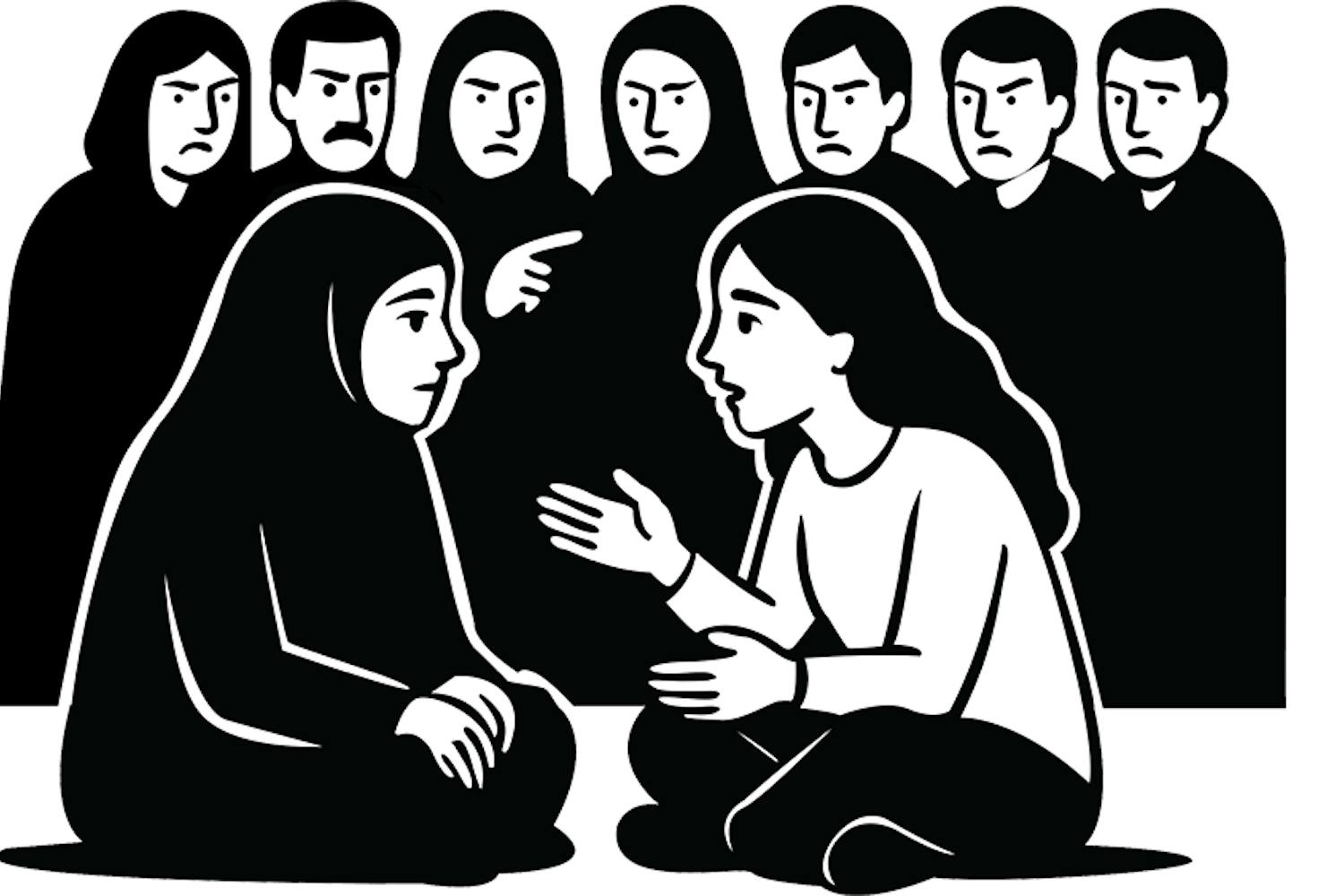
My sister wants to be excommunicated from the Catholic Church.
I'm a recovering Catholic myself. I lost my faith in the Church long ago for a variety of reasons and have simply stopped practicing. But my sister wants out -- and while I think that may be a little pointless and extreme given the reason for her decision, I can understand why she would want to distance herself from the Church.
She just doesn't want to be associated with an organization that protects child molesters.
Over the past few weeks, allegations over sexual misconduct have surfaced nationwide against members of the Catholic clergy. Young men from Boston to Los Angeles have come forward saying Catholic priests sexually abused them. Worse, though, are the charges that the Catholic Church protected these serial child molesters by ignoring the original complaints.
The worst allegation is against Father Paul Shanley, formerly of Boston. Several lawsuits have already been filed by men who say they were sexually molested or raped during the '70s and '80s by the Good Father. The only problem is, Shanley is on the lam so to speak and therefore can't be charged.
Worse than the accusations against Shanley, however, are the claims that the Archdiocese of Boston had known about the sexual misconduct allegations since 1967. Not only were the allegations not investigated, but Shanley was also given continued access to children until he left Boston in 1989.
It didn't matter that Shanley has acquired a laundry list of accusations against him. It didn't matter that he openly supported relationships between men and boys, and even spoke at a conference, which later formed the North American Man-Boy Love Association. The Catholic Church was willing to ignore the problem in order to protect their image of infallibility.
Priests and other members of community authority are under particular scrutiny for a reason, because we are supposed to trust them automatically. And as we've seen with the recent suspension of a Chandler police officer over his involvement with a porn web site, these members of the community are held to a higher standard because they represent and lead the community.
Allegations against these people, while they may only be allegations, should be taken seriously. Very seriously. It's not fair to immediately crucify these people (if you'll excuse the pun), but at the very least their interaction with children should be limited until the allegations can be sorted out.
That doesn't seem to be the way of the Catholic Church however, which would much rather claim that the problem is so infrequent that we shouldn't even bother. These things happen. Or, as Bishop Thomas J. O'Brien of the Diocese of Phoenix said in the Arizona Republic, "some abusers will inevitably slip through whatever safeguards are implemented to screen them out of church ministry."
This type of "well what are ya gonna do" defeatism simply won't fly. The Church needs to take realistic steps towards ending sexual abuse among its members by taking any and all allegations seriously.
Priests accused of molesting or violating children should not be allowed to have access to children until those allegations of confirmed or denied. It is that simple.
The Church should not try to sweep this issue under the rug like they have for decades. Granted, there are thousands of priests around the country and the world who do not molest children, but the "few" cases that have sprung up should prompt the Church as a whole to reexamine the way it handles these things.
The Church needs to take responsibility for its priests; otherwise, many more people will lose faith.
Lord knows I have.
Mark Broeske is an English education sophomore. Reach him at mark.broeske@asu.edu.