As I reflect this week on the 30th anniversary of Roe v. Wade, I question what women gained from the passing of this historic legislation. As a college student in the '70s, I argued passionately for a woman's right to have unfettered control over her reproductive life--something I still defend fiercely today.
Yet, I am disappointed with the lack of advocacy for a broader range of women's rights such as quality child care, access to health care, the elevation of status for women who work inside the home and the irksome reality that women are paid significantly less than men for doing the same job.
Furthermore, mainstream feminists--meaning those who get press coverage, such as the National Organization for Women (NOW) and Planned Parenthood--in a vexing alliance with the Democratic Party, focus on abortion as their one and only rallying cry, ignoring the daily material needs of women. Additionally, these groups suppress information about the abortion/breast cancer link and vigorously endorse the abortion drug RU 486, which causes severe pain, numerous emergency hysterectomies and has reported a 3 percent fatality rate.
Abortion is promoted as a simple procedure, when in fact, it is a surgical procedure often performed in substandard conditions. Pro-life groups also fail to acknowledge the emotional impact of abortion. You can visit the Rachael's Vineyard website and read firsthand about the unrelenting guilt and psychological pain many women experience after choosing abortion.
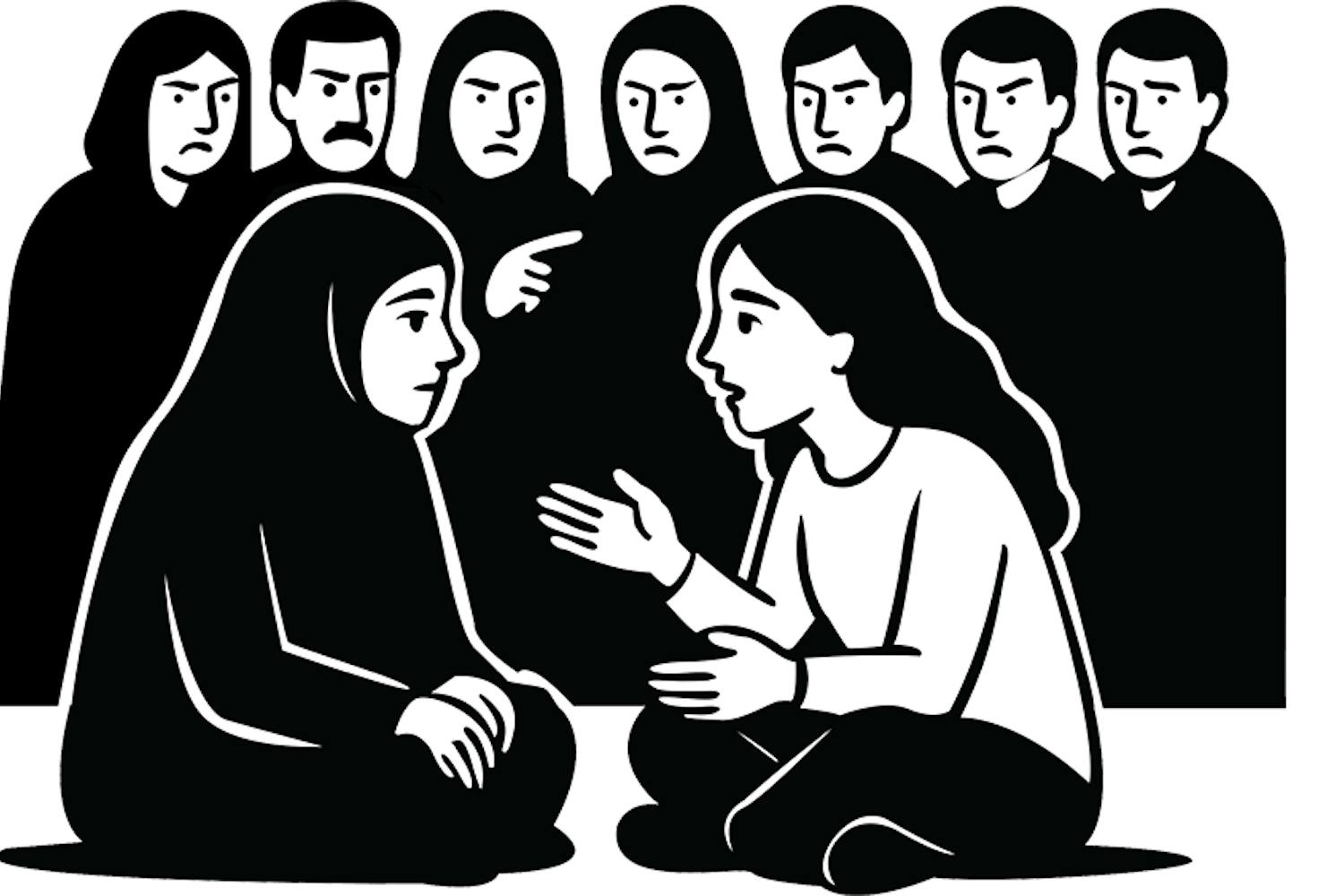
Overall, it seems like what "choice" democrats, NOW and Planned Parenthood promote is, instead, "choice-less," because those who question abortion are often accused of being anti-woman. Pro-life feminism is considered the ultimate oxymoron and people who believe that life begins at conception are ridiculed as religious fanatics.
The Republican Party is not exempt from similar affronts to women's rights. As the party espousing family values and a pro-life agenda, they too fail by consistently refuting government programs that help women take care of children. This was especially evident in their vigorous support of President Clinton's bigoted welfare-to-work program.
Both political parties, in sum, do little to make abortion less necessary, which is antithetical to feminist principles. In fact, the origins of the first-wave feminist movement began as a human rights issue.
The 19th century ideology of domesticity compared women's bodies to untamable nature. Therefore, their ability to create life became their silencing gag and men were their proxies in all public matters. Naturally, women wanted to dispel the myth that their bodies prohibited them from thinking rationally. However, their purpose was not to jettison motherhood, but to argue for the right to be public actors so they too could negotiate matters important to themselves, their children and their families.
Speaking at a women's rights convention in 1920, Crystal Eastman, social activist, attorney, and founder of the League of Women's Voters, reiterated the basic goals of the feminist movement: "What is the problem of women's freedom? It seems to me this: how to arrange the world so that women can be human beings, with a chance to exercise their infinitely varied ways."
In the 1970s, second wave feminists took up the mantle of their foremothers and their advocacy ushered in unprecedented changes for women. Yet, the movement that began with a broad agenda and the slogan, "the personal is political," internalized their opponents' implicit subtext: women are welcome as long as they adopt the values of the workplace, which has little patience for the needs of children. In short, babies became our enemies--not the underlying social structures that make motherhood problematic.
The "varied ways" of women became liabilities and abortion allowed women, in effect, to override biology so the playing field was leveled.
Paradoxically, this view that women's biology keeps them from attaining equality with men gives credence to the arguments that men have used to subjugate women and minorities throughout history.
To take seriously a women's right to control her body, all information about the benefits and risks of reproductive medical procedures, pharmaceutical interventions, and how they affect women physically and psychologically should be available to women now and in the future. The true essence of feminism demands that we exceed the crimped version of women's rights inherent in our acceptance of abortion as the measure of how far women have progressed.
Realistically, each abortion signals our continued failure to address what women really need, beyond temporary solutions that, ultimately, do not enhance their lives in any meaningful way. I think women deserve more.
Ellen Johnson thanks you for reading and welcomes your comments and criticism. Reach her at ellen.johnson@asu.edu.