Amid the papers, examinations, and lesson plans, educators in offices throughout ASU have been finding time to put their knowledge to a test of their own: sitting down and putting their thoughts into words. More than 20 books written by ASU faculty have been slated to hit bookstores between 2002 and 2003. The State Press recently had a chance to talk with a few of their authors.
A Search for Gold
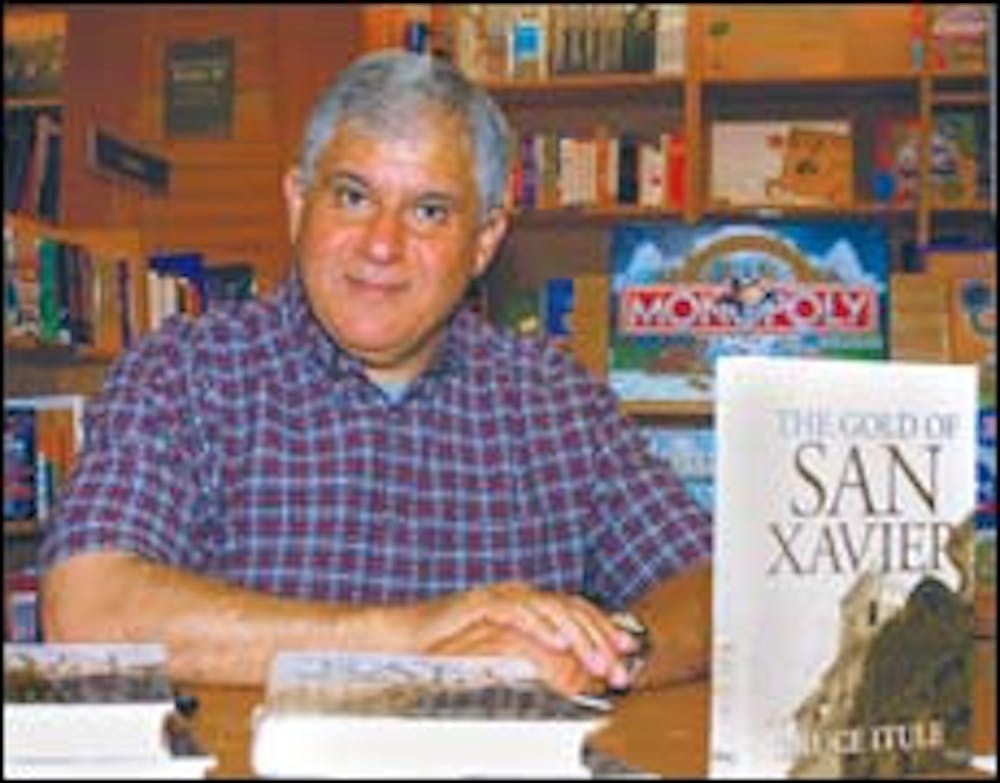
For more than 16 years, Bruce Itule served as the director of student media for ASU, until he retired from the position in late 2001. Following his decision to retire, Itule explored other opportunities, including co-founding Thunder Mountain Publishing Company in early 2002. Itule's first fiction book, The Gold of San Xavier, was also the first title for the publishing company.
"The company was started about a year ago by a group of us who are interested in writing and publishing books," he said. "My interest is in writing - others in the group are interested in publishing books."
Itule has previously served in various reporting and editing positions at such notable publications as the Chicago Tribune, Arizona Daily Star, The Phoenix Gazette, Boulder Daily Camera, The Denver Post, and the Minneapolis Star.
He is now a clinical professor of journalism who teaches reporting in the Walter Cronkite School at ASU and is perhaps best known for the various textbooks on whose cover his name is embedded. Some of the textbooks Itule wrote over more than 20 years ago regularly appear on syllabi for Cronkite courses.
"Before [writing textbooks] I had done a small [non-fiction] book," he said. "Along the way I've also done a lot of magazine stuff. Switching to fiction, particularly regional stuff set in Arizona, is a natural progression for me."
The Gold of San Xavier comes in the form of a story mixing fact and fiction. Nick Genoa, a freelance journalist, is seen as a focal point in the story as he ventures to the 200-year-old San Xavier Del Bac Mission, a Spanish colonial church in southern Arizona, which is still used today as a Catholic church.
Genoa's reporting has led him to cover a story at the Mission on a project by some European art conservators, but before Genoa can report on it, gold is found and delivered to a priest. The priest if found dead and the riches are nowhere to be found.
Itule said his interest in San Xavier provoked th novel. "I've always been fascinated with the history of the state and have written extensively on it," he said. "I am intrigued by and interested in San Xavier, but the story of lost gold in the mission truly is fiction. The story of the wonderful art conservation projects there - and other projects to preserve the wonderful place - is not."
A lesson in forgiveness
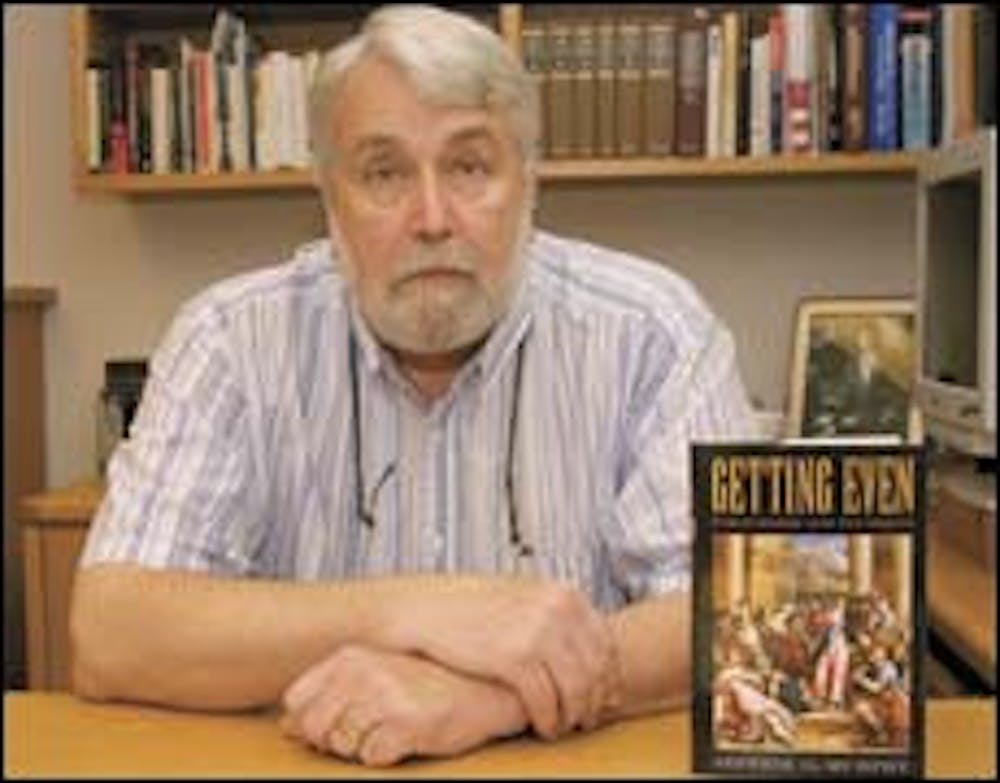
In the College of Law, Jeffrie Murphy, a regent's professor of law, philosophy, and religious studies, has also been stirring things up with his new book. Getting Even: Forgiveness and Its Limits was released last month and falls on the heels of, Before Forgiveness, a collection of essays published in 2002. One of Murphy's earlier books on forgiveness was published in 1988 and titled Forgiveness and Mercy.
"Forgiveness is a very 'in' topic these days," he said. "It comes up in criminal sentencing when people wonder how harsh systems of punishment can be compatible with our stated commitments to the value of forgiveness, when the self help and recovery sections of bookstores are filled with books that counsel self forgiveness, and when 'forgiveness counseling' has become trendy in psychotherapy."
Murphy claims a tension between his vindictive nature and moral and religious conviction that forgiveness is a virtue was what propelled him to write the book.
"I wanted to find a way to give vindictive passions their due, while still recognizing the virtue of forgiveness in a variety of circumstances," he said. "Making forgiveness contingent on repentance by the wrongdoer is one way of making the two postures consistent."
Murphy explores feelings of forgiveness, what it means to forgive and how to overcome vindictive feelings toward another person, in Getting Even.
"Most people who write on the topic see forgiveness as an unambiguous good. I do not," Murphy said.
He explains forgiveness as directly related to human emotions.
"Forgiving a person does not mean that one must reconcile with him or allow him into one's life again," he said. "Forgiveness is simply the abandonment of vindictive feelings such as hatred toward a wrongdoer, but one can still consistently advocate punishment for the wrongdoer for reasons having nothing to do with hatred."
Society has chosen to bear the brunt of righting the wrongs of citizens to one another. Capital punishment is often used to discipline, regardless of whether or not one party has chosen to forgive the criminal.
"The issue of capital punishment has little to do with forgiveness," he said. "Society executes, but only individual victims, in my view, have the standing to forgive or not forgive the wrongs done to them. Society may have legitimate resons for not punishing the person who has wronged me, but it has no business claiming to forgive that person."
"It is perfectly consistent for society to punish a wrongdoer who has been forgiven by his victim or not to punish a wrongdoer who has not been forgiven."
Chicana and Chicano
Gary Keller, a regent's professor of Spanish and Chicano studies, joined the ASU staff in 1986. Keller also serves as director of the Hispanic Research Center.
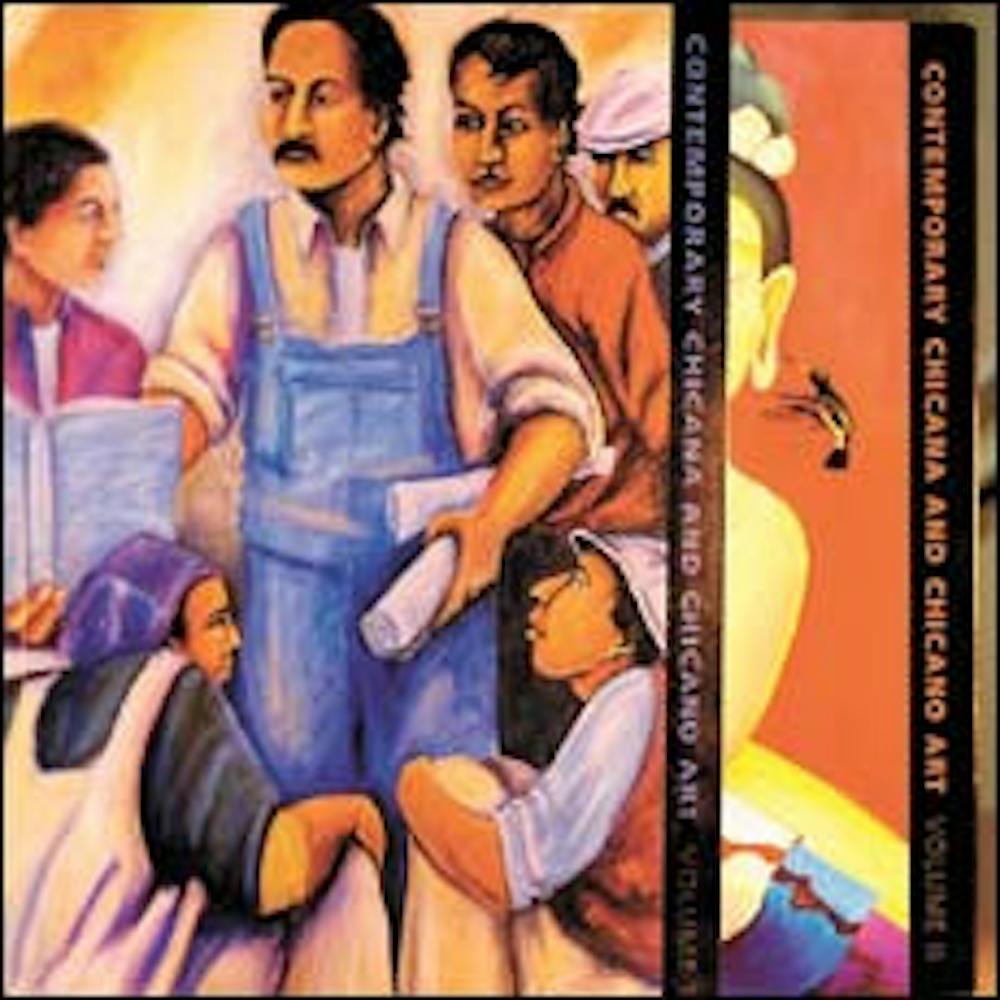
His latest book, Contemporary Chicana and Chicano Art, debuted in September 2002 and is one of the most recent titles to be published by the Bilingual Review Press, which Keller co-founded in 1973 and brought to ASU in the '80s.
The book serves as a reference book of the most notable artists of this type of art, displaying pieces of some 194 artists and showcasing 16 themes.
"The themes of the art make me understand myself and my community better," he said. "Some of the art identifies Chicanos; some pieces have double meanings or fantasies based on cultural symbols. Other art highlights music, dance, food, low riding, and pastimes of my community. I see myself in the art, my parents, places I have lived, and struggles we have had."
Keller began his collection of art as a graduate student in 1963. He graduated that year with a bachelor's degree from University of the Americas in Mexico City, eventually earning a master's degree and Ph.D. from other schools.
One of Keller's favorite pieces of art is from Maya Gonzalez, entitled "The blood that stains." He bought this piece with his son and they value it to be worth hundreds of thousands, if not millions. The piece appears on the cover of the second volume of Keller's two-volume set.
"It is a really enriching experience, looking at [Chicana and Chicano art]," he said. "I can look at one of these things 100 times, and find something different the 101st time I look at it."
Approximately 12,000 copies of Keller's book have been printed already and have been snatched up by museums, art galleries, cultural festivals, collectors, and, "wannabe collectors," Keller said. He said he anticipates reprinting the book in two to three years to meet the demand.
"This book is changing the status and market value of art very quickly," he said. "The book is making a huge difference in recognizing art and its intellectual and dollar value.
"The book also has been advancing the careers of artists very quickly and prices of art have gone up by 20 percent since the book's release," Keller said. "I was kidding Cheech Marin [the largest collector of Chicano art in the United States] the other day that his collection was only worth $5 million before my book and is now worth $25 million."
Reach the reporter at michael.miklofsky@asu.edu.