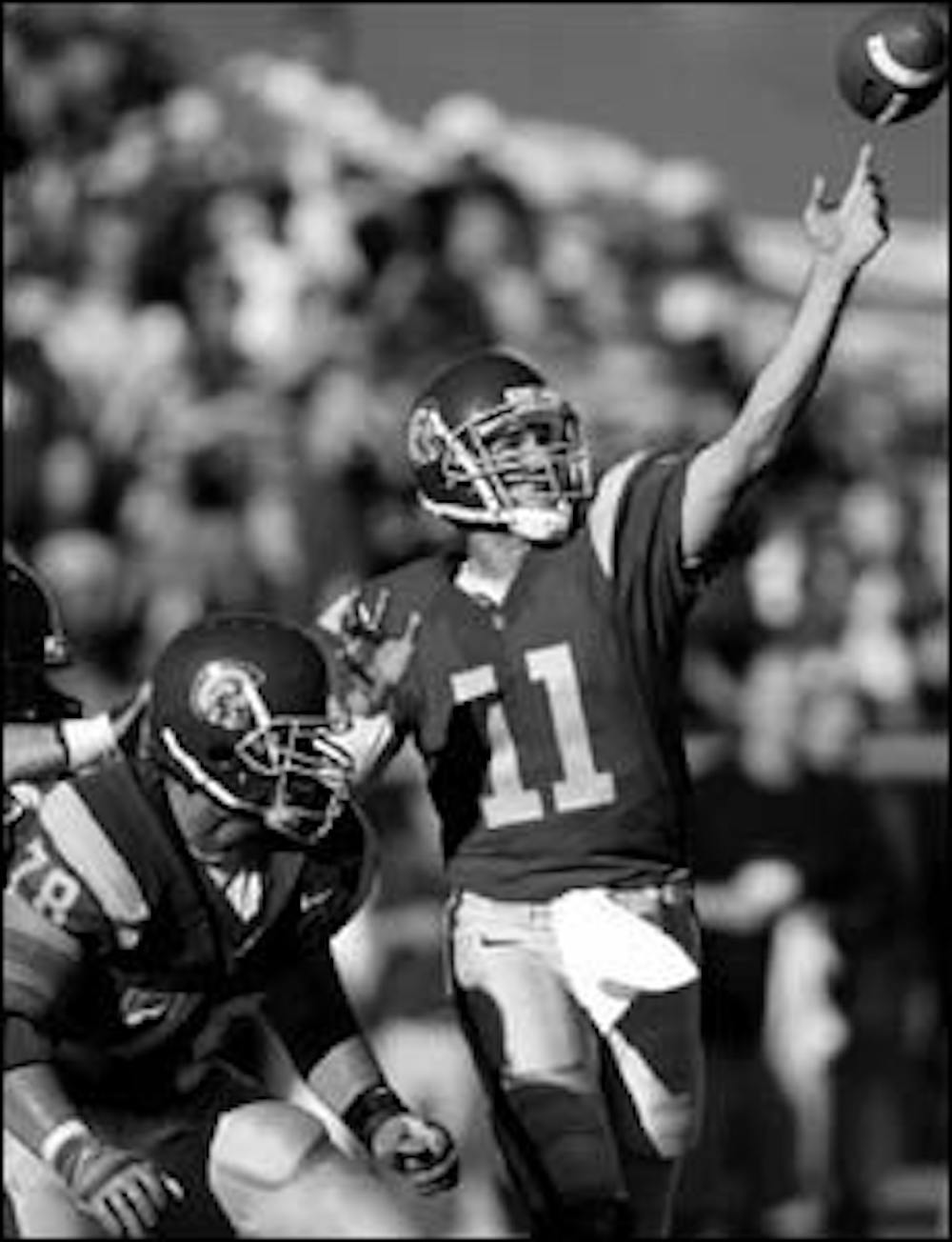
When one thinks of USC's resurrection from mediocrity to domination, the names of head coach Pete Carroll, Heisman Trophy winner Carson Palmer, or even all-everything receiver Mike Williams probably come to mind.
But behind the scenes is one of the most successful offensive coordinators in the history of college football: Norm Chow.
"He's come in here and had a big impact," Carroll said. "Our opportunity to get off to a reasonably strong start with a first-time starter [quarterback Matt Leinart] is due to the system and the way our quarterbacks are handled."
For 27 years, Chow had been the power behind the throne at Brigham Young, developing quarterback after quarterback for LaVell Edwards. Some of the players who played under Chow include Steve Young, Ty Detmer, Jim McMahon and current Heisman Trophy candidate Philip Rivers at North Carolina State.
Of the 12 all-time pass efficiency leaders, Chow has coached six of them. Of the top 30 passing offenses of all time, 11 can be attributed to Chow.
"Some of my college coaches were defectors off of the same BYU staff that he was on," ASU head coach Dirk Koetter said. "When I started learning the passing game in college, I learned the BYU passing, so our roots in the passing game are the same."
Yet year after year, Chow has been passed over for head coaching positions, with some of his assistants even getting head coaching jobs in the NFL: Mike Holmgren, Brian Billick and Andy Reid.
Some rumors attributed his staying at BYU to a desire to take over the BYU program after Edward's departure, something Chow denies.
"I stayed in one spot for 27 years to try to raise a family," Chow said.
After a change in administration at BYU, it was clear that Chow had no chance of being head coach, so he left for N.C. State.
"I realized it was time to leave knowing that we weren't going to get a chance," Chow said.
In 2002, Chow was named assistant coach of the year, winning the Broyles Award. In this year's Sports Illustrated college preview, Chow was recognized as the "pass master." During the winter, he was offered a job as the head coach at Kentucky, only to turn it down for a raise at USC.
"I'm glad that he decided to leave BYU because he is now getting some of the recognition that he deserves," Koetter said.
But Chow remains grounded, never seeking out the spotlight or blowing his own horn about his successes.
"All I know how to do is work as hard as I can work," Chow said. "I don't sit around aspiring to be a head coach. Obviously everybody would like a chance. If I get one, fine. I teach [the players] just like everybody else teaches them."
Reach the reporter at matthew.schubert@asu.edu.