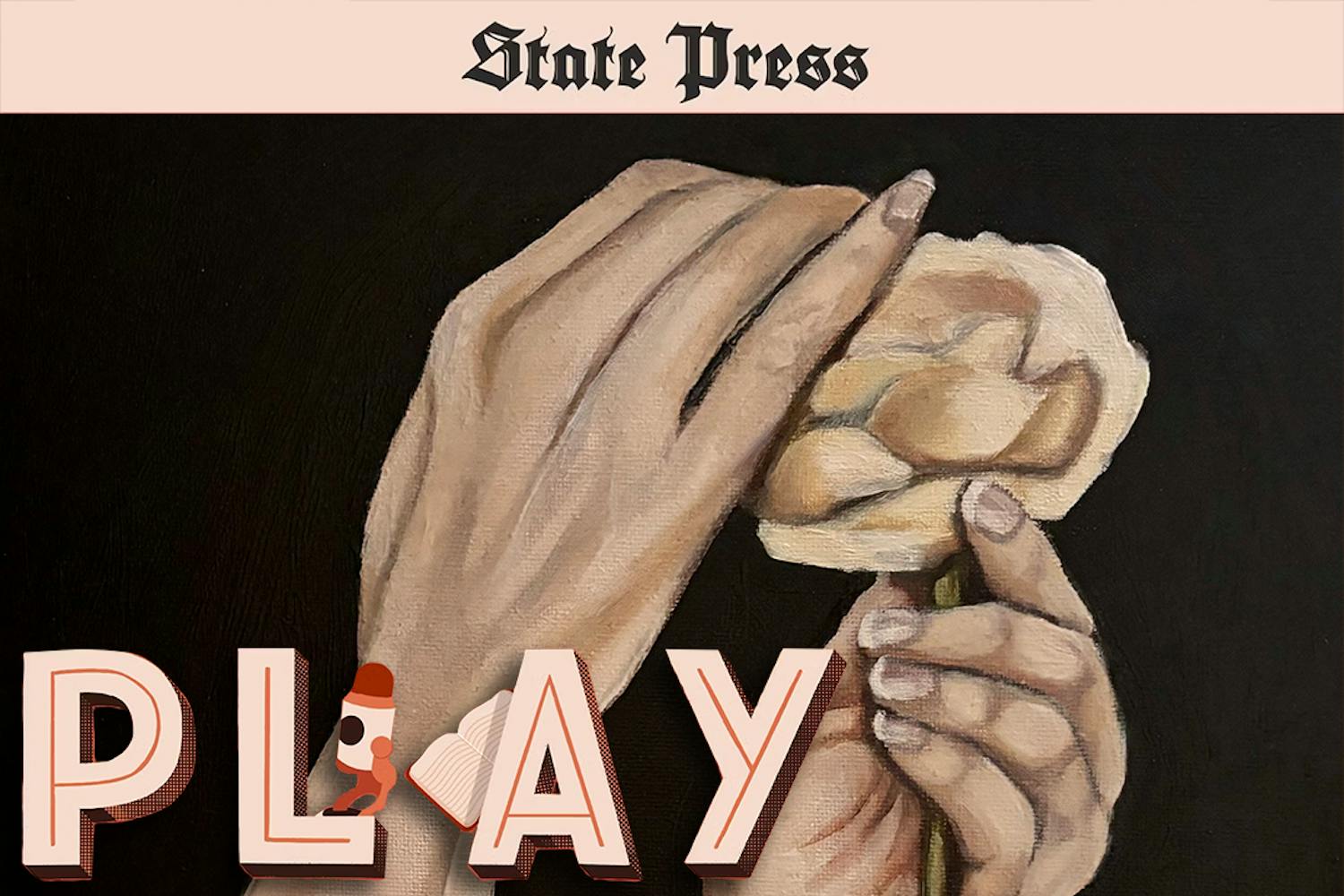
Colorful Cuban artwork waits in storage inside the ASU Art Museum with nowhere to go.
The paintings, which satirically depict contemporary Cuban life, were left behind after Cuban painter Pedro Alvarez allegedly committed suicide Feb. 12.
According to Tempe police, Alvarez allegedly jumped from a fifth-floor balcony of the Tempe Twin Palms Hotel at Apache Boulevard and College Avenue.
But starting next week, an ASU adjunct law professor's firm will begin the complicated process of returning the artwork to Alvarez's family.
The artist died a week after the opening of his art exhibit, "Landscape in the Fireplace: Paintings by Pedro Alvarez," at the ASU Art Museum.
The art exhibit continued to run until June 19, its full duration. Now, his art remains in storage until a decision can be made about what to do with it, said Marilyn Zeitlin, director of the ASU Art Museum.
"The work is tied up until all the international issues can be resolved," Zeitlin said. "There are lots of people who want to buy it, so we don't want to accidentally, in a moment of impatience, lose it."
But Alvarez died without a will, said John R. Becker, a partner with the law firm Braun Becker Kruzel PC. The fact that he has family in Cuba and Spain complicates matters because different countries' property laws are involved, he added.
Becker said ASU's Office of General Counsel asked him to help distribute the artwork to Alvarez's family members, because there could be many possible owners in the case.
Becker, also an ASU law professor, said he was selected because he specializes in both property and art law and not because of his work as a professor.
Alvarez had a child with his first wife, who is from Cuba, but Alvarez wanted to move to Spain, Becker said. He and his wife divorced and married Spanish spouses with the intention of divorcing those spouses and remarrying later, Becker added.
The complicated family situation adds to the confusion over who should get the artwork.
Returning the artwork to the best owner may require looking into Spanish and Cuban laws, Becker said.
"We want to make sure [the paintings] go to the legal owner," Becker said. "We want to give them to the right person."
Becker said he would file a request with Maricopa County Superior Court sometime next week, asking a judge to advise ASU in giving the artwork to the proper family members.
Then, within a month, the court will set a hearing date and invite people interested in the artwork to attend or phone in to the hearing, Becker said. Because Alvarez received money for a couple of paintings he had sold, the money would also have to be distributed.
He added that the hearing would not be "adversarial," and that he would be asking a judge to clarify a complicated situation.
"There will be no arguments whatsoever," Becker said. "It will be, 'Court, give us the facts.'"
Zeitlin said it would be a mistake for the court to give away the artwork without considering Alvarez's underlying family issues.
"That doesn't seem like the commonplace thing to do," Zeitlin said.
Reach the reporter at nicole.saidi@asu.edu.