ASU researchers have invented a sensor that could play an important role in early detection of disease-causing bacteria or bioterrorism agents in drinking water supplies.
The researchers unveiled their invention Monday at the Arizona Water Quality Center's biannual meeting in Tempe.
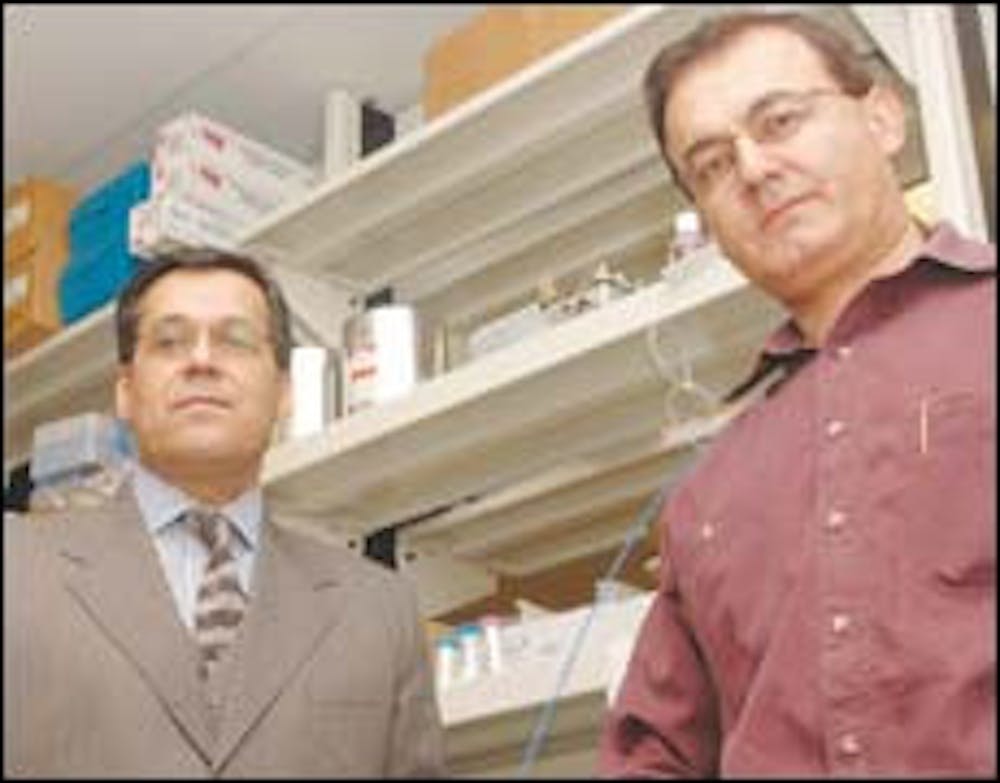
Developed by WQC Director Morteza Abbaszadegan and his ASU research team, the biosensor uses fiber optics, wireless communication and a patent-pending chemical process to identify bacteria in as little as 10 minutes.
Identifying those same bacteria usually takes between 24 and 48 hours using current methods.
"We have developed bacterial signatures," Abbaszadegan said. "By knowing those signatures, we can identify bacteria in an unknown sample. It's very exciting."
In the case of disease-causing bacteria, identifying unsafe drinking water needs to be done quickly, he added. The difference between 10 minutes and 24 hours could save lives.
Binga Talabi, senior chemist for the Scottsdale water quality department, said a device like the biosensor could improve any city's preparedness in the event of a bioterrorism attack.
"The focus of most municipalities is to find real-time monitoring systems like this," he said.
In addition to the device's speed, another advantage is that it could be installed onsite, enabling more accurate readings, said research associate Mohamad Elzein.
Abbaszadegan said the biosensor could also be adapted to detect hormones in water sources.
Hormonal contaminants, he said, are an emerging issue in the industry due to the use of birth-control pills and other medications.
When people using hormonal medications urinate, hormones are released into the wastewater, which is then filtered and often mixed with drinking water sources.
Abbaszadegan said that although humans have yet to be affected by waterborne hormones, some fish in the Everglades have been negatively impacted.
Male fish have started developing female characteristics as a result of living in contaminated water supplies.
Abbaszadegan said he's currently seeking a patent for the biosensor, which he hopes to commercialize within the next few years.
That would mean national recognition and big bucks for ASU, he added.
"We know [the biosensor] works because we've been working on it for a couple of years," Abbaszadegan said. "The issue now is how would the industry like to use it?"
At Monday's meeting, other professors and research teams presented progress reports and proposals for additional WQC projects.
Sponsored by the National Science Foundation, the WQC is a collaborative effort between UA, ASU and industry members, who often fund research projects like the biosensor.
Reach the reporter at ann.censky@asu.edu.