Sulejman Talovic was a survivor of Bosnia's civil war in the early 1990s, specifically of the Srebrenica massacre in which 8,000 Muslims were killed. He escaped with his mother and father, although his grandfather was killed by shellfire.
On Monday evening, 18-year-old Talovic opened fire on a Salt Lake City shopping mall, killing five people before he was fatally shot by police responding to the scene.
Talovic wore a trench coat when he went to the mall with a backpack full of ammunition, and because the events of April 20, 1999 have been permanently burned into my brain, I thought of pictures of trench-coated Columbine High School shooters Eric Harris and Dylan Klebold.
I remember being riveted to the news as it was announced that 12 students and a teacher had died that day.
I remember wondering then, as I do now, what causes a teenager with a whole life of possibilities to commit murder.
Almost eight years later, I still have no answer. I still feel stunned and speechless.
This is the way I felt one night in high school, when an evening of homework was interrupted by a phone call from my best friend, who'd driven to the middle of a bridge crossing the Arkansas river and didn't know whether to drive home or jump in.
Speechless is how I feel when I add up the number of friends I have who've been prescribed mood-altering medications.
I used to believe that happiness was as simple as Abraham Lincoln made it out to be when he said, "People are just about as happy as they make up their minds to be."
I believed it was all a matter of willpower until I watched a Boy Scout develop alcoholism and depression in his freshman year of college.
I believed it until he dropped out of school before he finished his first semester, sold everything he owned and moved across the country.
When I met him again, years later, after he had spent time in the hospital being treated for mental illness, and I saw how he'd shrunk into himself despite gaining forty pounds, I knew that happiness is not a choice he decided against.
I know that the family members and friends I've visited in the mental and behavioral health wings of various hospitals would choose to be anywhere else in the world if they could.
It's taken a while, but time and experience have taught me that mental illness is no different than any other problem affecting our bodies.
A chemical imbalance that causes depression is as much the fault of anyone suffering from it as Down syndrome would be.
Yet, while we've overcome the societal stigma attached to most genetic disorders, we still have a tendency to blame those suffering from mental health issues for their medical problems.
We look at their lives, we reason that nothing can be bad enough to inspire such depression, and we blame them for causing their own unhappiness.
We've watched innumerable episodes of "Law & Order" that demonize schizophrenics, characterizing them as dangerous criminals who knowingly refuse to take their medication and inadvertently end up kidnapping babies.
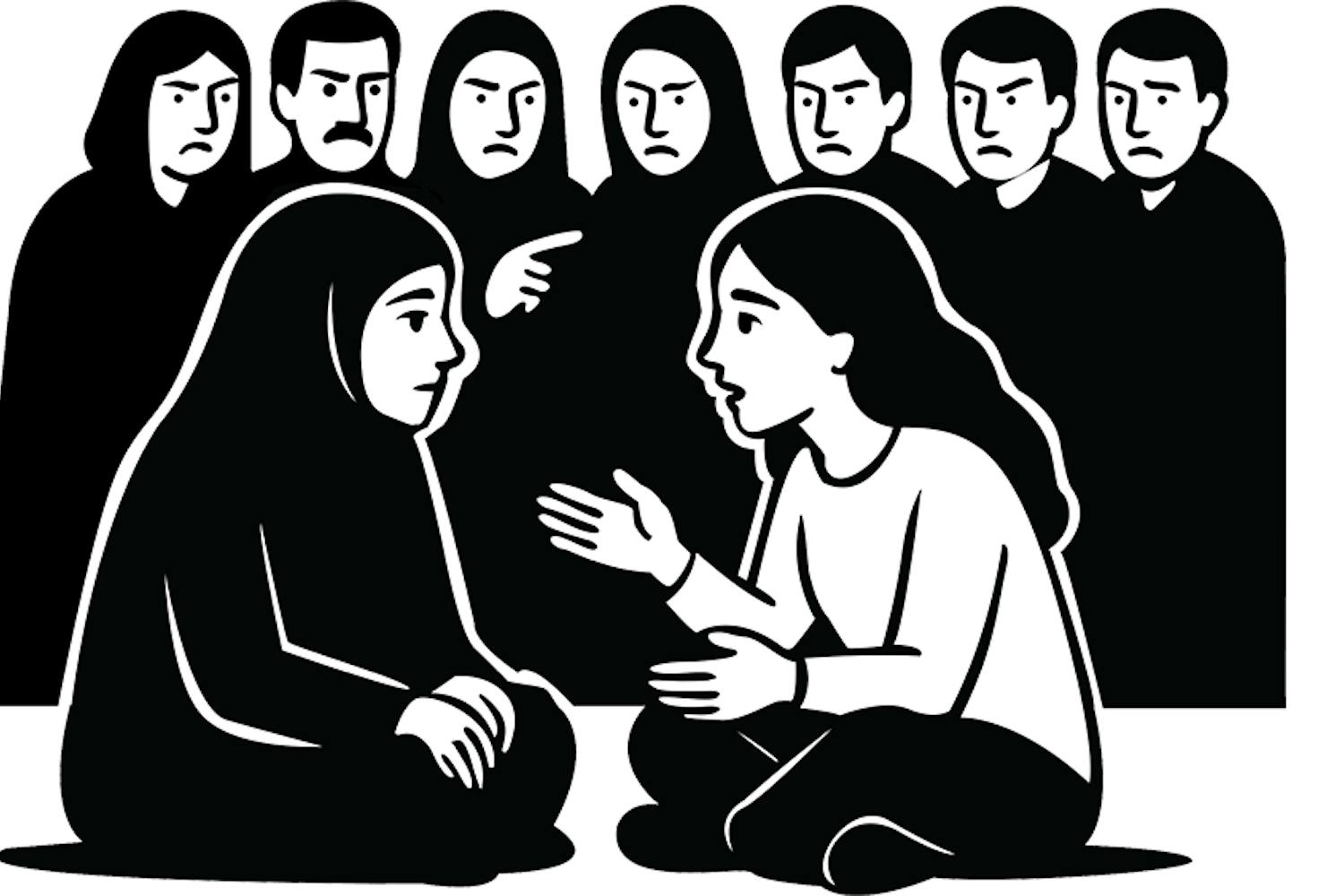
Because we judge mental illness so harshly, people suffering from it are understandably reluctant to speak about it openly.
Instead, there is a culture of silence surrounding mental health, which is ironic, considering that the National Institute of Mental Health estimates that 26.2 percent of Americans over 18 suffer from some form of mental disorder.
I don't know that altering the attitude we have toward mental health would have stopped Talovic or Harris or Klebold from doing what they did. I don't know if they would have sought out professional help if we stopped thinking of mental illness in and of itself as criminal.
I do know that there is a possibility that changing our attitude toward mental health could stop violence in the future, and I think that's worth talking about.
Reach the reporter at: mailto:hanna.ricketson@asu.edu.