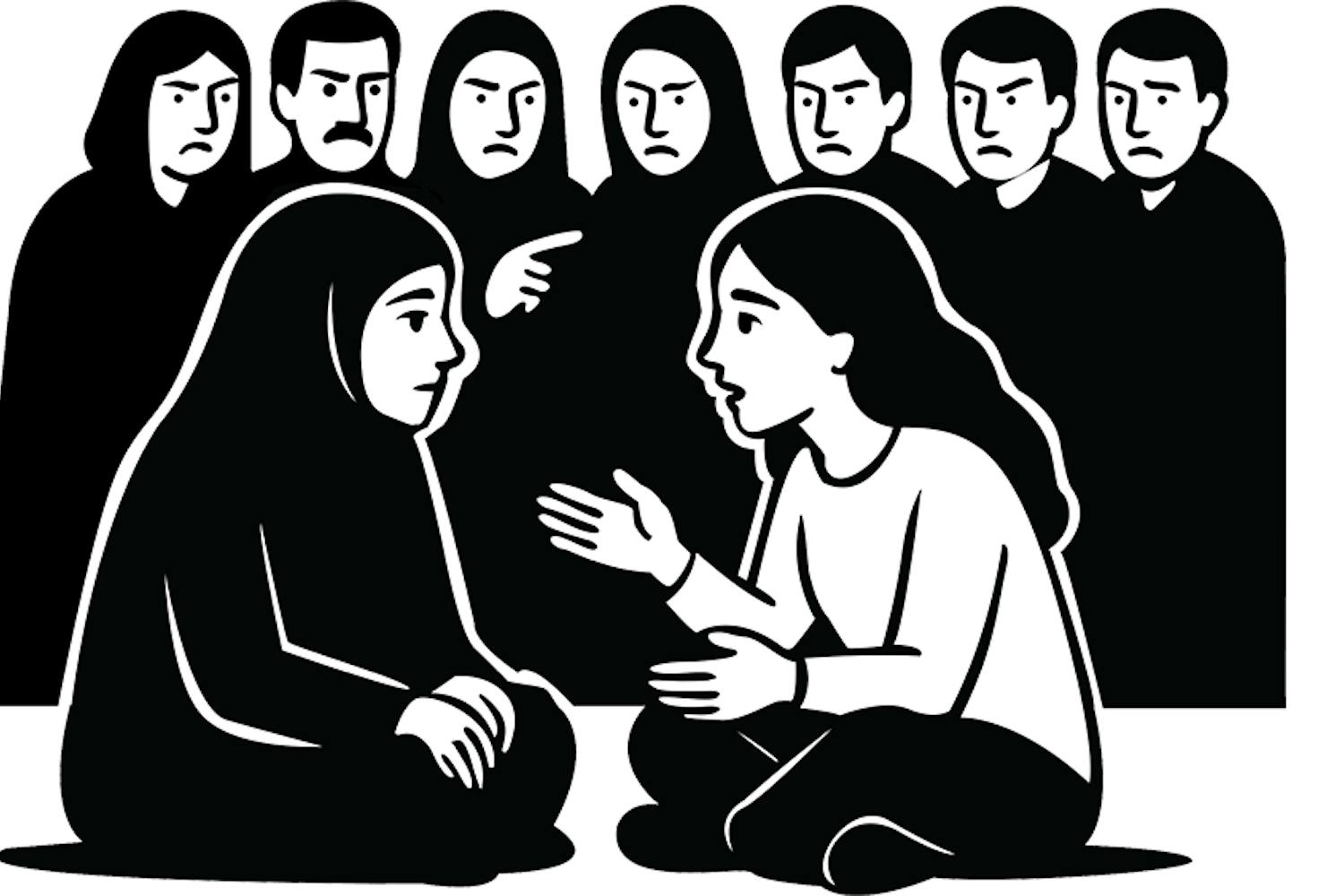
Today marks the eleventh annual National Day of Silence, a symbolic action to represent the ensuing silence of members of the lesbian, gay, bisexual, transgender, queer and questioning community as a result of discrimination or marginalization.
It began in 1996 at the University of Virginia, and has since spread. The Gay, Lesbian and Straight Education Network estimates that some 450,000 students participated in this national event last year, as well as 4,000 schools. The network also reported that, "The tenth National Day of Silence was one of the largest student-led actions in American history."
This year ASU is taking a markedly different approach to the National Day of Silence. This event has been planned to take a more proactive stance and promote LGBTQ empowerment, as opposed to the typical focus of victimization.
This is not to say that there is not a pervasive inequality that exists in our country and states' laws.
The U.S. military policy of "Don't ask, don't tell" still hinders LGBTQ servicemen from living openly. Every state that has brought an initiative to ban homosexual marriages or unions in their constitution has passed, with the sole exception of Arizona, which voted the initiative down in November, in a slim victory. And only Massachusetts and New Jersey have made actual legislative and judicial efforts to legalize same-sex unions.
On another note, anti-gay slurs still worm their way into public discourse. Recently, conservative author and supposed political commentator Anne Coulter used the word "faggot" to describe Democratic presidential candidate John Edwards at a conservative banquet.
When interviewed by CNN, Coulter defended her actions, stating that 'faggot' was merely a "playground taunt."
The usage of words like "faggot" are akin to other pejorative terms used to refer to African-Americans, Asians, Hispanics, women, and so on. While Coulter did receive criticism for her words, had she used a racial slur instead, undoubtedly she would have taken a lot more heat.
And naturally, the American public finds these words unacceptable in public discourse, as well it should be. The current Imus scandal is another demonstration of racially charged and sexist speech.
But why should "faggot" be any different? It is still offensive and serves to demean and differentiate a minority group.
Even so, the LGBTQ community has come a long away over the years. Gays are depicted often in the media, and generally have a positive image, such as on shows like "Will & Grace," and through icons like Ellen DeGeneres, who hosted the latest Oscars.
While homosexuals have come a long way in the fight for equality and fairness, there is still a long way to go, and that is the point of the National Day of Silence - to be silent no longer. That was the approach; The Day of Silence this year aims at LGBTQ empowerment as opposed to lamenting over past wrongdoing and discrimination.
This spring, we seek to overcome oppression boldly, and also acknowledge that people from all groups, whether ethnic, religious, political, or based on sex, have been discriminated against.
The modern fight for LGBTQ rights is reminiscent of the fight for women's suffrage, the Civil Right's Movement.
Thus, NDOS this year acknowledges that all groups are discriminated, and hopes to stand in solidarity to fight the injustice against those oppressed now.
Rick Beitman is a co-chair of the LGBTQ Coalition's National Day of Silence, and a political science and French senior. Questions and comments may be addressed to: richard.beitman@asu.edu.