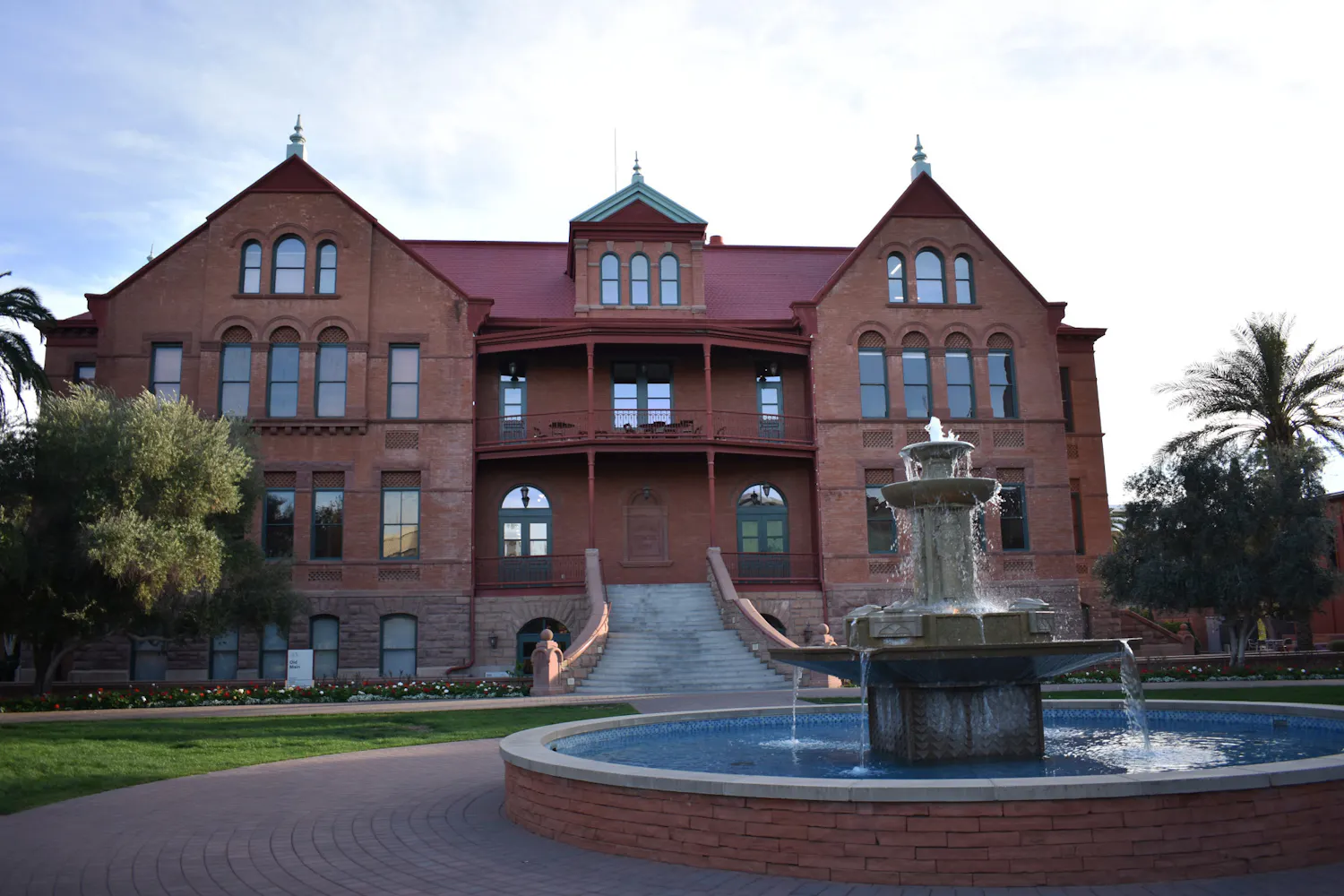
ASU Changemaker put on its first Sustainable Fashion Show, showcasing student creativity, expression and sustainability on Nov. 7 on the Student Services Lawn.
The show included three categories: Cultural Roots, Thrift Flip and Zero-Waste Couture.
"Sustainability is so broad," said Paige Hebert, ASU Changemaker vice lead of sustainability and a sophomore studying sustainability and geographic information science. "It's not just about upcycling or recycling, but it's also about reusing and taking back to cultural ties."
READ MORE: Upcycling is for everyone: a guide to sustainable fashion
The show had a total of 10 entries, worn by both designers or models.
"It's been really fun to see all the creative design students have come up with," Hebert said. "That was all the students' own agency; then we just get to be the place where they get to showcase it."
Serena Teng, a junior studying painting, drawing and art education, and Jasmine Pycha, a junior studying business, entered the Cultural Roots category together.
This category showcases the sustainability of preserving cultural heritage, identity, community and tradition.
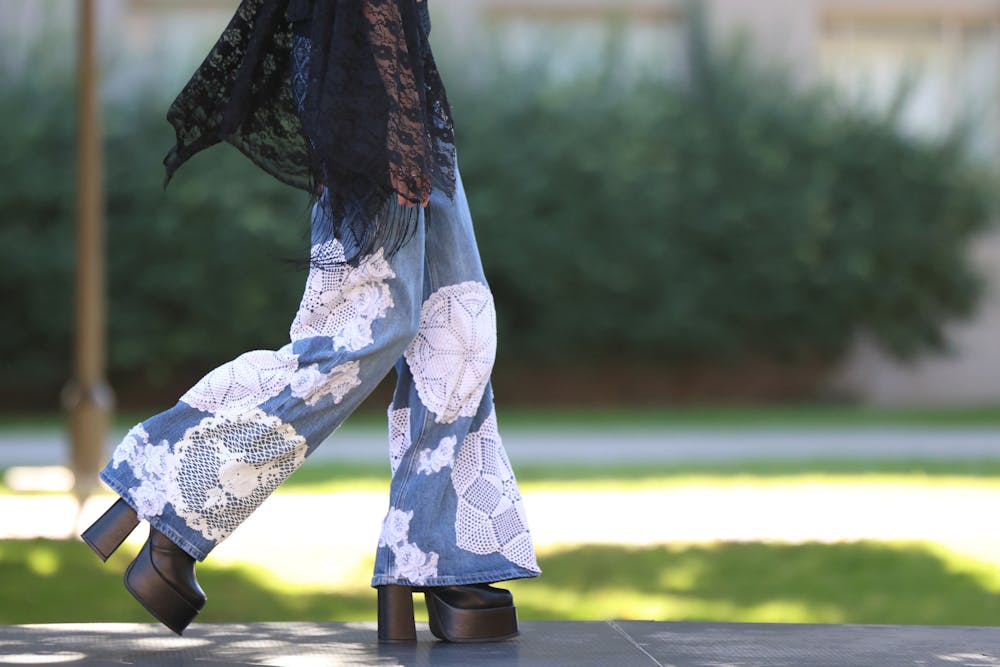
"Both pieces are connected to different Chinese dynasty eras and are fused in with modern elements," the program said of Teng and Pycha's designs.
The outfits were created using thrifted pieces and items already owned by the pair. For Teng, the hardest part of creating these pieces was mixing and matching to see what worked and what did not.
"We had a Pinterest board of all the goals that we want to have," Teng said. "I feel like we just kind of went with the colors that fit us."
Clara Najjingo, a freshman studying fashion, entered her design in the Thrift Flip category.
This category showcased students' secondhand clothing by reinventing it to prove that style does not need to come with an ecological footprint.
READ MORE: Fashion's dirty secret: Cheap clothing and its towering environmental cost
The main goal of the outfit was to use materials that do not require manufacturing chemicals, which are bad for the environment, Najjingo said.
"In my class, we've been learning about waste and how the clothing materials pollute the environment," Najjingo said.
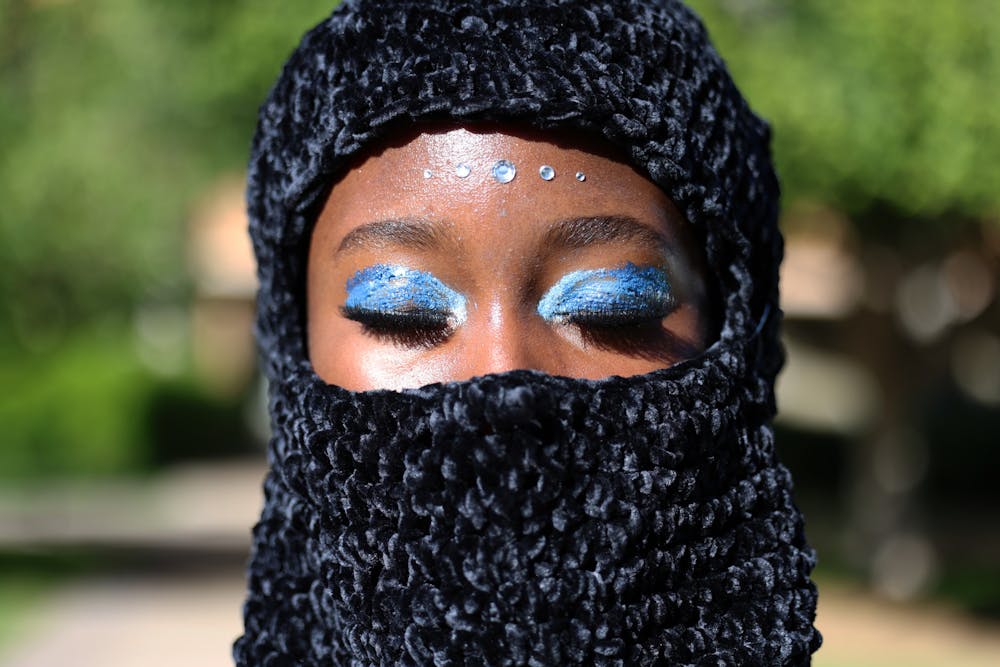
Her design featured a hand-crocheted headpiece that took six hours to complete and a plastic skirt and top.
"I had to count everything. I had to count increases, like double crochet, single crocheting and triple," Najjingo said.
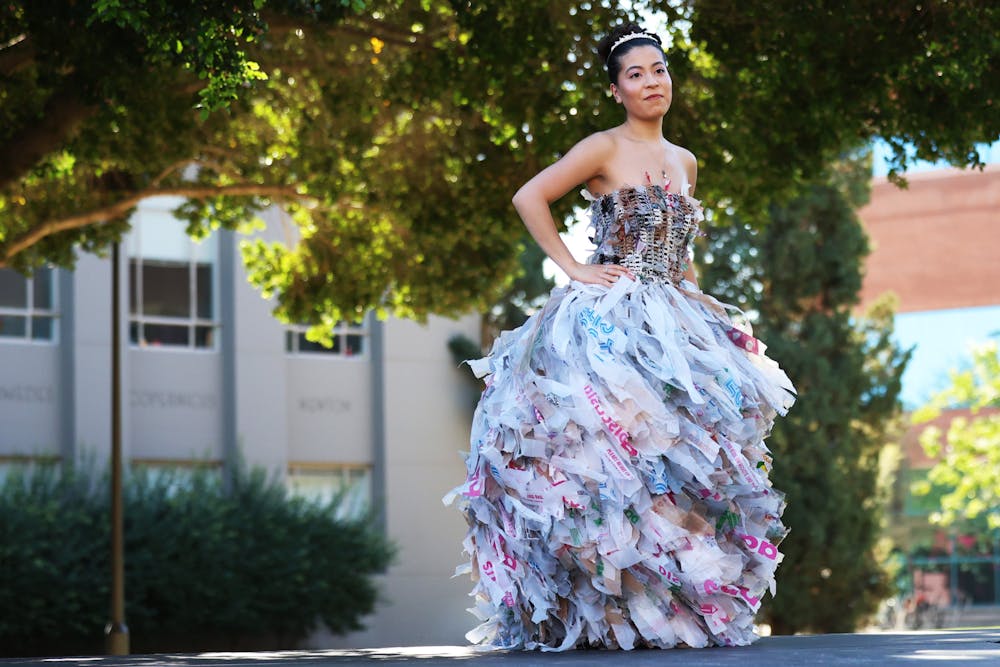
Vianny Arroyo, a junior studying fashion, entered two outfits in the Zero-Waste Couture category.
This category was all about high fashion with a low impact, to show how luxury and sustainability can coexist. Arroyo made a dress out of crochet that highlighted the creative frustrations of a designer.
Arroyo's first design called "Silent Belle" was made of crochet and highlighted creative frustration and challenged habits and ideas that come with perfection.
"This one is my most personal piece, just because of the mindset I was in. I was going through a creative block. As a person, I'm really a perfectionist, it works with me and against me," Arroyo said. "I woke up one day and I was like, I want to create, and I'm just gonna do it."
The crochet dress took her three months to create while the plastic bag dress took her six months.
"Everything really came naturally with both pieces," Arroyo said. "This really is like a symbol of creative freedom."
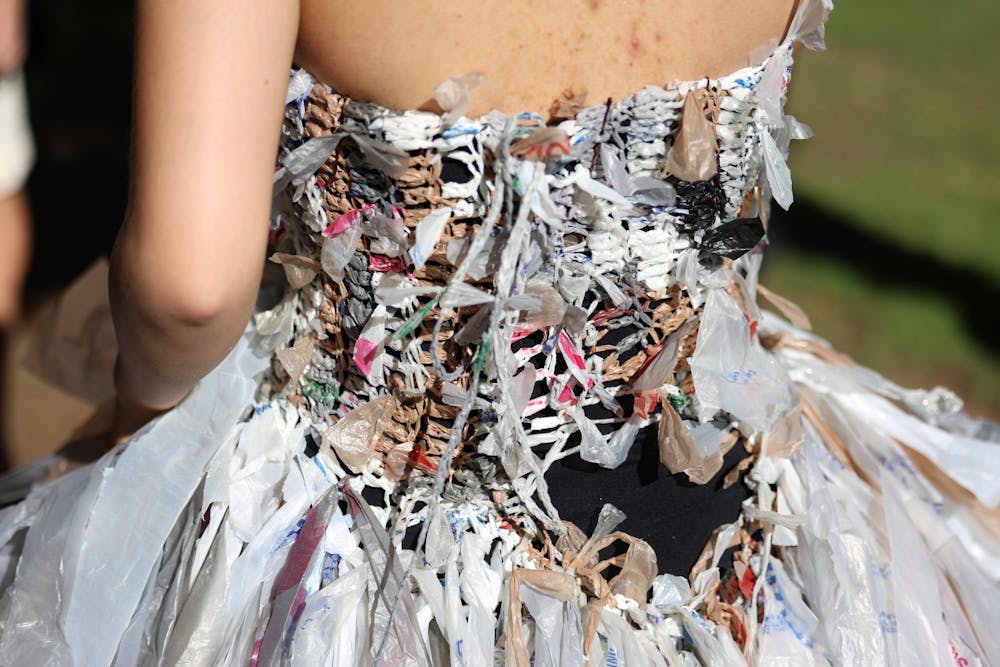
For the plastic bag dress, Arroyo said it was an incredibly long process, and she did not know where to start initially. She started by using crochet techniques to make the plastic bag strands stick together.
"It's very uplifting to see (the dress) because ... it's my most personal piece and really identifies me as a designer," Arroyo said. "The day before the show, I saw this dress on the mannequin, and I walked into my room randomly, and I teared up ... taking a moment to step back and just look at it."
Edited by Natalia Rodriguez, Senna James and Sophia Braccio.
Reach the reporter at galawre3@asu.edu.
Like The State Press on Facebook and follow @statepress on X.
Grace Lawrence is the lead reporter for the community and culture desk at The State Press. This is her 2nd semester working with The State Press.