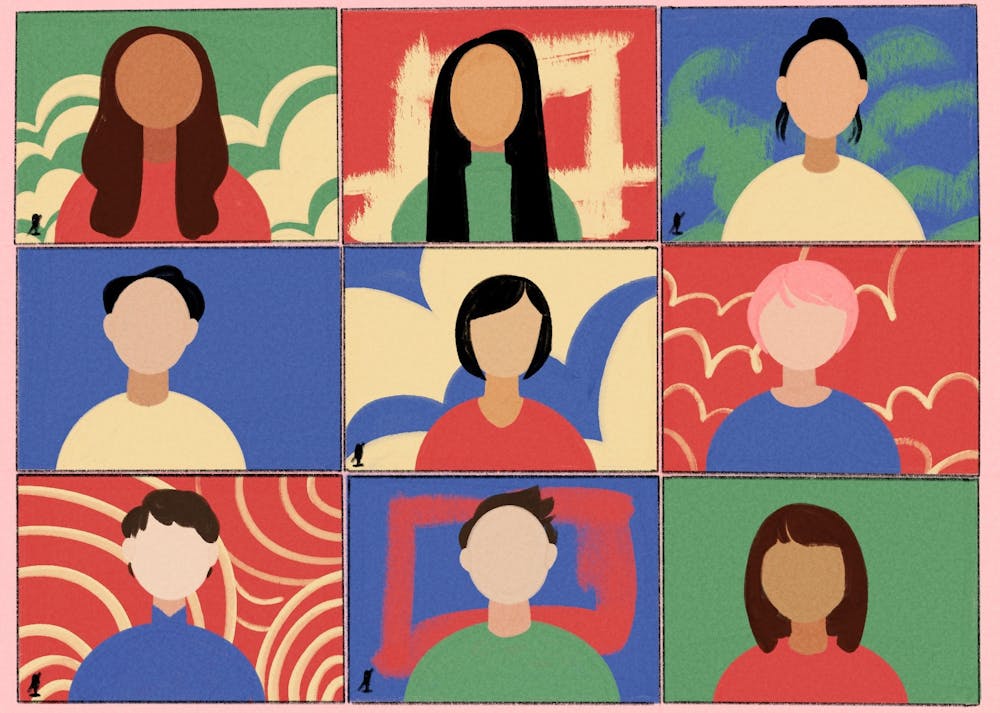
The Race and Relationships (R&R) Lab is a counseling psychology research lab at ASU that studies topics primarily impacting communities underrepresented in research.
Current areas of focus include the impacts of racism on health outcomes, as well as how individuals can begin to heal from such encounters by strengthening their interpersonal relationships. Lydia HaRim Ahn, founder and principal investigator for the R&R Lab, said the team meets biweekly to generate ideas for research within its focus areas.
"We conduct studies that really focus on translating science," Ahn said. "So, how do we develop programs and prevention and intervention programs that can help facilitate healing?"
Ahn began working in psychology research with marginalized communities before starting the R&R lab. While pursuing her master's degree at the University of Pennsylvania, Ahn helped develop an intervention to assist parents in discussing racial stressors with their children.
"Being able to work on this project, I really saw the impact of this intervention," Ahn said. "I wanted to continue this line of research with Asian American families."
Now, she is actively pursuing such research through the R&R Lab. One project aims to investigate whether strong parent-child communication within Asian American families can alleviate the effects of discriminatory stressors.
The project is in active recruitment for participants from across the country. The researchers are looking for parents and adolescents within Asian American families to participate in a 'daily diary' approach style of data collection in which entries are collected every day for five days.
Beyond Ahn's work, student researchers within the R&R Lab explore questions related to the lab's focus areas and similar topics. Finneas Wong, a doctoral student studying counseling psychology, recently finished a paper investigating how humor can impact the psychological effects of discrimination.
"Sometimes we laugh about whatever atrocities that happen to us because we just have to find a way to cope," Wong said. "Other times, we try to use self-enhancing humor to also cope with whatever has happened."
Wong said using humor as a coping mechanism is an experience many of the people working on this research have lived through, as individuals "holding marginalized identities." He added that the method has helped to cope with systemic and internalized racism.
The researchers are trying to figure out how to "alleviate" the impacts of such experiences, whether through therapy or community efforts, as well as efforts to become resilient against discrimination, Wong said.
READ MORE: Counseling services are easier to find than students think
Preesha Kumar, a senior studying psychology and a student research assistant at the R&R Lab, discussed her experience with the discriminatory stressors the lab aims to alleviate, including the model minority myth.
"Asian Americans, unfortunately, are believed to be more competent, more told to stay in our lane and we're told to just be very productive and to not really question the system," Kumar said. "Because people perceive us like that, we're less willing to break norms, break cycles, break traditions and seek mental healthcare."
Kumar said she observed an underrepresentation of Asian Americans within the mental health field. For this reason, she began working in the field to have the opportunity to advocate for people.
She added that historically, Asian American mental health care has been underrepresented in comparison to other groups. Wong also noted that he has observed little funding for studies specifically focused on Asian Americans.
According to a 2019 study, only 0.17% of the National Institutes of Health's budget between 1992 and 2018 funded projects focused on Asian American, Native Hawaiian and Pacific Islander participants. Wong said the current skew of research studies does not represent the communities living in the U.S.
"Our lab (is) not specifically looking at Asian Americans, but (for) a portion of the work, we are," Wong said. "I think it is just amazing there are still efforts being put into this field."
Edited by Kate Gore, Senna James, Tiya Talwar, Sophia Braccio and Pippa Fung.
Reach the reporter at dmle5@asu.edu.
Like The State Press on Facebook and follow @statepress on X.