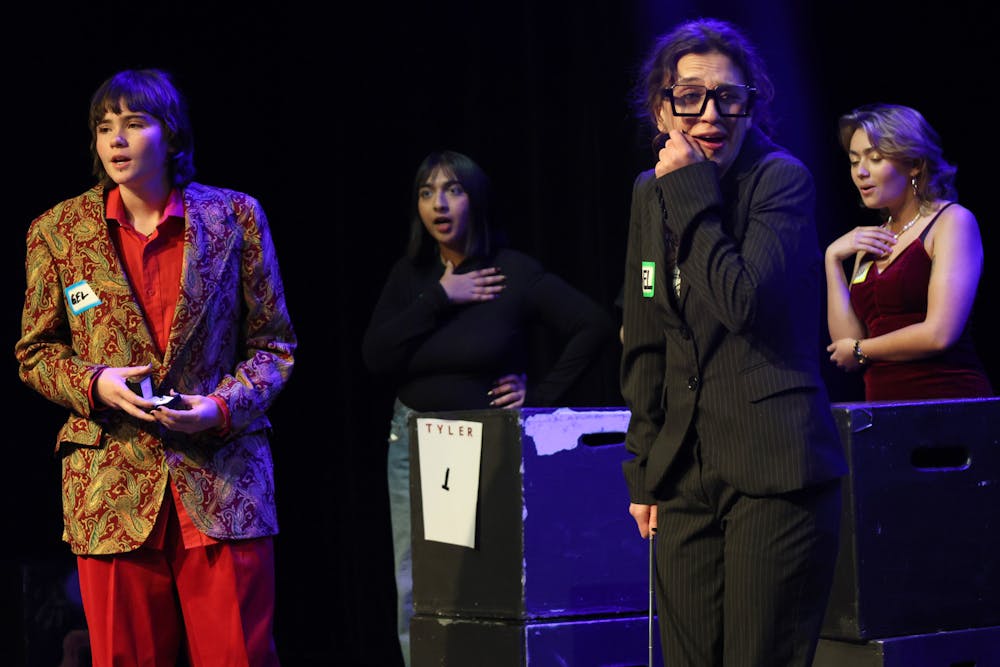
"That's What She Said," ASU's sketch comedy show written, directed and performed by an all-woman and gender minority cast, took the stage for the second year in a row at ASU Prism Theatre on March 7.
The show was first performed last year when Madison Meyers, a junior studying film and media production and French, along with her friend Shea Riley, a junior studying theater, saw the need for a women centered space in ASU's comedy scene.
This year, all proceeds from the event were donated to St. Jude Children's Research Hospital.
Meyers said previously "there were so many amazing, funny women that just didn't get the space that they deserved in order to be amazing and funny."
The show consisted of 13 sketches full of physical comedy, dry humor and even some audience participation throughout.
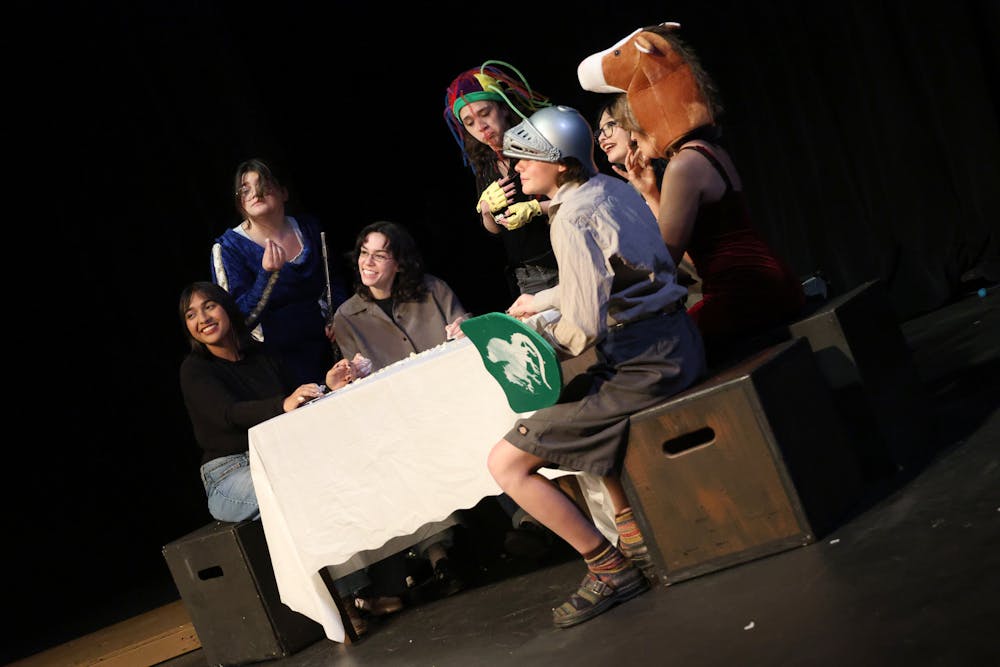
The cast had a variety of props to work with but used minimal set dressing to accommodate the size of the blackbox theatre.
This year's production pulled cast members from different groups at ASU including Farce Side Comedy Hour and TBA Comedy, as well as students who were not previously involved with a specific club, allowing for a larger group with a diverse brand of comedy.
Creating a comfortable environment for the cast to share their ideas was important to Meyers, who has experienced unsupportive writers' rooms.
"It's not just always men, but I've had a lot of like men who I've worked with in comedy be very judgmental," Meyers said. "They always tended to come down on my sketches because they usually were more femme focused humor."
Kaycee Aldaz, a junior studying theater design and production, said the positive environment of the show prompted them to share sketch ideas they had previously been nervous about presenting. As a writer, performer and Prism Theatre representative, Aldaz contributed to the technical aspects of this production, ensuring things like audio and lighting were properly programmed.
"I felt empowered because other women and gender non-conforming people laughed along with my sketch," Aldaz said.
Sketches for the show ranged from a sign language interpreted birth to commentaries on the culture of toxic masculinity. The main goal was to make audiences laugh, Meyers said.
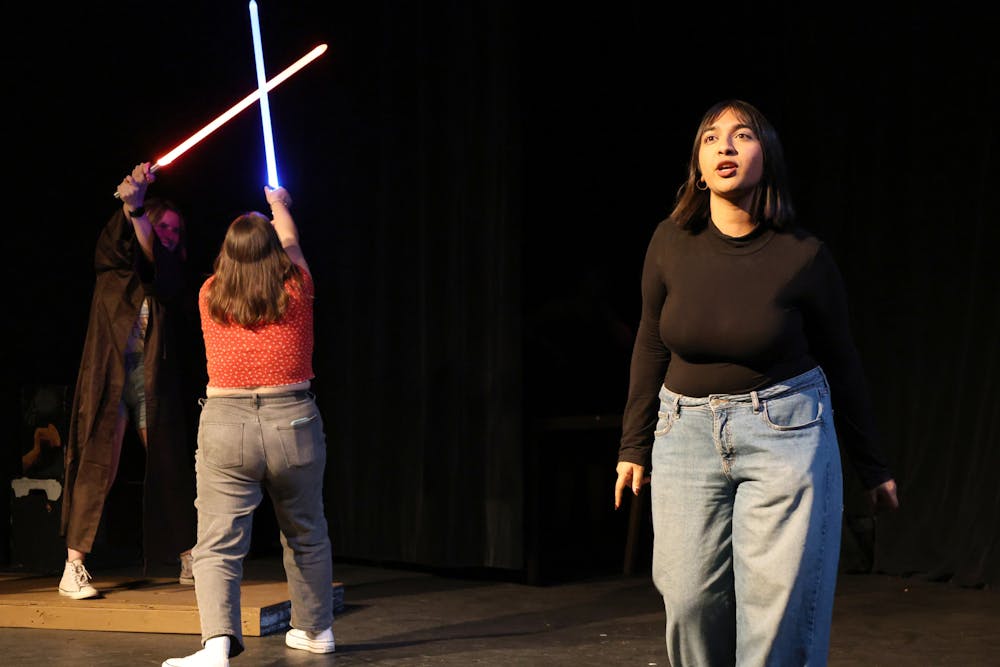
Meyers said she also hoped the audience would feel inspired by this production to think about comedians in a way that is not based on gender identity.
"It'd be great to define (the show) as a sketch comedy show that happens to be all women," Meyers said.
Molly Riley, a freshman studying mechanical engineering, said in some ways, it is easier for male comedians to get a laugh as audiences tend to react differently to female comedians, but shows like this help break down these barriers.
"It's so deeply ingrained in some people," Riley said. "I think having spaces like ('That's What She Said') maybe takes away from that, makes it more equal."
READ MORE: Student comics reflect on changing cultural discourse, importance of diverse writers' rooms
Meyers said comedy is a way to get these conversations started because comedians are able to present social commentaries in a way that is digestible to their audience.
In addition to inspiring her audience, Meyers also aimed to uplift her cast mates through this performance.
"You want a bunch of people to be able to explore different stories," Meyers said. "It's the same thing with comedy, of giving women the space to just do what they want, whether there is a message or not to their silly sketch. It's just so important to have their voices heard."
Edited by Kasturi Tale, Senna James and Sophia Braccio.
Reach the reporter at cabeery1@asu.edu
Like The State Press on Facebook and follow @statepress on X.