When Charli XCX released her critically acclaimed album "brat" last year, the record became more than a collection of songs — it was a lifestyle for a whole summer.
The singer went on to accept The Wall Street Journal's 2024 Music Innovator Award and gave a speech at the podium before dancing to her own song with The Dare during the event’s afterparty.
"I wrote an album about myself and about my friends and about partying and about all of my problems," she said during her speech. "I wasn't really sure if anyone would connect with it, but luckily for me, the pendulum of culture swung in favor of messiness, personality and the niche."
She described her elation that the music industry was in a place where it "embraces female artists for their authenticity and their individualism. For being unapologetically themselves, for being imperfect and above all for being chaotic."
But a year and a half later, the pendulum swung back.
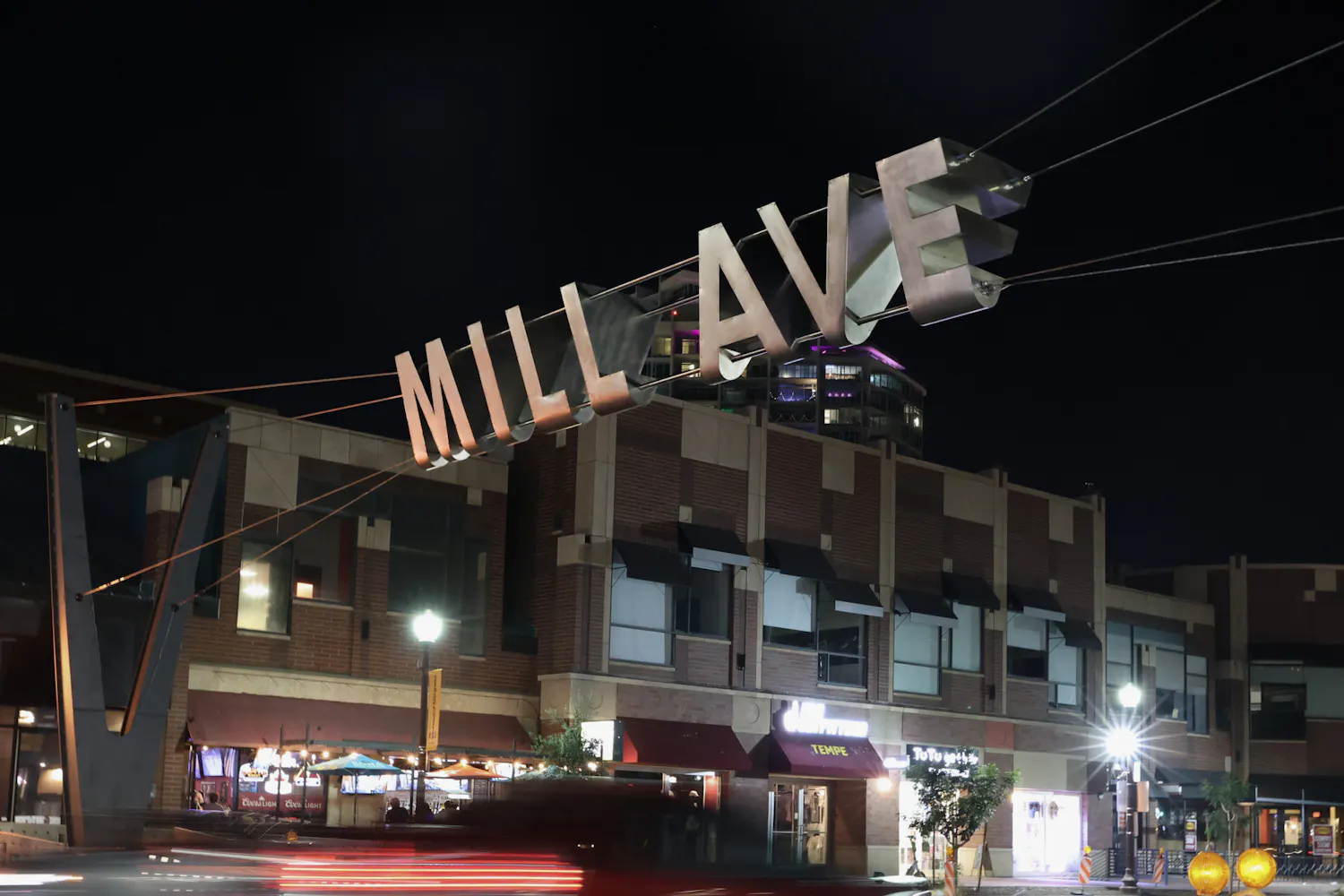
Mini skirts are turning into floor-length petticoats, friends from high school are marrying their military boyfriends at 20 years old, the popular ASU party scene is dead and "trad" is in.
The accolades Charli XCX received turned sour, with people claiming that being 'brat' was an excuse to be rude and messy — disgusting even. How can a piece of art meant to embrace the freedom of being a slightly flawed hedonist turn into something worthy of being burned at the stake for?
Revolutions and rosaries
In the 1960s and '70s, the sexual revolution set modern culture ablaze. The rigid social norms from previous generations began to loosen and society went in a more progressive direction.
Eric Swank, a clinical professor specializing in social and cultural analysis at ASU’s West Valley campus, said this kind of generational movement among young people in society is called a collective, or public challenge.
"First, the '60s was more anti-war activism and civil rights activism, and then in the '70s is when there started to be more mobilization among feminist movements," Swank said. "And then a little bit later than that, queer movements became more public and mobilizing in the late '70s, and then going into the early '80s."
Casual drug use, advancing equality between men and women, 'the pill' and a distaste for authority ran rampant throughout subcultures and minority spaces, eventually seeping into public knowledge.
"Mainstream stuff generally has control over [the public] and manages sexualities and gender," Swank said. "But at the same time, there's always competing trends and contesting at the individual level, even if it’s not public, their brain is trying to change it."
The liberation college-aged people cultivated for themselves was a direct reaction to the strictness of previous decades. Young people felt free to do what they wanted in a way that was unique to their generation — until it became a disruption.
Older generations became concerned about the youth’s promiscuity and lack of inhibitions, raising red flags about premarital sex, falling into harmful cults and participating in unruly behavior that could lead to other issues down the line. And due to a widespread misunderstanding about the AIDS epidemic, gay men, drug users and Black people, specifically, were ostracized from society, despite heterosexual men and women also contracting and spreading the disease.
According to the National AIDS Memorial, "The same systemic racism that devalues communities of color permeates institutions– healthcare, housing, work, family – that we need to take care of ourselves and one another. The coupling of racism and AIDS stigma has been lethal. So too has been the rising cases of hate crimes and acts of discrimination and racism against Black, Asian and the Trans communities."
This fear triggered a rise in more conservative beliefs. Purity rings, abstinence and a strong resistance to anything "controversial" became the push that thrust young people into menial office jobs.
By the '90s, the term "purity culture" was coined, based on puritanical religious beliefs from 16th-century England. It was characterized by American Christian communities through the popular book "True Love Waits," which encouraged women and men to show less skin and stop engaging in devious sexual behaviors. It also pushed religious spaces to prohibit smoking and drinking alcohol.
According to Swank, the uptick in shame toward supposed deviant behaviors and a turn toward conservatism happen in cycles, especially at times of political unrest, and vice versa.
"There’s a debate in literature that says social movements respond to what’s called political opportunity structures, or changing political environments," Swank said. "The argument is that social movements have to grow when elites and the powerful have some cracks and break, so at least progressive ones grow when [the] president and senators argue, when corporations don't fund certain types of politics and when religious institutions break from conventionality."
Parties and purity
After the late aughts, a time characterized by loud, abrasive pop music, glitter and eyeliner smeared with sweat and alcohol, young people didn’t see another generation-defining resurgence of party culture until "brat summer." It was a season that embraced being loud, wearing less and drinking more. It was also a fleeting moment — suddenly Kamala Harris wasn’t 'brat' anymore, and America was about to enter a new conservative administration, which was voted in by a landslide. Faced with a looming war, a new presidency and rising prices, tension rose between American citizens.
At the height of this strain, Robert Eggers' "Nosferatu" — starring Lily Rose Depp and Bill Skarsgard — was released. In the weeks leading up to its Christmas Day opening, it received critical acclaim and headlines that predicted the film would have a large impact on popular culture.
Throughout history, films released during times of nationwide turmoil have become champions for the era, such as "The Wizard of Oz," which was made during the end of the Great Depression. "Nosferatu" came out alongside other films like “Wicked” and “A Complete Unknown” — all three garnered attention from huge audiences and reflected themes of transformation to viewers.
But despite the positive reviews for "Nosferatu," the internet had an array of thoughts about the movie’s contents.
"Nechrophilia porn. Disgusting. Ruined Christmas for me. If I could give it no stars I would," one Letterboxd user wrote about the film, with a half-star rating to accompany it.
Eggers' movie is a remake of the 1979 film "Nosferatu the Vampyre," which is a remake of the original film from 1922. The story itself was taken from Bram Stoker’s novel "Dracula." The plot and details of the film have been referenced in the media countless times, despite shock that the 2024 film had three key themes — sex, death and shame.
When I saw the movie at the AMC Centerpoint in Tempe, in a theater filled with college students, moments of silence were filled with laughter or suppressed chuckles. The general consensus on social media was that "Nosferatu" was "too freaky."
Within the last couple of years, posts shared by Gen Z users on X and TikTok reflect sentiments that sex scenes in movies and TV shows have become unwarranted.
One post on X reads, "sex scenes are truly not needed in film and if you're a good videographer you know how to imply it w/o an actual sex scene." Another stated, "if we abolish all sex scenes maybe we don’t need intimacy coordinators."
According to a study from the University of California, Los Angeles, 51.5% of adolescents said that instead of wanting scenes depicting sex or intimacy of any kind, they would rather see the development of platonic relationships on screen.
This trend in beliefs has formed directly alongside similar thoughts regarding going out and experiencing nightlife. According to young people on social media, just as sex scenes and controversial content in movies are "too much," so is partying.
Several posts on X state, "partying is for the emotionally unwell, very low vibrational," and “Stay away from doing low vibrational activities E.g going to the club, partying, drinking alcohol, doing drugs. A lot of people don’t have your best intentions in mind. All they do is waste their lives away & they don’t care if they take you down with them."
The term 'low vibrational' has no clear origin, aside from its popularity in spiritual spaces. It has transitioned into new internet slang, with many people using it to describe behaviors they deem as "toxic" or negative. One Reddit user even associated being "low vibrational" with being a bad person, and on the flipside, "high vibrational = non-toxic shit, positive energy, good people."
Gen Z's strong aversion to sex, intimacy and discomfort in film, as well as being anti-drinking, parties and nightlife, has resulted in what seems like the second coming of the '90s era purity culture.
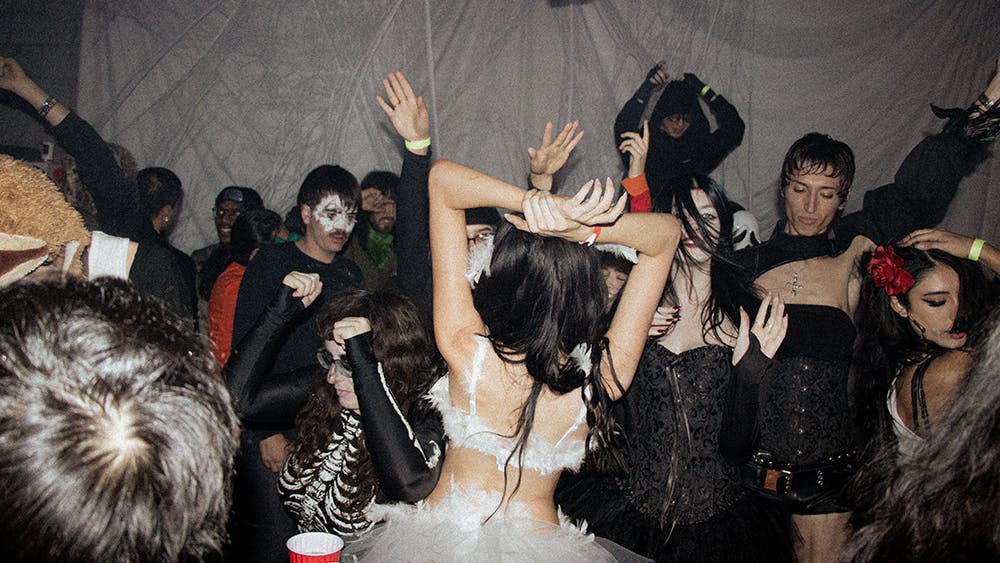
"People have become too wound up," Maxine Hernandez, a junior studying photography, said. She specializes in documenting underground party culture. Her most recent project is titled "The Carefree — Work. Money. Death," which is a mini-series about house parties and Halloween.
"I think we are living in a really politicized time, but it's mixing with people not knowing how to connect with other people in that way," she said.
Hernandez said people aren’t having fun "like they used to." She has noticed that at concerts and events, there's a reluctance among people to break down their walls and become more open-minded. Because of this, she said the underground party scene has become a way to do that for college students.
The parties Hernandez attends and documents are often filled with young people from all types of backgrounds. If it's a house party, there’s usually a list of invited guests, who are allowed to bring whoever they want — it creates an environment of familiarity while allowing attendees to meet new people.
At the "underground parties" I've been to, it's as if the UCLA statistics and complaint tweets don’t even exist. A walk through the party's front door, past the living room and into the backyard has left me with five new friends and 10 different conversations. I’ve watched relationships' life cycles begin and end within a night, and I've seen people compete with each other at arm wrestling, cup pong and Wii Sports tennis. DJs leave their stands to go dance, letting guests queue their own music. People are sitting on couches outside and discussing the ethics of artificial intelligence, while a foot away, their friends are making out. There are no rules, just fun.
"Being part of an underground anything, we all notice a shift in culture, and we're trying to preserve the essence and the sanctity of partying," Hernandez said. "I believe that parting is like a form of art in a way because you have the music, you have dance, it's all these different forms of human expression [that] come together."
According to Hernandez, underground cultures should never "bend a knee" to mainstream cultures, but due to the state of the political divide and the lack of connection among people, she believes everyone should experience a real, authentic party at least once in their lives.
"Partying is a way of [having] cheap thrills," Hernandez said. "You don’t need to go to a really expensive, lavish party with a bunch of influencers. You could just have a better experience with your friends at a house party with good music, good dancing and unadulterated fun."
The way Hernandez sees it, "unadulterated fun" is what Gen Z needs in order to be released from the shackles of believing sex and partying are inherently bad.
Due to the second wave of purity culture's influence on college students, Hernandez said it would be a "perfect utopia" to be rid of "societal norms and misogyny." According to her, "If that goes away, we can actually have fun and … connect with people on an intimate level. But that’s asking for the sky not to be blue."
Edited by Leah Mesquita, Natalia Jarrett and Abigail Wilt. This story is part of The Purity Issue, which was released on December 3, 2025. See the entire publication here.
Reach the reporter at njarret1@asu.edu and follow @nataliajarrett on X.
Like State Press Magazine on Facebook, follow @statepressmag on X and Instagram and read our releases on Issuu.
Natalia Jarrett is a managing editor for the magazine. This is her fifth semester at The State Press and she has worked as an illustrator, reporter and digital producer in previous semesters.