Two tickets are running for the executive positions of the Undergraduate Student Government Downtown. Each ticket has a candidate running for USGD student body president, vice president of services and vice president of policy.
Voting for the USGD executive election will take place from March 31 to April 1.
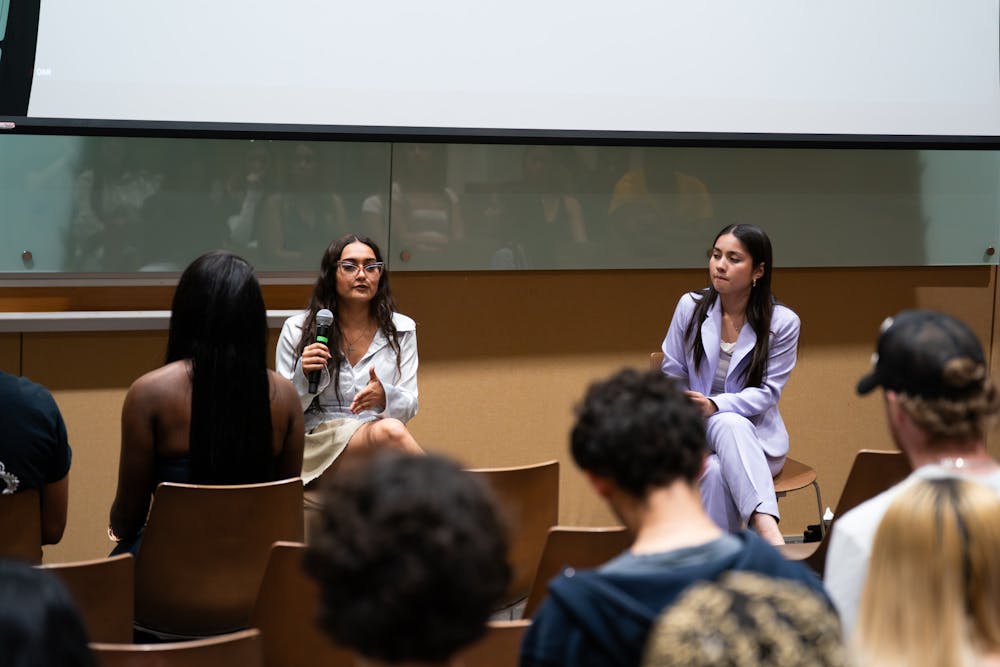
At a debate downtown on March 23, the two tickets discussed their proposals and issues important to the Downtown Phoenix student body.
The debate was moderated by election commissioner Kaneeshka Jakkula and assistant election commissioner Evelyn Cabrera, who guided the candidates across topics including affordability and student engagement.
The Ritchie Ticket
Katie Ritchie, Sydney North and Catherine Molina are running on the Ritchie ticket.
Ritchie, a junior studying public service and public policy, is running for student body president and has centered her campaign on four pillars: affordability, accessibility, connection and representation.
"Students shouldn't have to choose between paying for their education and paying for basic necessities like housing, healthcare and food," Ritchie said.
Her platform includes expanding funding for resources like the crisis fund and childcare subsidy, as well as increasing access to basic needs through initiatives like health and wellness.
North, a junior studying medical studies, is running for vice president of services. She said her experience within USGD and campus involvement has shaped her focus on improving student life, particularly in areas like housing, dining and campus safety.
Molina, an online student studying healthcare administration and policy, is running for vice president of policy. Molina aims to increase representation for online students.
Voters can learn more by reading the Ritchie Ticket's platform.
The Tedoco Ticket
Rei Tedoco, Adrian Ortiz and Naomi Inegbenedion are running on the Tedoco ticket.
Tedoco, a junior studying journalism and mass communication and the current USGD vice president of services, is running for student body president.
Her platform focuses on improving student and organization access to USGD appropriations, expanding awareness of campus resources and improving safety, she said.
Ortiz, a sophomore studying public service and public policy and current USGD director of communications, is running for vice president of services. He said he was motivated to run for the position because of his own difficulties finding resources as a first-generation student.
Ortiz said he would increase programming to connect students with professional opportunities.
Inegbenedion, a junior studying health care administration and policy, is running for vice president of policy.
Voters can learn more by visiting the ticket's website.
Affordability and access to resources
Candidates emphasized the financial challenges students face, though they differed in how they'd address them.
Ritchie focused on affordability, signaling rising student fees and the need to reduce the financial burden on students. She said her administration would advocate against increasing student-initiated fees and work to ensure more funding is directed toward basic needs support.
"Student fees and costs at ASU are going up," Ritchie said. "Our administration will be committed to not increasing any student-initiated fee to keep costs low for students."
Tedoco also acknowledged financial barriers but focused more on helping students navigate existing resources. She said a main goal of her ticket is to make sure students know how to take advantage of the funds available to them through the student government.
This would be accomplished by educating students about how to apply for funding, Tedoco said.
Transparency and student awareness
The tickets also focused on efforts to improve transparency within USGD.
Ritchie said transparency issues stem from a lack of clear communication about how student funds are used.
"Oftentimes, people have this misconception that student government isn't transparent about how they spend their money," Ritchie said. "I think the reality is that it's actually a communication barrier."
Ritchie said her administration would be committed to communicating how USGD spends its budget so students can hold the student government accountable.
Tedoco said she would also work to increase USGD transparency by publishing recordings of the organization's meetings and spreading the word about the actions it is taking.
Ortiz said he had worked to expand student awareness of resources through USGD's newsletter and social media profiles in his current role.
Mental health and well-being
The candidates agreed that mental health remains a significant concern for students, but proposed different approaches to addressing it.
Ritchie connected mental health challenges to financial stress and access to basic needs, emphasizing expanded partnerships with ASU Counseling and Health Services and increased resource availability.
Tedoco focused on improving access to support systems, including peer-to-peer networks, and said her administration would increase mental health awareness resources in spaces students already use.
Campus safety and commuter concerns
Ritchie proposed working with departments to increase the presence of park rangers, ASU Police and downtown Phoenix ambassadors, who walk students home at night.
"We want our campus to be as safe as possible for students, and I think that really comes up through the presence of our law enforcement officials and making sure that students feel safe in the park on campus," Ritchie said.
Tedoco talked about improving the current safety infrastructure, including ensuring blue light emergency systems are functional and strengthening partnerships with ASU Police.
Both tickets also addressed commuter student concerns, including transportation safety and accessibility, and the need for more flexible programming to accommodate student schedules.
Student engagement
Candidates talked about student engagement as an ongoing challenge, particularly for commuter and online students.
Ritchie said adjusting event times and expanding programming during the day could help increase participation for commuters.
Tedoco focused on outreach, emphasizing connecting with students directly in classrooms and student organizations.
Edited by Sophia Braccio, Jack McCarthy and Ellis Preston.
Reach the reporters at mmart533@asu.edu and coyer1@asu.edu.
Like The State Press on Facebook and follow @statepress on X.
MJ Martinez is a senior reporter at The State Press. She has worked for the paper for 3 semesters, working previously as a SciTech Reporter.
Carsten Oyer is a managing editor at The State Press. He has previously served as a politics reporter and a politics editor, and this is his fourth semester at The State Press. He is a junior studying journalism and political science at Arizona State University. Oyer has also worked for Cronkite News and interned at PolitiFact.