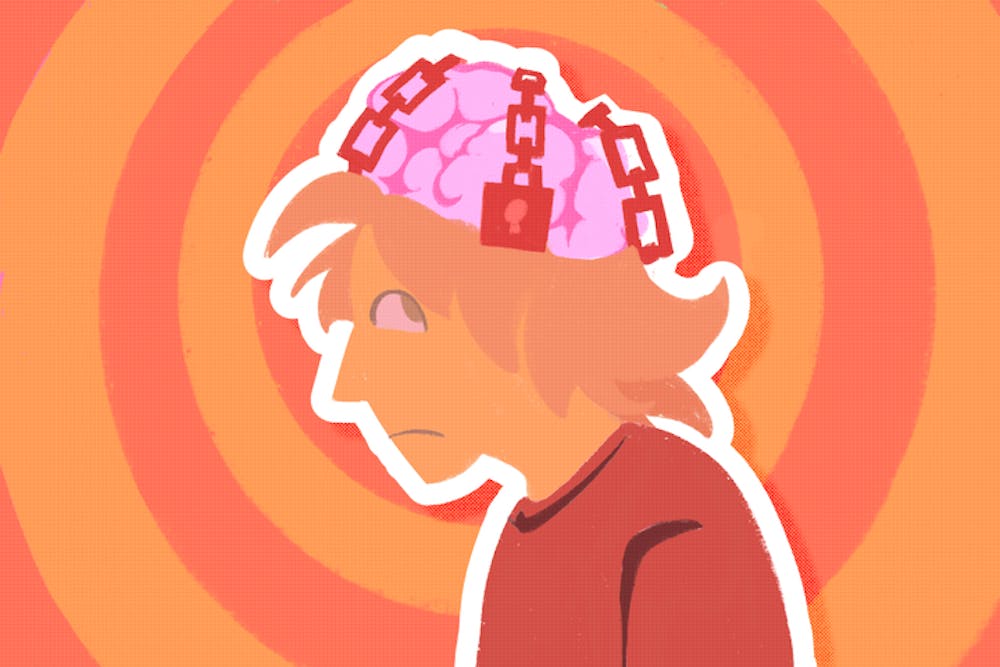
With the rapid emergence of neurotechnologies, from AI-based developments to Neuralink, the ethical and moral implications of new technologies can weigh on ASU students looking to pursue careers in neuroscience.
Neurotechnology has changed the field's landscape. Ian Peebles, a professor in the School of Historical, Philosophical and Religious Studies, said newer AI-based technologies show promise, if used responsibly.
"We need to figure out what the ethical, social and legal implications are as it relates to the development and distribution of these technologies in order to use them in a way where they can actually fulfill the sort of promise that we're hoping they will," Peebles said.
Neuralink is one of the top neurotechnology companies, with many breakthroughs and emerging developments. The business is designing implantable devices to allow for communication between computers and the brain.
READ MORE: ASU neuroscientists weigh in on the 'Link' between risk and reward in human testing
Criticisms of the company allege a lack of concern for animal welfare in trials, and neuroethicists have raised further concerns about informed consent and autonomy for patients.
Neuralink did not respond to a request for comment.
Aryan Vyas, a freshman studying neuroscience and a former intern at the Barrow Neurological Institute, said the underlying goal behind Neuralink is "absolutely fantastic" and something to move toward. Vyas also cautioned about possible misuse of the technology.
"Its potential and its therapeutic potential, it's so groundbreaking to a standpoint where we must take this route," Vyas said. "But maybe also fully understand the regulations of the ethical abuse behind it."
Beyond AI and Neuralink, neuroscience research has produced technologies capable of altering moral cognition. A 2023 study suggested using non-invasive brain stimulation to regulate aggressive behaviors by stimulating the prefrontal cortex, which showed promise.
"When you think about the ways in which we can modulate human cognition such that people act certain ways in ethical contexts, I think that there's a lot there to unpack," Peebles said.
He added that the potential for technology to alter and reveal cognitive patterns raises questions over the ethical use of such practices.
"If those sorts of interventions become compulsory, I think that could be an issue," Peebles said.
While such developments present great promise for the field of neuroscience, their presence in an educational and university setting is largely uncharted territory. The University does offer bioethics courses; however, it does not currently integrate requirements for the topic into its neuroscience degree program.
That does not stop conversations about the effects of emergent technologies in the classroom.
"We actually talk a lot about AI and the effects that it has on developing brains," Finn Murphy, a junior studying biological sciences, said.
Murphy added that he thinks AI will not necessarily pose a threat and that it will open up more job markets for people in the medical field.
READ MORE: ASU medical school builds curriculum from 'ground up' to address health disparities
Though constructive conversations about the impacts of technology mixed with course material can be beneficial, Peebles said, thinking about ethical considerations through an examination of values should guide the process of scientific investigation in the classroom.
"Rather than just being passengers and taking on those assumptions and moving through, it's better for us ... to critically evaluate those values," Peebles said. "In that way, (we) have a little bit more say in the ways in which we engage in scientific inquiry."
Edited by Kate Gore, Henry Smardo and Ellis Preston.
Reach the reporters at ccbixby@asu.edu.
Like The State Press on Facebook and follow @statepress on X.