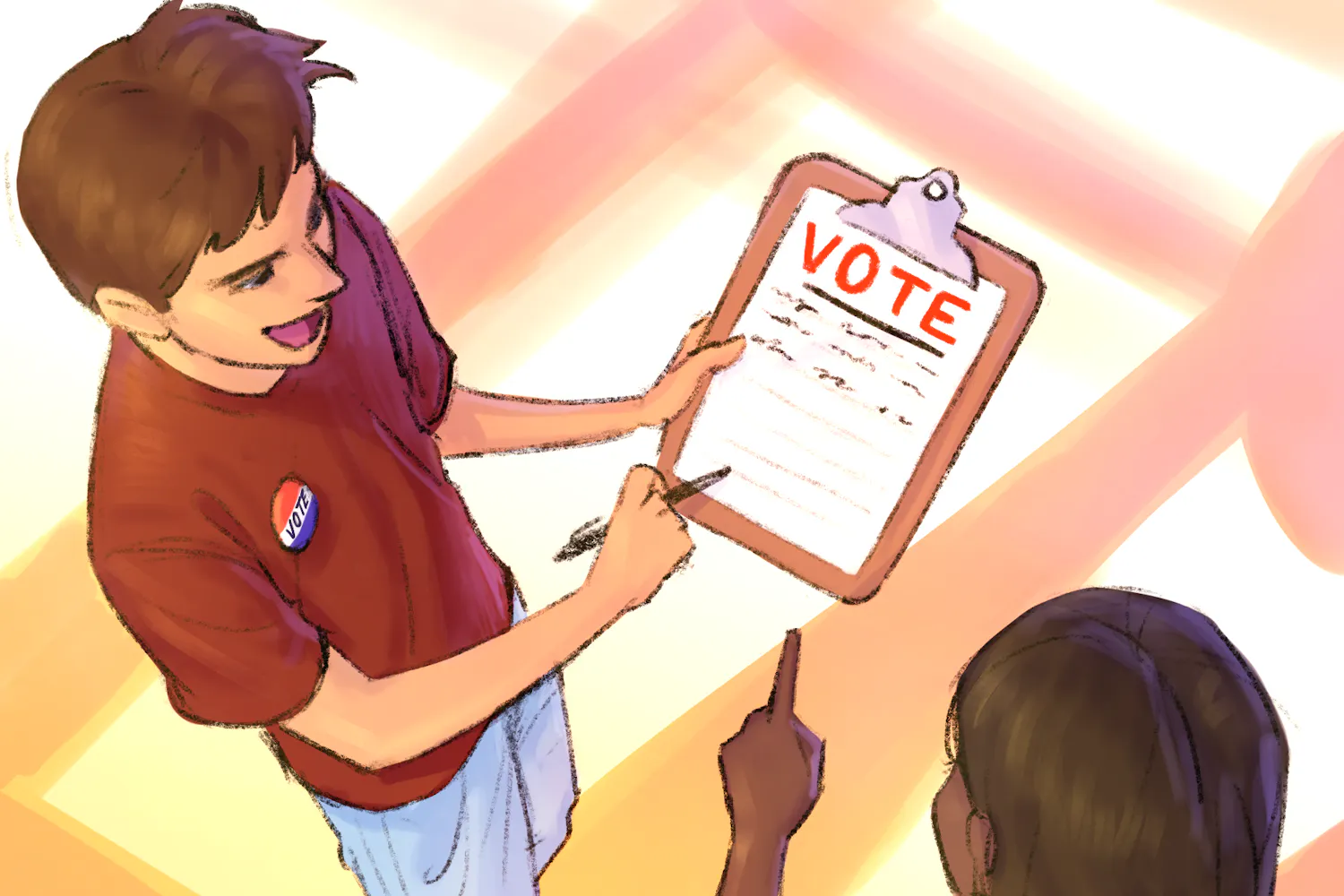
There is one defining flaw in the democratic process that consistently appears in voter turnout rates after every election — the simple, yet tremendous flaw that for a democratic process to work, people must not only participate, but also be informed.
Voter apathy and lack of belief in political efficacy has many negative affects, like undermining the whole point of having a democracy.
But a more observable consequence is the rare outcome of a president taking office who didn’t actually receive a majority of the popular vote, thanks to the Electoral College. It has happened four times in American history, the most recent of which was in 2000, when George W. Bush became president, despite Al Gore receiving 540,000 more votes.
This is why hearing my peers and other young voters say that they don’t vote because they don’t see the point frustrates me.
Eighteen- to 29-year-olds have the worst voter turnout rate of any other age group. In 2008, it rose to 51 percent, its third highest percentage since the 26th Amendment was ratified in 1971, making 18 the minimum voting age.
However, during the 2010 mid-term elections, voter turnout rates for 18- to 29-year-olds was a dismal 24 percent. This is compared to a hardly more impressive overall national average of 45 percent.
But we young voters in Arizona should give ourselves a quick pat on the back because we had a turnout rate of 30 percent, beating the national average by 6 percent.
In the past few weeks, the power of an organized youth has proved itself to be an influential force in enacting legislation change.
The proposed Keystone XL pipeline would have been the largest oil pipeline in U.S. history had it gone through. It was backed by lobbyists and corporations alike that possess a nearly inexhaustible amount of money and influence.
President Obama’s decision to reject the pipeline can be partially accredited to “young protesters who had pressed the administration to stand up to oil companies and meet its environmental promises,” as described in a statement by Courtney Hight, former White House staff member and co-director of Energy Action Coalition, a youth-led coalition of environmental and social justice groups that was instrumental in rallying opposition against the pipeline.
The recent Stop Online Piracy Act (SOPA) was pulled by its chief sponsor, Lamar Smith, after waves of online protest claimed it would lead to Internet censorship.
A study conducted by the Pew Research Center revealed that 23 percent of 18- to 29- year-olds followed the SOPA controversy closer than any other issue.
This is in stark contrast to the national average of 7 percent of people who said they followed the bill closer than other issues, such as the 2012 elections, which demonstrates that public outcry by young people was the defining factor in shutting down the bill.
Battling foreign oil company interests and federally mandated legislation is no small task. If young people were able to achieve this through online protests and petitions, just imagine how different the political landscape would look if we actually voted.
Reach the columnist at damills3@asu.edu
Click here to subscribe to the daily State Press newsletter.