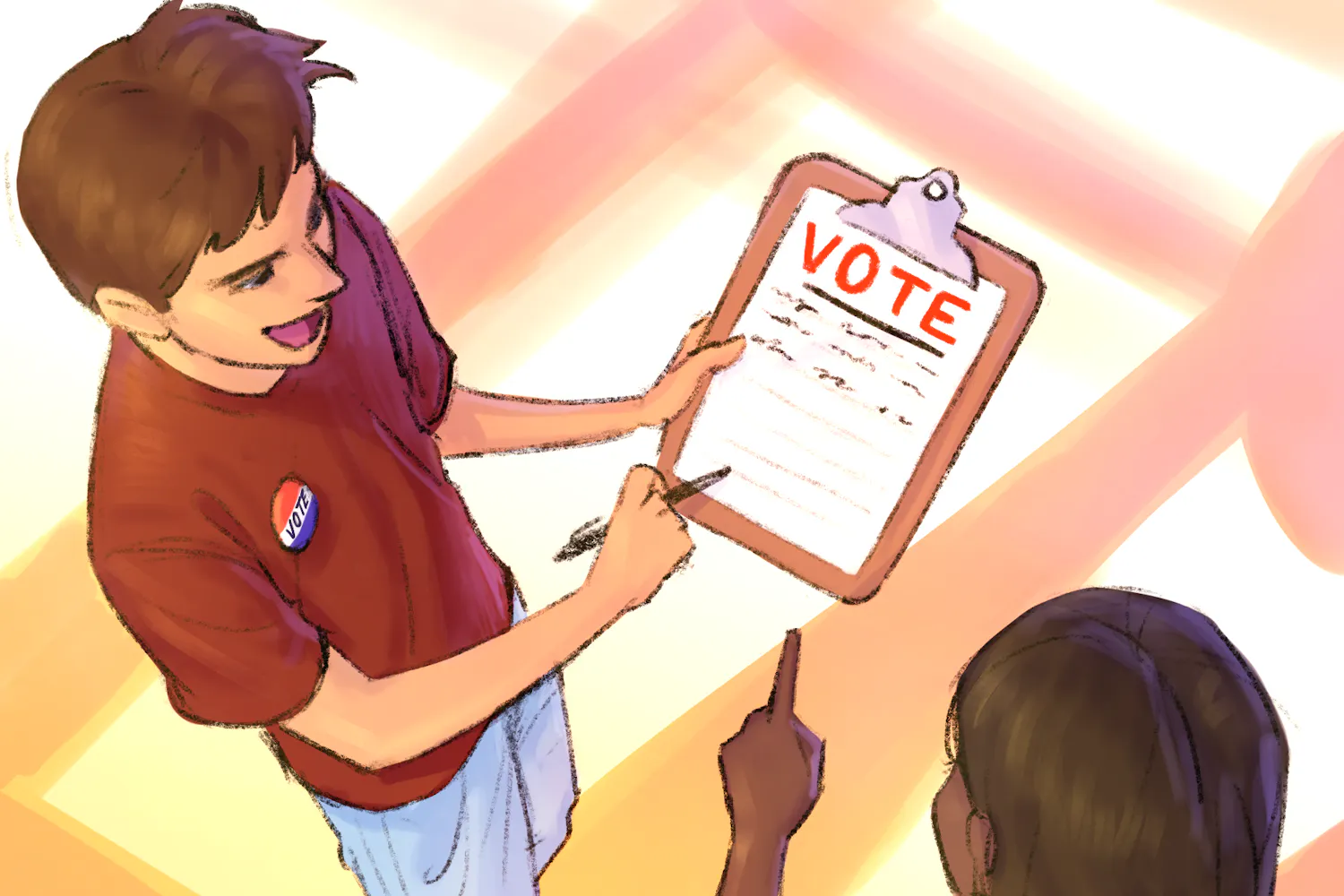
It is not unreasonable to expect that college students' voting rights should not be restricted in an attempt to keep voters away from the polls.
This is exactly what North Carolina state Sen. Bill Cook has proposed: Senate Bill 667, which would carry a tax penalty for parents whose children register to vote at their college address.
Unless the student lived in the same county, parents would suddenly not be able to claim their students as dependents on their state income tax return.
SB 667 would further require that voters have their vehicle registered at the same location as their voter registration. If the bill fails, the provisions could still be passed as part of a larger omnibus bill, SB 666.
Supporters of the provision claim that this bill will somehow "protect students from abuse," as they can be "manipulated like pawns."
It seems much more likely that they simply want to restrict the power that student populations have in elections.
Students are part of the community in which they live. If they live in the vicinity of their university, even if they are from a different part of the state, they should still be able to vote in local elections.
For centuries, legislatures have extended the right to vote to many more groups. Many states now allow residents to vote in elections, qualifying that they have an interest in the policies and state of affairs in the local government.
Are college students, often residing in the same state in which they have citizenship, so different as to warrant this legislation?
Of course students have an interest in local policies, as they will no doubt affect them on a daily basis. Policies and local officials have power over things that affect their education as well, including tuition and fees.
Their interest should not be so easily discounted. Their parents should not be punished because their children have registered to vote at their college address. They should be able to vote, even if their vehicle is registered at another address.
These measures don't seem as though they were designed to protect students. They aim to disallow as many students as possible from voting, especially by punishing their parents on their state tax returns.
It can't be a coincidence that several districts in North Carolina with large student populations, including Watauga and Orange, skew Democratic. Students' large, skewed-Democratic numbers have the capability to influence the outcome of an election, such as when students in Buncombe County changed the outcome of a race for a county commission seat in 2012. It also can't be a coincidence that the state senators pushing for this bill, and for the omnibus bill with restrictive measures on voting registration and early voting, are all Republican.
Political parties play this game. When they wield a large amount of power within the state's legislative or executive branch (or both), they have the ability to set up the state so that their own party can keep its power. Redistricting is one of the ways that they do this, and in recent years, voter ID laws and other restrictions (such as this one) have become more popular with local policymakers.
Partisan politics should step aside in the interests of preserving the ability of citizens and residents to vote, especially for the local elections in which their vote has a higher value and may have a larger impact.
Students are residents of the area in which they reside, which is often a different area from that of their parents' home. Students and their parents should not be penalized, because their students have registered to vote with their college address, especially since voter registration drives, nonpartisan and otherwise, generally are highly successful on college campuses.
In the partisan war between political parties, students' voting rights should not be a casualty.
Reach the columnist at jelanza@asu.edu or follow her at @jentrylanza