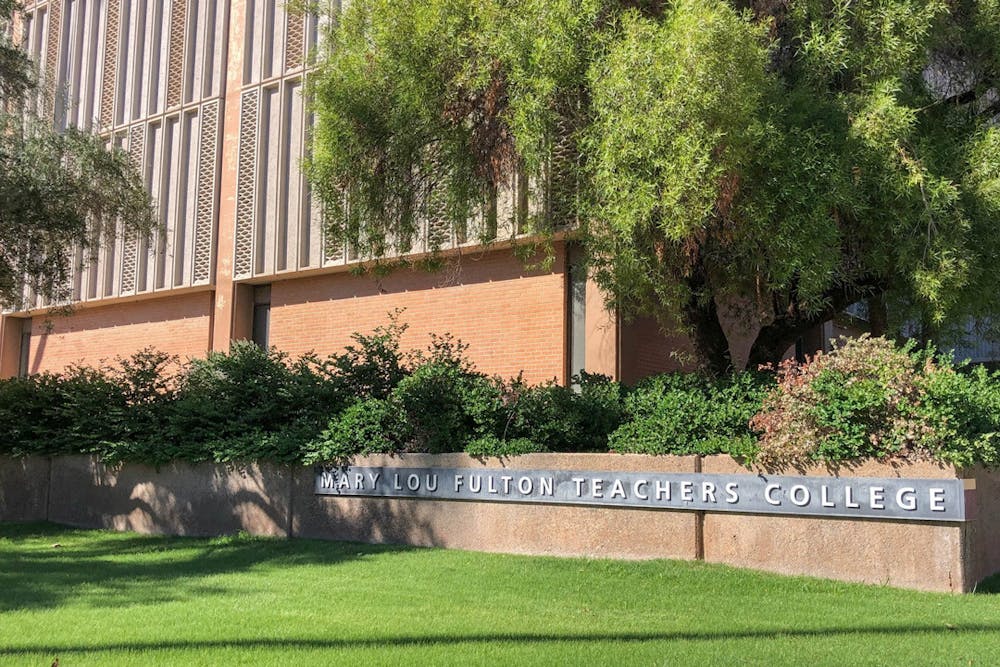
ASU is working to implement a three-year bachelor's degree in education for the Fall 2026 semester.
Proponents of the 90-credit program said it will reduce the barriers to becoming a teacher, particularly in special education.
Carole Basile, the dean of the Mary Lou Fulton College for Teaching and Learning Innovation, said the program addresses the financial burden many education students face.
"We found a way to be able to do it in less time, so that our students didn't have to carry large amounts of debt," Basile said. "We want to get them into classrooms."
The University Senate, which must sign off on all proposed academic programs, approved the Bachelor of Education degree on March 2 after some faculty members voiced concerns about the program.
The proposal was initially introduced in November, and final consideration by the University Senate had been pushed back twice to allow additional time for study and evaluation, according to minutes from the March 2 meeting.
READ MORE: The University Senate and how it functions
According to the minutes, some senators questioned whether students in the program would be eligible for graduate school or ready to teach.
A resolution on 90-credit degrees was also introduced at the March 2 meeting. It called for "greater scrutiny and monitoring" of the shorter programs and urged the University to inform students about potential drawbacks of enrolling in them.
The motion to approve the 90-credit Bachelor of Education degree passed with 82 for and 27 against it.
"We are excited to learn more about what 90-credit degrees include and the opportunity they can provide for our students and communities," University Senate President Elisa Kawam said in a written statement.
Basile said the creation of the 90-credit Bachelor of Education degree was driven by affordability concerns and ongoing teacher shortages. Teaching is a "high need profession," and educators need to be prepared for challenges like artificial intelligence, Basile said.
She said universities across the country are increasingly adopting three-year, 90-credit programs.
This degree maintains the clinical experience and state certification requirements for graduates, Basile said.
READ MORE: ASU looks to new strategies to boost Arizona educational outcomes
Basile added that the shorter program aims to improve equity by reducing costs for students while also accelerating entry into the workforce to address the ongoing teacher shortage.
The program will streamline curriculum and remove redundant coursework, Basile said. It seeks to benefit students who are already working in schools and cannot afford to quit working while pursuing their degree.
"They get to earn while they learn," Basile said.
She does not foresee the new program replacing the typical four-year path, Basile said.
"It really is for a different population, a population that has not traditionally been able to commit to four years," Basile said. "I don't think it's better or worse. I think they're equal. I think they're just different."
During the March 2 University Senate meeting, Basile said students will be informed about the nature of the degree, according to the minutes. Students have the option to change to a 120-hour program, and there will be a comprehensive evaluation system for those enrolled.
Juliet Hart Barnett, a professor of special education in the Mary Lou Fulton College, said the 90-credit Bachelor of Education program is a solution to growing gaps in special education staffing across Arizona.
Barnett said public schools rely heavily on emergency or provisional certifications, while charter and private schools often employ educators without formal special education training. This is particularly challenging for students with disabilities.
"In that context, I think the question for us as a college of education is: What responsibility do we have to respond to that reality?" Barnett said. "That's where the 90-credit program, I think, really comes in."
Students in the proposed degree path can choose to specialize in special education, as well as elementary education.
READ MORE: 'Kids still need teachers': ASU educators share thoughts on their future careers
Barnett said establishing this pathway is better than letting teachers work without qualifications due to barriers in receiving certification.
Reducing the number of credits would not remove the competencies earned by those who graduate from the program, she added.
"We're trying to increase access for everyone, and if we don't increase the access for students to come in and become certified educators, we're not only perpetuating the inequity for those individuals, but we're, by extension, increasing the inequity for the children who aren't getting taught in our schools because they don't have credentialed professionals teaching," Barnett said.
Basile said the program still has to be reviewed by the Higher Learning Commission, but the University plans to start offering the degree in the Fall 2026 semester.
Edited by Carsten Oyer, Senna James and Ellis Preston.
Reach the reporter at swang496@asu.edu.
Like The State Press on Facebook and follow @statepress on X.
Quinn is currently a first-year Barrett student studying Business Data Analytics & Supply Chain Management with a minor in fashion. She is the Professional Development Intern for ASU's DECA Chapter and a part of Phi Alpha Delta in addition to being a politics reporter at the State Press.