Content warning: This story contains subject matter that may be disturbing or upsetting to some readers, including eating disorders. Please proceed with caution.
Costco on a Sunday afternoon is a wash of fluorescent light with endless lines, crying kids, impatient parents and carts lingering in the aisles you stroll.
It's the errand everyone dreads, for whatever reason it may be. So, my boyfriend and I usually divide and conquer.
My mission today: frozen fruit.
I scan the freezer doors, moving fast. A mother and daughter argue over ice cream flavors a few steps away, their voices echoing down the aisle.
The hum of the freezer units drown them out as I finally lock my sights on the strawberries.
I flip the bag in my hands and let the label meet my eyes.
50 calories for 13 strawberries.
Labels used to mean everything. A thought that once followed every piece of food I touched, but an idea that means nothing now.
I look up to close the freezer door, but my reflection in the glass refuses to let me.
I never miss a reflection. I never miss a chance to take inventory, to pull apart the silhouette in front of me.
The buzzing in my ears tries to silence the only honest thought I have: that no version of this image has ever brought me peace.
I still see the body that once held me.
The one that mourns the way I live now, yet stands as proof of something I once had — and maybe could have again.
Those old reflections didn't reveal a body broken into evidence. I couldn't see the collarbones like handles I could carry myself by. I couldn't see my sternum reaching for escape. I couldn't see a head too heavy for the frame beneath it, just skin that still folded and a number on my scale that stayed obedient.
But I eat now. And I tell myself that means I've worked through it.
Yet every meal still feels like a negotiation with the part of me that still remembers how easy it was to disappear.
And when I almost give in, it feels like a relief — until it isn't.
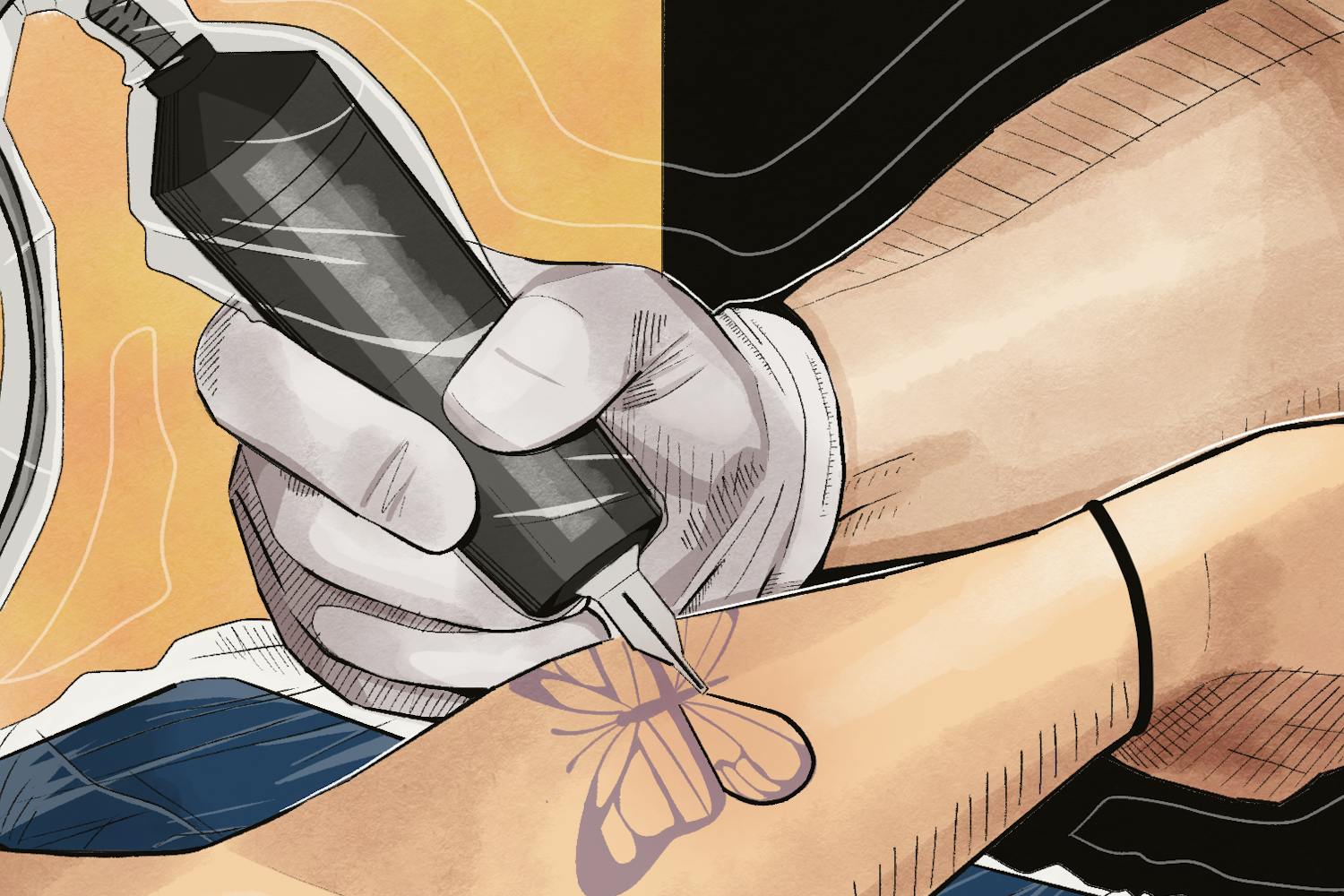
Purging a meal was like brushing my teeth, a rhythm I followed even when I didn't understand why.
During that time, I didn't know I was sick. I didn’t even know there was a word for what I was doing.
It wasn't a disorder; it was routine.
So when I was told to eat a cheeseburger, to put meat on my bones, it felt like an insult to all of the work I had done.
And sometimes I still feel like that 16-year-old girl, living in a body she would've hated. What's supposed to feel like healing still feels like something I have to forgive myself for.
Recovery changes the body faster than it changes the mind.
That made me wonder when I actually decided that recovery tasted better than skinny felt. I couldn't find a moment when it became clear. No single day, no dramatic shift.
I'd always thought that recovery was a one and done, not a life sentence.
My body still yearns for what it knows. The longing never truly leaves, or at least it hasn't yet. It waits in the quiet. It shows up in conversations, in the space between bites and in the seconds before I decide what I deserve.
It tries to convince me this is the one thing I can control, that if the rest of my life feels too loud, this can make me small enough to survive it.
Some days, it's the only thing that feels constant.
When I reflect on my old reality, I ache for the 16-year-old girl who felt like she had to earn each meal, for the 12-year-old girl measuring herself against everyone else in dance class and for the 7-year-old girl who didn't understand the depths of these emotions, yet still felt sad in a bathing suit.
I think back to the moments I'd try to justify these actions, and each time I'd respond with:
"Because I love you."
Love might've felt ugly, but at least it made me look pretty.
My disgust became familiar. So familiar it felt normal.
"Baby, are you ready to go?" my boyfriend shouts from the end of the aisle.
As I walk down to meet him, I hear the mother and daughter decided on mint chocolate chip.
Maybe one day, I'll have a daughter of my own. And I'll tell her she's beautiful — not for how little space she takes up, but for how much of the world she deserves to have.
And if she ever asks why, I'll always tell her:
"Because I love you."
The National Eating Disorders Association in the U.S. can be reached by phone at 1-800-931-2237 or online via chat.
Edited by Leah Mesquita, Natalia Jarrett and Abigail Wilt. This story is part of The Love Issue, which was released on February 25, 2026. See the entire publication here.
Reach Aleah Steinle at amsteinl@asu.edu and follow her on Instagram at aleah.milan.
Like State Press Magazine on Facebook, follow @statepressmag on X and Instagram and read our releases on Issuu.