The Diabetes Link at ASU is a club on campus meant to create a space for students with diabetes or students interested in learning about diabetes to form an educational and supportive community.
This organization is a chapter of Diabetes Link, a national nonprofit organization for resources, peer support and leadership opportunities designed specifically for young adults.
The National Diabetes Statistics Report for 2026 from the Centers for Disease Control and Prevention reported that 12% of the United States' population has diabetes.
The club meets monthly and hosts events in between its meetings. At meetings, they compete in diabetes trivia and other games. They also offer various snacks, some with high sugar for those who have low glucose and snacks with low sugar for those who have high glucose.
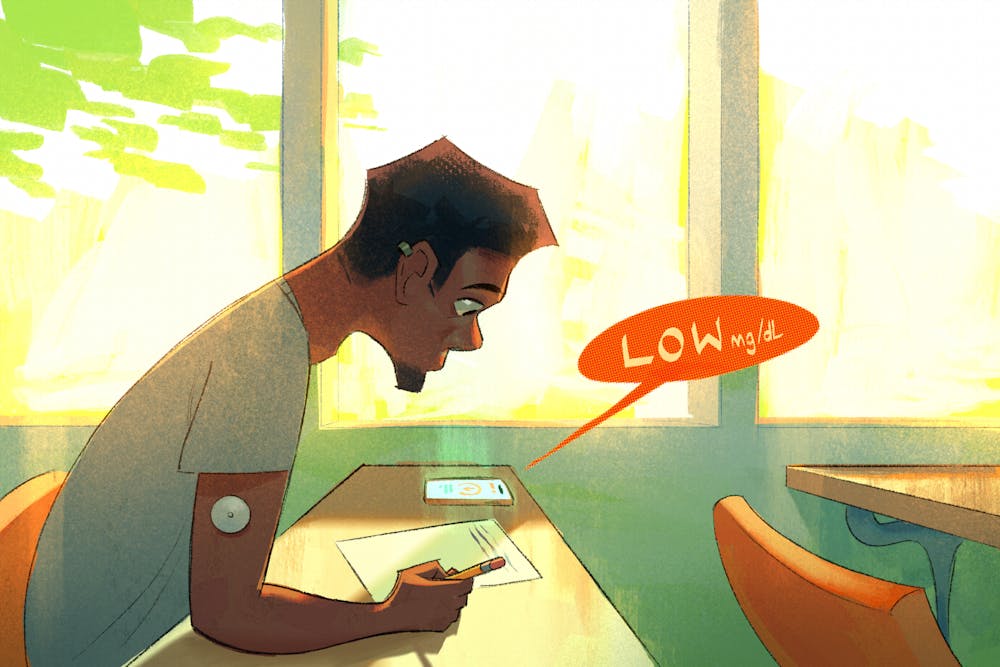
One of their past events focused on learning about diabetes technology, such as insulin pumps and glucose monitors.
"Diabetes feels really isolating sometimes, and there's not a lot of understanding of it, which is part of why it feels so lonely," Sophia Parkinson, one of the club's founders and a freshman studying business law , said. "So, we're trying to get people with diabetes, or want to learn more (about) diabetes and educate and make people feel safe and included."
The club was inactive following ASU's switch from Sun Devil Sync to Sun Devil Central.
Parkinson worked with two founders to relaunch the club back on campus, one of them being Isabella Small, a sophomore studying psychology and organizational leadership.
READ MORE: Goodbye Sun Devil Sync and hello Sun Devil Central
Small has Type 1 diabetes and explained the differences between the two forms of diabetes. She said Type 1 diabetes is an autoimmune disorder that someone has since birth, but can be triggered later in life by environmental stressors.
"The pancreas is what creates insulin and monitors blood sugar levels," Small said. "Basically, you just have to function for that organ because it's not functioning for itself."
People with Type 2 diabetes still produce insulin in their pancreas, but it is not enough to keep their blood sugar levels in a healthy range, according to Mayo Clinic.
Type 2 diabetes can be caused by different things, "but the main difference is that it can go away just through exercise, dieting (and) certain medications," Small said.
Sophia Broughton, a club member and a senior studying human systems engineering, said the club has helped her feel seen as a person with Type 1 diabetes.
She has also enjoyed meeting new people who have or are interested in learning about diabetes.
"There's so many different resources that the club brings," Broughton said. "It taught me some things about diabetes and drinking. It also taught me things about requesting accommodations, whether it's in requesting accommodations in school or requesting accommodations in the workforce and navigating that."
There are a lot of misconceptions about diabetes, like the assumption that all forms are curable or that people with diabetes cannot have sugar. Broughton also said the two types of diabetes often get mixed up and are associated with an unhealthy lifestyle.
Broughton said the club helps clarify these misconceptions and clarifies the reality of diabetes.
"We are still regular people with regular emotions and regular daily struggles," Broughton said. "There's just an added layer of diabetes."
Edited by Natalia Rodriguez, Senna James, Emilio Alvarado and Ellis Preston.
Reach the reporter at galawre3@asu.edu.
Like The State Press on Facebook and follow @statepress on X.
Grace Lawrence is the lead reporter for the community and culture desk at The State Press. This is her 2nd semester working with The State Press.