Tempe is known for being the home to ASU's main campus and nightlife on Mill Avenue. However, recent developments have shown a shift in nightlife culture and a push for increased public safety, housing security, transportation and transparency from new leadership.
City Council welcomes two new faces
On July 1, Tempe City Council swore in two new members, Brooke St. George and Bobby Nichols. In the past two months, St. George and Nichols have worked to address issues including housing insecurity, government transparency and communication, and transportation.
St. George aims to bridge gaps in information between the local government and the people. Coming from a background in communications, she sees that the City Council is not accessible to everyone, which she is working to address by holding office hours at local businesses and answering questions through social media.
She is also an advocate for transportation equity and was recently appointed to the Valley Metro Rail Boards of Directors.
"We have the highest ridership per capita of all of the cities around Maricopa County that participate in Valley Metro, and because we are lucky enough to be here in the middle, we've got streetcar, light rail, and our bus service and our Orbit, which is very unique to Tempe," St. George said.
Nichols is a public interest lawyer who became the first Democratic Socialist on the City Council. He is passionate about addressing the housing crisis in Tempe and plans to form a housing and tenants' rights subcommittee.
READ MORE: Democratic socialist sees both support, pushback in race for Tempe City Council
He said the city can set rent controls on subsidized housing, which includes thousands of units surrounding ASU. He also wants to explore revenue streams that can pay for rental assistance, one option being a tax on luxury goods, including jewelry, designer clothing, rideshare services, short-term rentals and land developments in Tempe.
"I hope that the work that I'm doing can help students find a way to build lives here in the city of Tempe," Nichols said. "I know that there's a lot of people who come in from different cities around Arizona or even out of state, and it's just a little too expensive for young people to set up long-term lives here. I'd like to change that."
Nichols said the people of Tempe can expect a period of change, but they need to step out and build the world they want to see.
"We're not going to be given a world where everybody can afford to eat and travel and own a home. We are going to have to build it for ourselves and take it from the people who would have us chained to our desks for the rest of all time," he said.
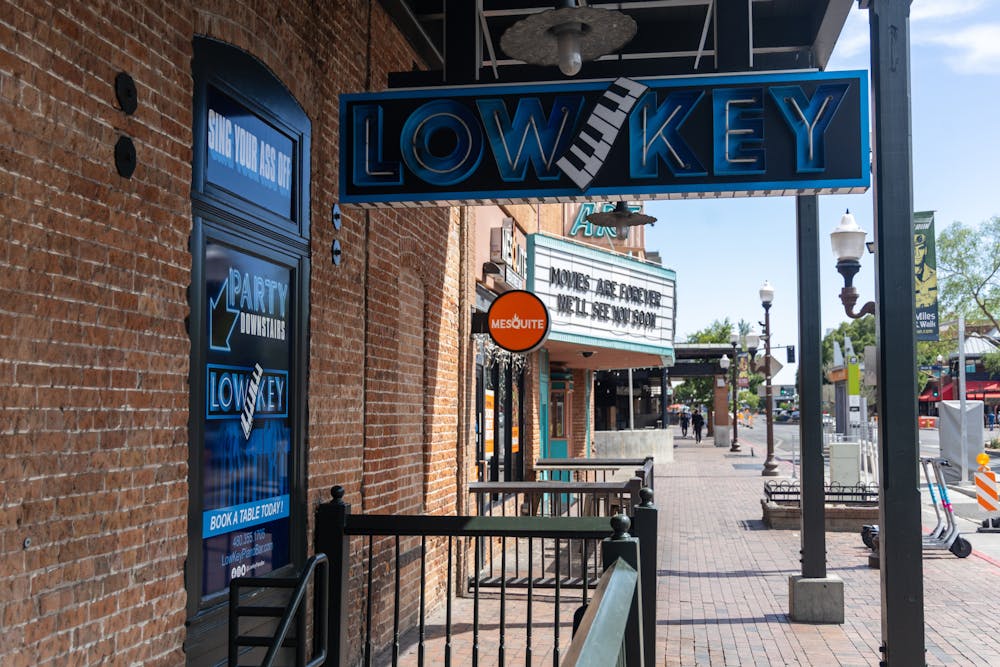
Low Key Piano Bar shuts down
Low Key Piano Bar closed its doors earlier this month after residing on Mill Avenue for over 12 years.
The owner, Austin Walter, said the decision was a result of multiple factors, including declining sales, building management, COVID-19 and road closures.
Walter also said Tempe does not have a typical college bar scene because the bars don't stay open long enough to span generations of ASU students.
READ MORE: Opinion: Nightlife around ASU is changing for the worse
"I hope for ASU's sake and for Tempe's sake that Mill Avenue does a full recovery and becomes, you know, this vibrant, fun entertainment district again, but I just don't know," Walter said.
Low Key's last weekend garnered a positive response, bringing in a line down the block despite ASU students being on summer break. Walter said alumni showed out, as it was a more popular spot with an older crowd than college students.
Drink spiking prevention ordinance
Another new development in Tempe is the drink spiking prevention ordinance, which went into effect on Aug. 1.
READ MORE: Tempe drink spiking ordinance to require drink testing kits, signage in bars
"It's such an underreported, often stigmatized crime," Councilmember Randy Keating said. "We refused to treat drink spiking as an unfortunate consequence of a vibrant nightlife."
Keating founded the Drink Spiking Education and Prevention Council Subcommittee, which came together to form the ordinance. Each bar and restaurant impacted by the measure was given over 50 free drink testing kits, and they have the option to sell them to replenish their inventory.
"We don't want to create a burden on businesses, so that's why we gave them the initial donated product and said, 'Hey, take this, go ahead and sell it if you need to. However, you better not run out,'" he said.
Enforcement of the ordinance will be complaint-driven. Keating said there will be minimal active enforcement, so it's on the people to report an establishment selling alcohol past midnight without drink testing kits available.
E-bike and e-scooter ordinance
Tempe City Council also updated its regulations on e-bikes and e-scooters in July.
On the sidewalk, riders cannot exceed 10 mph and must slow down to 5 mph to pass pedestrians. On multi-use paths, the speed limit for e-bikes was lowered from 20 mph to 15 mph. Also, riders must be at least 16 years old to operate a class three electric bike.
Mary Kate Nacke, the public information officer for Tempe Transportation and Sustainability, said in a written statement that the ordinance will be enforced by citations and educational efforts.
"Our primary aim is safety, which can often be best achieved through education rather than issuing fines. Since the ordinance is new, Tempe Police will focus their efforts on talking with e-bike and e-scooter riders about what is expected of them," Nacke said.
Those cited with a violation may be eligible to attend a Diversion Class instead of paying the fine. The class is also available online for anyone interested in e-bike and e-scooter safety, free of charge.
Nichols said he encourages people to continue fighting for a better future in Tempe during this time of change.
"Don't succumb to nihilism," he said. "A better world is possible, and we can have it. We just have to do the hard work to get there."
Ellis Preston contributed to this story.
Edited by Emilio Alvarado, Alan Deutschendorf and Senna James.
Reach the reporter at sevoorhe@asu.edu.
Like The State Press on Facebook and follow @statepress on X.
Sydney Voorhees is a Senior Reporter at The State Press. She is also an intern at Arizona PBS and a member of Delta Gamma Fraternity. This is her second semester with The State Press, working previously as a part-time Sci-Tech reporter.