There is a growing awareness in the United States for kratom as synthetic versions of the drug were discovered at the scenes of the two deaths of University of Mississippi students in late September.
Kratom comes from a tropical tree native to Southeast Asia, according to the Drug Enforcement Administration. It has been safely used for centuries in the form of teas and capsules, causing a stimulant effect at low doses and a sedative effect at high doses.
The leaves of the tree contain two major psychoactive compounds: mitragynine and 7-hydroxymytragynine.
The drugs have been available in the U.S. for more than a decade, and the kratom products tended to be made entirely from the natural kratom leaf, according to a 2025 study from the National Library of Medicine.
Recently, more "diverse kratom products and derivatives" are being marketed and sold, with those containing pure, isolated 7-OH and mitragynine pseudoindoxyl being the most concerning, the NLM study said.
Foster Olive, a professor at the John Shufeldt School of Medicine and Medical Engineering, said natural kratom has been used as a "replacement mechanism" for addictive drugs like heroin and oxycodone, which has prevented it from being restricted by the Drug Enforcement Administration.
Olive said the newer synthetic versions of the product can hold unknown amounts of the highly potent 7-OH compound, which may lead to overdoses.
"It's unregulated, and so therefore it's quite dangerous," Olive said.
Some newer synthetic products are being advertised as kratom, but pharmacologically do not resemble natural kratom. The NLM study states the products contain derivatives of kratom alkaloids that are not naturally present in the leaf and can be more potent than morphine.
In the case of the Ole Miss students, toxicology reports found Mitragynine, MGM-15 and MGPI, in the bloodstreams of 18-year-old Aidan Hamilton and 20-year-old Robert Strang, according to WAFB Channel 9. Court records suggest the two died of conditions consistent with overdoses.
The documents said the three substances were the same as those found in the kratom-related products discovered in the students' possessions at their times of death, according to WAFB 9.
In Mississippi, kratom is banned in certain counties and municipalities, and a buyer must be at least 21 to purchase it. The students were able to obtain it from smoke shops and other stores selling similar products, according to WAFB 9.
In Arizona, kratom is also sold over the counter in local smoke shops but can be legally purchased at age 18.
Matt Salmon, special adviser for ASU's Office of University Affairs and chairman of the board of the American Kratom Association, said synthetic kratom should be banned.
"The AKA has been on record for at least two years, calling for a total ban of the 7-OH or the synthetically manipulated mitragynine products," Salmon said. "We've been very, very clear that it is a very very dangerous product, and should not be on the market."
The American Kratom Association's mission includes supporting proper regulation of the natural version of the drug, rather than total bans.
"We hope to demonstrate responsible use and the health benefits of kratom will convince other countries to responsibly regulate kratom, not ban it," according to the website.
Kratom lobbyist Mac Haddow said it was "statistically improbable" that the students deaths were both directly caused by natural kratom. Haddow emphasized the relative safety of the natural substance compared to the synthetic products.
The distinction between natural kratom and opioids labeled as kratom is central to Haddow's advocacy.
"In the last couple of years — especially because a lot of these really, really bad actors that have synthesized some of the alkaloids in the kratom leaf, and turned it into an opioid-like substance, which is highly addictive and also a drug that can cause serious overdose — what happened was that they initially started marketing their product as kratom, and we quickly came out, denounced it," Haddow said.
READ MORE: Popularity of peptides at ASU raises questions about safety and health impacts
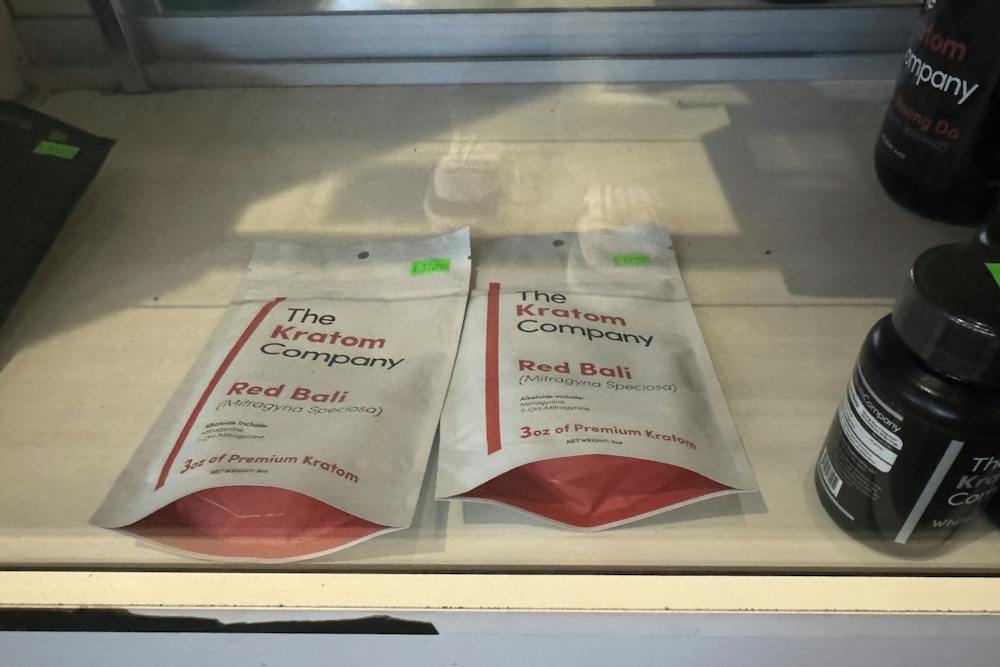
Regarding ASU students, Olive said awareness of the risks of the drug is key, as it is technically an opioid drug.
"It is an opioid," Olive said. "It's not a chemical name we're familiar with, like oxycodone or Percocet, things like that. It is in the same family in terms of its actions, so it's it's an opioid."
He added that when people buy cigarettes, vapes, alcohol and other regulated products, they can be reasonably confident their ingredients are safe. However, Olive said the kratom products available over the counter do not necessarily have such protections.
"When you buy this kind of stuff that's not regulated and just comes from overseas or any kind of street drug, you really have no idea what's in it," Olive said. "I want to say chances are you'll be fine. The chances are you're going to get something that you wish you didn't take."
Edited by Mia Sweador, Emilio Alvarado, Kate Gore and Senna James.
Reach the reporter at sewestov@asu.edu.
Like The State Press on Facebook and follow @statepress on X.
Summer Westover is a Sci-Tech reporter at The State Press. This is her first semester with The State Press.