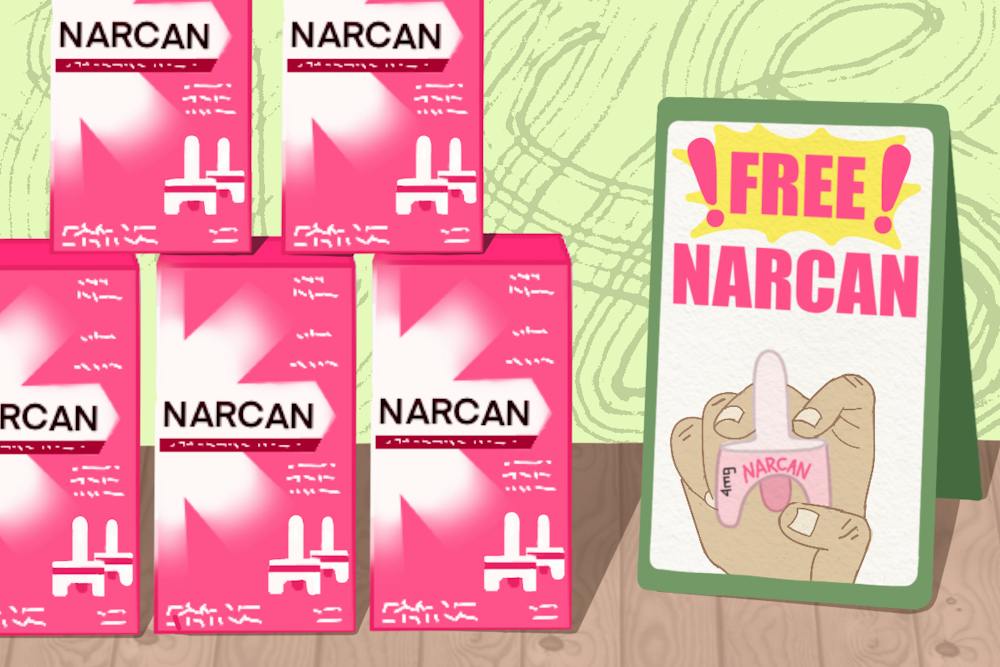
The city of Tempe is ramping up its efforts to address opioid overdoses with new expansions in Narcan access for the community.
Cases of fatal overdoses are on the rise again in Arizona after previous years of decline. Data from the Arizona Public Health Association show an increase in overdose deaths of 18% for the state, while national rates have dropped by nearly 14% in the last year.
Narcan Nasal Spray, a brand of naloxone, is a medicine that works to reverse a rapid opioid overdose, according to the National Institute on Drug Abuse. It works by attaching to opioid receptors, reversing and blocking the effects of opioids, including drugs like heroin, fentanyl and oxycodone.
Pat Shannahan, a spokesperson for Tempe Fire Medical Rescue, said the city is making Narcan free for everybody in response to this rise in deaths.
Several locations around Tempe will be giving out free Narcan kits, including the Tempe EnVision Center, fire stations, public CPR classes and the Tempe Coalition, according to the city.
READ MORE: Tempe City Council funds project addressing opioid overdose response, counseling
Shannahan said the kits contain two doses and are fairly easy to use.
"It's essentially like allergy spray. You put it in the nose, press it down and it delivers a dose," Shannahan said. "Wait a little while, and if it doesn't fully work, then you deliver the second dose to the other nostril, and usually it'll pop somebody right out of an overdose."
This expanded access is part of an existing effort by the city. This year, Shannahan said officials have put a lot of energy behind getting Narcan in people's hands.
Shannahan said the idea began in community CPR classes offered by Fire Medical Rescue.
"We thought this is a great place to start giving it out, and then that kind of led to some of the different departments wanting to participate in different ways."
Shannahan said getting the medicine into the hands of the public can help save more lives, as it can be used by anyone in the time between when 911 is called for an overdose and when first responders actually arrive at the scene.
The program helps remove some of the barriers people might face when trying to access Narcan.
While it is available for purchase over-the-counter at pharmacies, prices sit at around $50 for two doses, according to GoodRx. Shannahan said making it free will mean more people will have it on hand.
Shannahan said people generally feel safe getting Narcan from firefighters and community areas like the EnVision center, something that "could be all the difference."
The kits themselves are paid for by the state, but the city also uses the national opioid settlement dollars it receives, said Susie Steckner, a spokesperson for Community Health and Human Services in Tempe.
READ MORE: ASU club brings overdose awareness to Sun Devils on and off campus
As a college town, the program could hold special importance for the ASU community.
The ASU Police Department crime and fire log shows 12 narcotics cases or other cases involving possession or use in the last 60 days.
Jason Weber, the crime prevention programs manager for ASU PD, said in a written statement that students are actually not involved in many of these incidents.
"The drug incidents that are on the crime log do occur on or near campus but typically involve non-affiliated people," Weber stated.
While it is not a problem the University regularly faces, Weber stated that Narcan is still nice to have on hand.
Having free access to the life-saving medicine could benefit entire communities, Steckner said.
"Anyone, regardless of your age or your circumstances, wants to be prepared, whether for themselves or for a loved one, a neighbor, a friend, a college roommate," Steckner said. "Increasing access across the board improves the overall health and well-being of the city."
Edited by: Dhemi Bell, Carsten Oyer and Senna James.
Reach the reporter at msweador@asu.edu and follow @miasweador on X.
Like The State Press on Facebook and follow @statepress on X.
Mia Sweador is the Science and Technology Editor at The State Press. This is her third semester with The State Press, working previously as a politics reporter.