Marvin Flores Espinoza, like many ASU students before him, has lost his voice at a rave, but it wasn't from cheering on the DJ.
Not far from the dance floor, he was shouting over the music, educating ravers on how to use naloxone, a medication meant to reverse opioid overdoses.
Flores Espinoza, a senior studying biochemistry, is the social media lead for End Overdose at ASU.
The club aims to reduce drug-related overdose deaths by providing resources and education to ASU students, both on campus and out in the community at concerts and events.
This organization is a chapter of the Los Angeles based nonprofit organization, End Overdose, that has 78 chapters nationwide.
According to the Centers for Disease Control and Prevention, over 2,600 individuals died due to overdose in Arizona in 2024.
ASU chapter president Nolan Smith, a junior studying biochemistry, saw the effects of this firsthand before attending college and decided to start a chapter at ASU.
"In high school, we had a few overdose deaths," Smith said. "It wasn't like they were trying fentanyl ... they had like a wax pen, and it was laced."
Smith got his friends together to start the organization at the University in August 2025. The organization has been teaching and attending events since.
Club members table at the Memorial Union where they provide short-form training on how to spot an overdose and hand out fentanyl test strips.
The organization tells students to look for the triangle of symptoms: dilated pupils, slowed or stopped breathing and unresponsiveness, Flores Espinoza said.
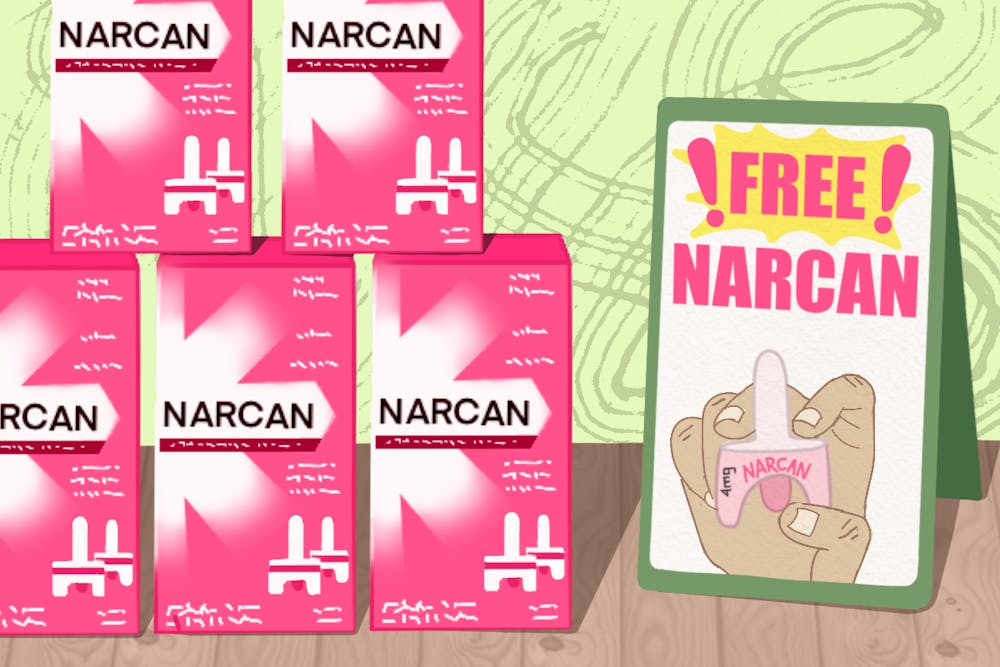
They also hand out free nasal naloxone, often referred to by the brand name Narcan, and ensure they train students on how to use it before they give it out.
"At the tabling events, we have a dummy doll over there, and so we show on the dummy what parts of the body people are likely to show signs that they're experiencing an overdose," said the club's fundraising lead Gaurisankar Jolal, a junior studying biochemistry.
READ MORE: Where to find overdose-reversal drug naloxone and other resources at ASU
Smith said there can be stigma around overdose training, which is what the club is working against. According to the same CDC study, over 69% of drug overdose deaths had at least one opportunity for intervention.
Smith said it is a common misconception for people to think they won't ever be around anybody who overdoses.
READ MORE: Substance misuse prevention nonprofits throughout the Valley battle ongoing crisis
"It's important to have those types of organizations on campus, so that in the event that they're (students are) with friends or other people that might potentially be exposed to an overdose, they have the knowledge to be able to, one, spot it and then, two, they know how to use the Narcan," Jolal said.
Edited by Natalia Rodriguez, Sophia Braccio, Katrina Michalak and Pippa Fung.
Reach the reporter at galawre3@asu.edu.
Like The State Press on Facebook and follow @statepress on X.
Grace Lawrence is the lead reporter for the community and culture desk at The State Press. This is her 2nd semester working with The State Press.