Fans at the home opener at Sun Devil Stadium on Saturday likely spent more time standing in line at the gate than they would have two years ago as security personnel searched their bags and patted down their pockets.
Increased security at ASU events like football games has remained standard since Sept. 11, 2001.
Prior to the terrorist attacks, patrons were only required to present a ticket to enter an ASU public event and were not subject to bag searches at the front gate.
Following the attacks, however, safety measures that prohibited bringing backpacks and other large bags to public events were enacted.
Barricades were also built around Sun Devil Stadium in an effort to ensure that cars and trucks could not park too close to the building.
ASU police Lt. John Sutton said the barricades were installed to especially guard against car bombings.
"The idea with the installation of barricades was to prevent an incident like the Oklahoma City bombing from happening," Sutton said.
After the Sept. 11 attacks, ASU Police Chief John Pickens worked with ASU administrators to create an emergency operations center, now located in the University Services Building. There, top officials can gather information in the event of an emergency on campus.
"The idea of the emergency operations center was to establish a command center from which ASU officials could make decisions that might affect the University in case of [a] crisis," Sutton said.
Though procedures at the Tempe Police Department have not changed in the two years since the Twin Towers crumbled and the Pentagon was attacked, officers are employing more proactive methods of crime prevention.
When two Tempe men were arrested last week on charges of violating an eviction notice, officers discovered shotgun shells and gunpowder littering the residence. A subsequent search of the apartment by bomb technicians revealed a homemade explosive device and a cut down .22 caliber rifle.
Officer Jeff Lane said quick thinking by officers likely prevented a crime from being committed and people being injured.
"The Tempe Police Department did not establish any new practices after Sept. 11," said Lane. "Officers are definitely more vigilant, though. If they're responding to a call and see something suspicious, they're going to make sure that item gets investigated and taken care of."
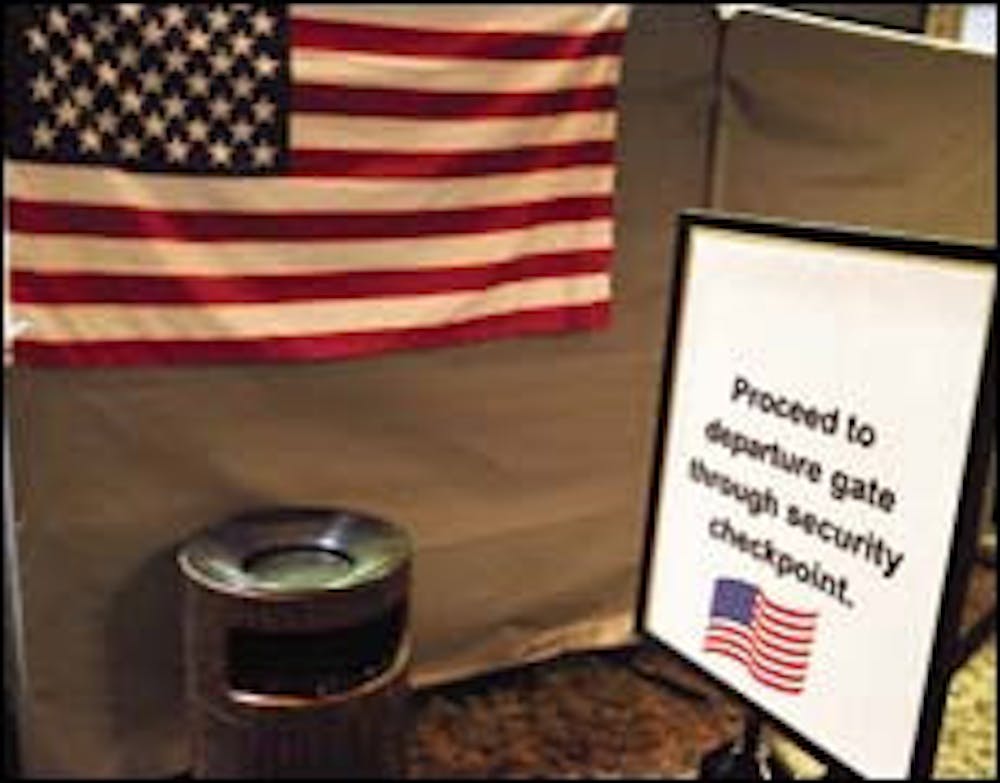
The most sweeping security changes following the events of Sept. 11 have affected airports like Phoenix's Sky Harbor International Airport, located about six miles from ASU.
The Federal Aviation Administration advises passengers to arrive at the airport two hours before their departure time and provides a list of prohibited items - including nail clippers and tweezers - on their Web site.
"I had to take off my shoes, empty my pockets and turn all of my electronics [off] when I flew home to New York," said accounting junior Chris Raab. "Immediately after the attacks, it seemed like travel took a long time and was a huge problem. Now things seem to be pretty normal," Raab added.
Psychology and pre-medicine senior Craig DiTommaso said increased airport security wasn't easing everyone's fears.
"The government is trying to make everyone think that the airlines are safe and travel isn't a problem," he said. "In reality, these extensive security measures only serve to make a small population feel safer about flying."
Reach the reporter at kelly.vaughn@asu.edu.


